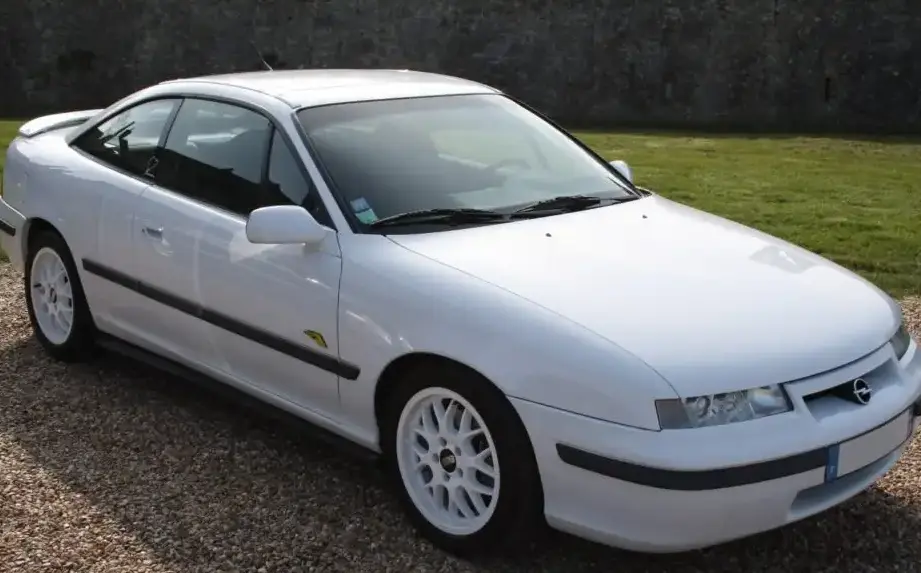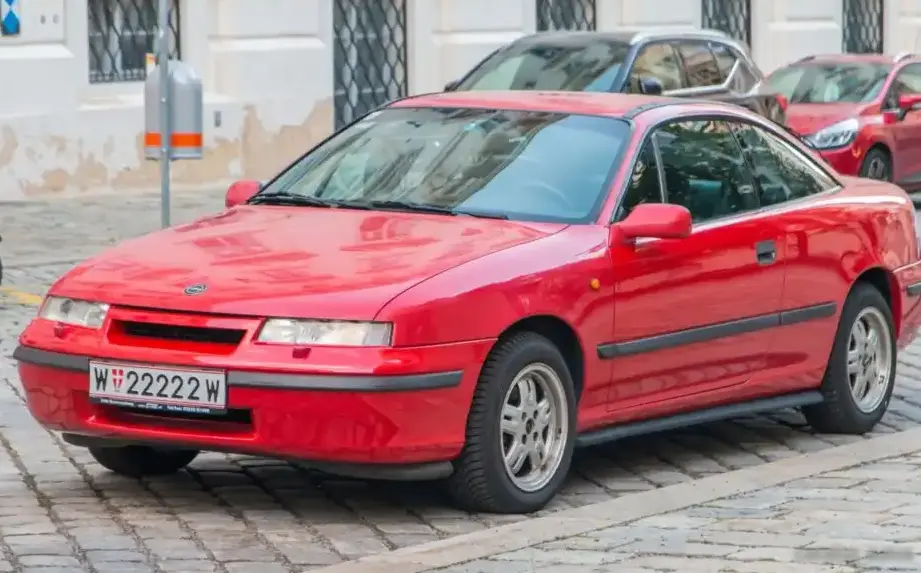
The Opel Calibra 2.5 V6 Automatic, produced from August 1993 to 1994, represented the performance pinnacle of the Calibra coupe range. Positioned as the flagship model, it combined a potent V6 engine with the convenience of an automatic transmission. The Calibra itself, launched in 1989, was Opel’s attempt to create a stylish, aerodynamic coupe to compete with rivals like the Ford Escort RS Cosworth and Toyota Celica. It was built on the GM410 platform, shared with the Opel Vectra and Cavalier, but distinguished itself with its distinctive fastback design and focus on driving enjoyment. The 2.5 V6 Automatic was a relatively short-lived variant, representing the culmination of the Calibra’s engineering before production ended.
Technical Specifications
| Brand | Opel |
| Model | Calibra |
| Generation | Calibra |
| Type (Engine) | 2.5 V6 (170 Hp) Automatic |
| Start of production | August, 1993 |
| End of production | 1994 |
| Powertrain Architecture | Internal Combustion engine |
| Body type | Coupe |
| Seats | 4 |
| Doors | 2 |
| Fuel consumption (urban) | 15.9 l/100 km (14.8 US mpg, 17.8 UK mpg, 6.3 km/l) |
| Fuel consumption (extra urban) | 8.5 l/100 km (27.7 US mpg, 33.2 UK mpg, 11.8 km/l) |
| Fuel consumption (combined) | 11.2 l/100 km (21 US mpg, 25.2 UK mpg, 8.9 km/l) |
| Fuel Type | Petrol (Gasoline) |
| Acceleration 0 – 100 km/h | 8.8 sec |
| Acceleration 0 – 62 mph | 8.8 sec |
| Acceleration 0 – 60 mph | 8.4 sec |
| Maximum speed | 234 km/h (145.4 mph) |
| Weight-to-power ratio | 7.9 kg/Hp, 125.9 Hp/tonne |
| Weight-to-torque ratio | 5.9 kg/Nm, 170.4 Nm/tonne |
| Power | 170 Hp @ 6000 rpm |
| Power per litre | 68.1 Hp/l |
| Torque | 230 Nm @ 3200 rpm (169.64 lb.-ft. @ 3200 rpm) |
| Engine layout | Front, Transverse |
| Engine Model/Code | C25XE |
| Engine displacement | 2498 cm3 (152.44 cu. in.) |
| Number of cylinders | 6 |
| Engine configuration | V-engine |
| Cylinder Bore | 81.6 mm (3.21 in.) |
| Piston Stroke | 79.6 mm (3.13 in.) |
| Compression ratio | 10.8:1 |
| Number of valves per cylinder | 4 |
| Fuel injection system | Multi-port manifold injection |
| Engine aspiration | Naturally aspirated engine |
| Valvetrain | DOHC |
| Engine oil capacity | 4.5 l (4.76 US qt | 3.96 UK qt) |
| Coolant | 7.5 l (7.93 US qt | 6.6 UK qt) |
| Kerb Weight | 1350 kg (2976.24 lbs.) |
| Max. weight | 1775 kg (3913.21 lbs.) |
| Max load | 425 kg (936.96 lbs.) |
| Trunk (boot) space – minimum | 300 l (10.59 cu. ft.) |
| Trunk (boot) space – maximum | 980 l (34.61 cu. ft.) |
| Fuel tank capacity | 63 l (16.64 US gal | 13.86 UK gal) |
| Length | 4492 mm (176.85 in.) |
| Width | 1688 mm (66.46 in.) |
| Height | 1320 mm (51.97 in.) |
| Wheelbase | 2600 mm (102.36 in.) |
| Front track | 1426 mm (56.14 in.) |
| Rear (Back) track | 1446 mm (56.93 in.) |
| Ride height (ground clearance) | 140 mm (5.51 in.) |
| Drag coefficient (Cd) | 0.26 |
| Drivetrain Architecture | The Internal combustion engine (ICE) drives the front wheels of the vehicle. |
| Drive wheel | Front wheel drive |
| Number of gears and type of gearbox | 4 gears, automatic transmission |
| Front suspension | Wishbone |
| Rear suspension | Coil spring |
| Front brakes | Ventilated discs |
| Rear brakes | Disc |
| Assisting systems | ABS (Anti-lock braking system) |
| Steering type | Steering rack and pinion |
| Power steering | Hydraulic Steering |
| Tires size | 205/55 R15 |
| Wheel rims size | 15 |
Powertrain & Engine Architecture
The heart of the Calibra 2.5 V6 Automatic is the C25XE engine, a 2.5-liter, 60-degree V6. This engine was a significant departure from the four-cylinder engines offered in lower Calibra trims. It featured a cast iron block and aluminum cylinder heads, employing dual overhead camshafts (DOHC) and four valves per cylinder. The C25XE utilized Bosch Motronic multi-port fuel injection, carefully managing fuel delivery for optimal performance and efficiency. The engine’s 60-degree V-angle was chosen to provide a balance between smoothness and compactness. Paired with this engine was a four-speed automatic transmission, providing convenient shifting but sacrificing some of the responsiveness of a manual gearbox. This automatic transmission was a GM unit, known for its durability but not particularly for its sportiness.
Driving Characteristics
The 2.5 V6 Automatic Calibra offered a distinctly different driving experience compared to its four-cylinder siblings. While the automatic transmission dulled acceleration slightly compared to the manual version (0-60 mph in approximately 8.4 seconds versus 7.8 seconds for the manual), it still provided brisk performance. The V6 delivered a smooth and linear power delivery, with peak torque arriving at 3200 rpm. The automatic transmission’s gear ratios were geared towards comfortable cruising rather than aggressive acceleration. The front-wheel-drive layout, while competent, could exhibit some torque steer under hard acceleration. Compared to the more nimble and engaging manual versions, the automatic felt more relaxed and suited to long-distance driving.
Equipment & Trim Levels
The 2.5 V6 Automatic typically came well-equipped, reflecting its position as the range-topping model. Standard features included central locking, electric windows, power steering, and an anti-lock braking system (ABS). Interior upholstery was typically cloth, although leather options were available. The dashboard featured a comprehensive instrument cluster, and many examples were equipped with an upgraded sound system. Optional extras included a sunroof, alloy wheels, and a more sophisticated audio system. The Calibra’s interior design, while functional, was somewhat dated even at the time of its release, lacking the modern aesthetics of some competitors.
Chassis & Braking
The Calibra’s chassis featured independent suspension all around, with a wishbone setup at the front and a coil spring arrangement at the rear. This provided a reasonably comfortable ride, although it wasn’t particularly sporty in its handling. The 2.5 V6 Automatic models were equipped with ventilated disc brakes at the front and solid discs at the rear, providing adequate stopping power. The ABS system helped to maintain control during emergency braking situations. Stabilizer bars were fitted front and rear to reduce body roll during cornering, but the Calibra’s relatively soft suspension setup meant it wasn’t a particularly sharp-handling car.
Market Reception & Comparison
The Calibra 2.5 V6 Automatic was generally well-received by automotive critics, who praised its smooth engine, comfortable ride, and stylish design. However, the automatic transmission was often criticized for detracting from the car’s performance potential. Compared to the 2.0-liter four-cylinder models, the V6 offered significantly more power and refinement, but at a higher price point and with increased fuel consumption. The V6 Automatic was also more expensive to maintain than the four-cylinder versions, due to the complexity of the engine and transmission. Fuel economy figures of around 21 mpg combined were typical, making it a relatively thirsty car by modern standards.
Legacy
The Opel Calibra 2.5 V6 Automatic, while a relatively short-lived model, has gained a cult following among enthusiasts. The C25XE engine is known for its durability and tunability, and many examples have been modified for increased performance. The car’s distinctive styling and relative rarity have also contributed to its desirability. Today, well-maintained examples are becoming increasingly collectible. The automatic transmission, while not ideal for performance enthusiasts, has proven to be reliable, and parts availability remains reasonable. The Calibra 2.5 V6 Automatic represents a unique blend of style, performance, and comfort, and remains a fondly remembered coupe from the early 1990s.