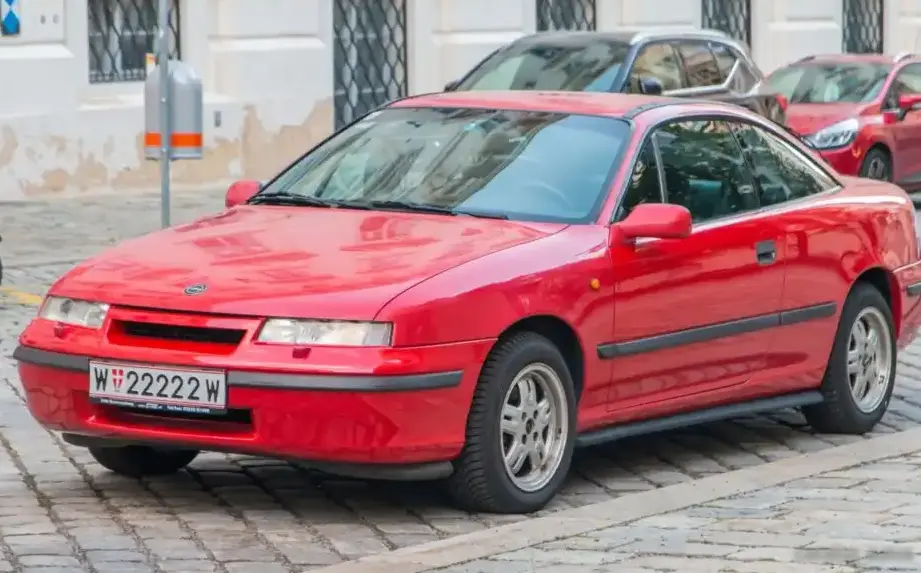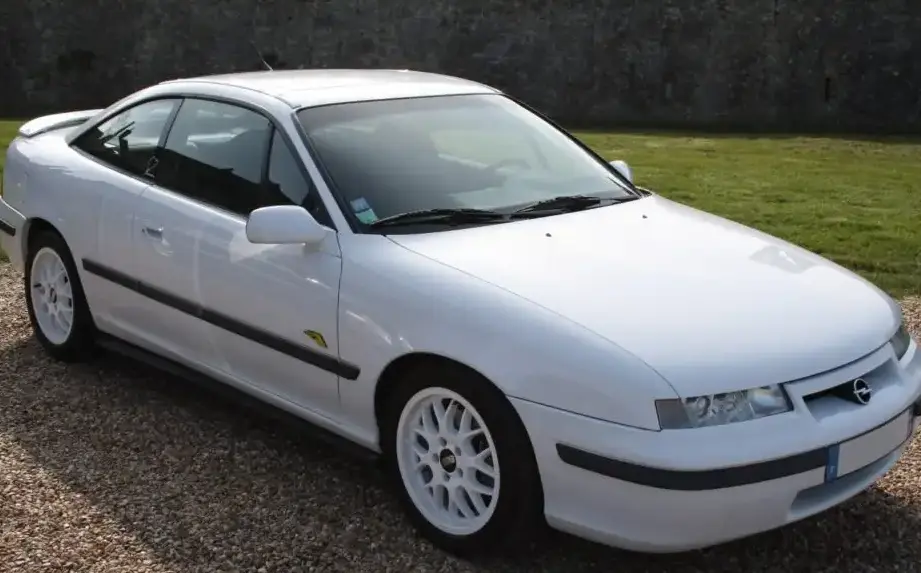
The Opel Calibra 2.0 16V ECOTEC 4×4 Automatic, produced from 1994 to 1997, represents a compelling blend of performance and practicality within the Calibra range. Positioned as a higher-specification variant, it catered to drivers seeking all-wheel drive security and the convenience of an automatic transmission, while still delivering a respectable level of power from Opel’s ECOTEC engine family. This facelifted model, introduced in 1994, featured subtle styling revisions and refinements over the original Calibra launched in 1989, solidifying its appeal as a sporty coupe in the European market. The Calibra itself was built on the GM410 platform, shared with the Vectra and Cavalier, and aimed to offer a more aerodynamic and stylish alternative to traditional hatchbacks and sedans.
Technical Specifications
| Brand | Opel |
| Model | Calibra |
| Generation | Calibra (facelift 1994) |
| Type (Engine) | 2.0 16V ECOTEC (136 Hp) 4×4 Automatic |
| Start of production | 1994 |
| End of production | 1997 |
| Powertrain Architecture | Internal Combustion engine |
| Body type | Coupe |
| Seats | 4 |
| Doors | 3 |
| Fuel consumption (urban) | 14.5 l/100 km (16.2 US mpg, 19.5 UK mpg, 6.9 km/l) |
| Fuel consumption (extra urban) | 7 l/100 km (33.6 US mpg, 40.4 UK mpg, 14.3 km/l) |
| Fuel consumption (combined) | 9.8 l/100 km (24 US mpg, 28.8 UK mpg, 10.2 km/l) |
| CO2 emissions | 231 g/km |
| Fuel Type | Petrol (Gasoline) |
| Weight-to-power ratio | 9.5 kg/Hp, 105 Hp/tonne |
| Weight-to-torque ratio | 7 kg/Nm, 142.9 Nm/tonne |
| Power | 136 Hp @ 5600 rpm |
| Power per litre | 68.1 Hp/l |
| Torque | 185 Nm @ 4000 rpm (136.45 lb.-ft. @ 4000 rpm) |
| Engine layout | Front, Transverse |
| Engine Model/Code | X20XEV |
| Engine displacement | 1998 cm3 (121.93 cu. in.) |
| Number of cylinders | 4 |
| Engine configuration | Inline |
| Cylinder Bore | 86 mm (3.39 in.) |
| Piston Stroke | 86 mm (3.39 in.) |
| Compression ratio | 10.8:1 |
| Number of valves per cylinder | 4 |
| Fuel injection system | Multi-port manifold injection |
| Engine aspiration | Naturally aspirated engine |
| Valvetrain | DOHC |
| Engine oil capacity | 4 l (4.23 US qt | 3.52 UK qt) |
| Coolant capacity | 7.2 l (7.61 US qt | 6.34 UK qt) |
| Kerb Weight | 1295 kg (2854.99 lbs.) |
| Max. weight | 1700 kg (3747.86 lbs.) |
| Max load | 405 kg (892.87 lbs.) |
| Trunk (boot) space – minimum | 300 l (10.59 cu. ft.) |
| Trunk (boot) space – maximum | 980 l (34.61 cu. ft.) |
| Fuel tank capacity | 63 l (16.64 US gal | 13.86 UK gal) |
| Permitted trailer load with brakes (12%) | 1350 kg (2976.24 lbs.) |
| Permitted trailer load without brakes | 650 kg (1433 lbs.) |
| Length | 4492 mm (176.85 in.) |
| Width | 1688 mm (66.46 in.) |
| Height | 1320 mm (51.97 in.) |
| Wheelbase | 2600 mm (102.36 in.) |
| Front track | 1426 mm (56.14 in.) |
| Rear track | 1446 mm (56.93 in.) |
| Drag coefficient (Cd) | 0.26 |
| Minimum turning circle | 11.45 m (37.57 ft.) |
| Drivetrain Architecture | All wheel drive (4×4). ICE drives front wheels, rear wheels engaged via clutch. |
| Drive wheel | All wheel drive (4×4) |
| Number of gears and type of gearbox | 4 gears, automatic transmission |
| Front suspension | Independent type McPherson, Transverse stabilizer |
| Rear suspension | Trailing arm, Transverse stabilizer |
| Front brakes | Ventilated discs |
| Rear brakes | Disc |
| Assisting systems | ABS (Anti-lock braking system) |
| Steering type | Steering rack and pinion |
| Power steering | Hydraulic Steering |
| Tires size | 205/55 R15 |
| Wheel rims size | 6J x 15 |
Powertrain & Engine Architecture
At the heart of the Calibra 2.0 16V 4×4 Automatic lies the X20XEV engine, a 1998cc inline-four cylinder powerplant belonging to Opel’s ECOTEC family. This engine featured a cast iron block with an aluminum cylinder head, incorporating dual overhead camshafts (DOHC) and four valves per cylinder. The X20XEV utilized multi-port fuel injection, delivering a precise fuel spray for improved efficiency and performance. The engine’s 136 horsepower at 5600 rpm and 185 Nm (136.45 lb-ft) of torque at 4000 rpm were respectable figures for its time, though not the highest output available in the Calibra range. The automatic transmission was a four-speed unit, designed to provide smooth and convenient gear changes. This transmission, while offering ease of use, did impact acceleration compared to the available five-speed manual gearbox.
Driving Characteristics
The 2.0 16V Automatic 4×4 Calibra offered a comfortable and capable driving experience. The automatic transmission, while not as engaging as a manual, provided effortless cruising and simplified driving in urban environments. The all-wheel drive system enhanced traction, particularly on slippery surfaces, providing a greater sense of security. However, the added weight of the 4×4 system and the automatic transmission resulted in slightly slower acceleration compared to the front-wheel drive or manual versions. The gear ratios were tuned for a balance between fuel economy and usability, rather than outright performance. The power delivery was linear, with a noticeable surge in torque around 4000 rpm. The Calibra’s suspension, while generally comfortable, could feel slightly soft in spirited driving, leading to some body roll in corners.
Equipment & Trim Levels
The 2.0 16V 4×4 Automatic Calibra typically came well-equipped, reflecting its position as a higher-end variant. Standard features often included central locking, electric windows, power steering, and an anti-lock braking system (ABS). Interior upholstery was usually a cloth or velour material, with options for leather upgrades. The dashboard layout was functional and driver-focused, with clear instrumentation. Optional extras could include a sunroof, upgraded audio system, and alloy wheels. The Calibra’s interior, while not luxurious, was well-built and offered a comfortable environment for both driver and passengers.
Chassis & Braking
The Calibra’s chassis featured independent McPherson strut suspension at the front and a trailing arm setup at the rear. A transverse stabilizer bar was fitted to both axles to reduce body roll. The braking system consisted of ventilated discs at the front and solid discs at the rear, providing adequate stopping power for most driving situations. The ABS system further enhanced safety by preventing wheel lockup during hard braking. The Calibra’s suspension was tuned for a balance between comfort and handling, prioritizing ride quality over outright sportiness.
Market Reception & Comparison
The Calibra 2.0 16V 4×4 Automatic received generally positive reviews, praised for its stylish design, comfortable ride, and all-weather capability. Critics noted that the automatic transmission slightly dulled the driving experience compared to the manual version, and the fuel economy was not particularly impressive. Compared to the more performance-oriented Calibra 2.0 16V with a manual gearbox, the automatic version offered less driver involvement. Against the 2.0 8V models, the 16V offered a noticeable performance upgrade. The 4×4 system added a premium to the price, making it a less accessible option for some buyers.
Legacy
The Opel Calibra, and specifically the 2.0 16V 4×4 Automatic variant, has gained a cult following among enthusiasts. The X20XEV engine is known for its reliability when properly maintained, although regular servicing is crucial. The automatic transmission, while generally durable, can be prone to wear and tear over time. Today, well-maintained Calibras are becoming increasingly collectible, appealing to those seeking a stylish and affordable classic coupe. The combination of its distinctive design, respectable performance, and all-wheel drive capability ensures its continued appeal in the used car market.