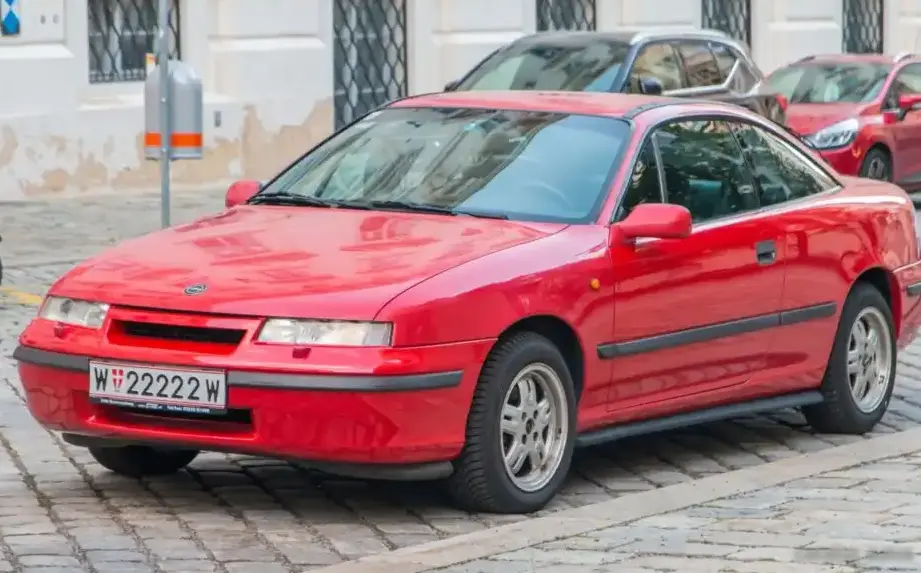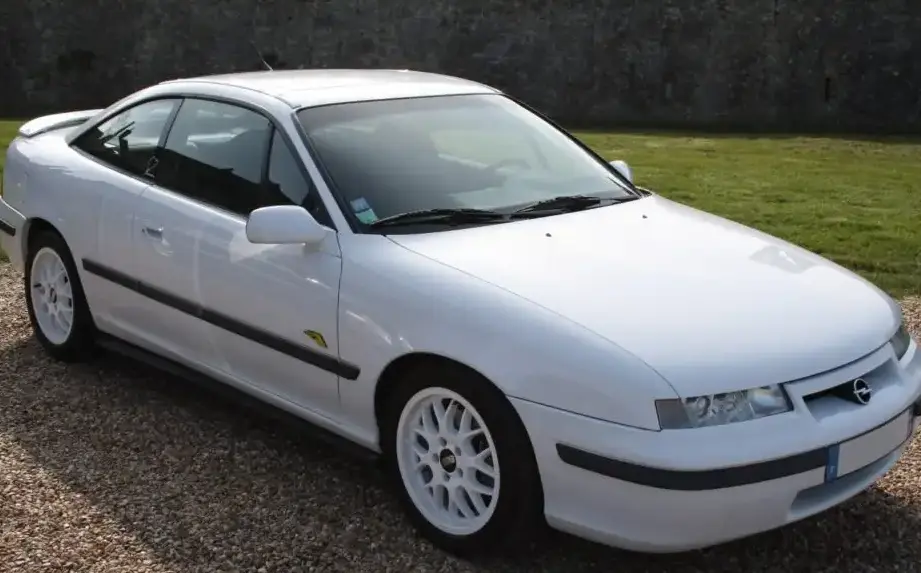
The Opel Calibra, particularly the facelifted model produced from 1994 to 1997, represented a significant effort by Opel to create a stylish and technologically advanced coupe. The 2.0 16V ECOTEC variant with an automatic transmission was a key part of the Calibra lineup, offering a blend of performance and convenience. Positioned as a mid-range offering, it sat between the base 1.6L models and the more potent, performance-focused versions like the 2.8L V6. The Calibra itself was built on the GM4100 platform, shared with the Vectra A, and aimed to appeal to buyers seeking a sporty, yet practical, coupe.
Technical Specifications
| Brand | Opel |
| Model | Calibra |
| Generation | Calibra (facelift 1994) |
| Type (Engine) | 2.0 16V ECOTEC (136 Hp) Automatic |
| Start of production | 1994 |
| End of production | 1997 |
| Powertrain Architecture | Internal Combustion engine |
| Body type | Coupe |
| Seats | 4 |
| Doors | 3 |
| Fuel consumption (urban) | 10.6 l/100 km (22.2 US mpg, 26.6 UK mpg, 9.4 km/l) |
| Fuel consumption (extra urban) | 5.3 l/100 km (44.4 US mpg, 53.3 UK mpg, 18.9 km/l) |
| Fuel consumption (combined) | 7.5 l/100 km (31.4 US mpg, 37.7 UK mpg, 13.3 km/l) |
| Fuel Type | Petrol (Gasoline) |
| Acceleration 0 – 100 km/h | 11.5 sec |
| Acceleration 0 – 62 mph | 11.5 sec |
| Acceleration 0 – 60 mph | 10.9 sec |
| Maximum speed | 205 km/h (127.38 mph) |
| Weight-to-power ratio | 9.4 kg/Hp, 106.3 Hp/tonne |
| Weight-to-torque ratio | 6.9 kg/Nm, 144.5 Nm/tonne |
| Power | 136 Hp @ 5600 rpm |
| Power per litre | 68.1 Hp/l |
| Torque | 185 Nm @ 4000 rpm (136.45 lb.-ft. @ 4000 rpm) |
| Engine layout | Front, Transverse |
| Engine Model/Code | X20XEV |
| Engine displacement | 1998 cm3 (121.93 cu. in.) |
| Number of cylinders | 4 |
| Engine configuration | Inline |
| Cylinder Bore | 86 mm (3.39 in.) |
| Piston Stroke | 86 mm (3.39 in.) |
| Compression ratio | 10.8:1 |
| Number of valves per cylinder | 4 |
| Fuel injection system | Multi-port manifold injection |
| Engine aspiration | Naturally aspirated engine |
| Valvetrain | DOHC |
| Engine oil capacity | 4 l (4.23 US qt | 3.52 UK qt) |
| Coolant capacity | 7.2 l (7.61 US qt | 6.34 UK qt) |
| Kerb Weight | 1280 kg (2821.92 lbs.) |
| Max. weight | 1700 kg (3747.86 lbs.) |
| Max load | 420 kg (925.94 lbs.) |
| Trunk (boot) space – minimum | 300 l (10.59 cu. ft.) |
| Trunk (boot) space – maximum | 980 l (34.61 cu. ft.) |
| Fuel tank capacity | 63 l (16.64 US gal | 13.86 UK gal) |
| Length | 4492 mm (176.85 in.) |
| Width | 1688 mm (66.46 in.) |
| Height | 1320 mm (51.97 in.) |
| Wheelbase | 2600 mm (102.36 in.) |
| Front track | 1426 mm (56.14 in.) |
| Rear track | 1446 mm (56.93 in.) |
| Drag coefficient (Cd) | 0.26 |
| Minimum turning circle | 11.45 m (37.57 ft.) |
| Drivetrain Architecture | Front wheel drive |
| Drive wheel | Front wheel drive |
| Number of gears | 4 |
| Gearbox type | Automatic transmission |
| Front suspension | Independent type McPherson, Transverse stabilizer |
| Rear suspension | Transverse stabilizer, Trailing arm |
| Front brakes | Ventilated discs |
| Rear brakes | Disc |
| Assisting systems | ABS (Anti-lock braking system) |
| Steering type | Steering rack and pinion |
| Power steering | Hydraulic Steering |
| Tires size | 205/55 R15 |
| Wheel rims size | 6J x 15 |
Powertrain & Engine Architecture
The heart of this Calibra variant is the X20XEV, a 2.0-liter inline-four cylinder engine belonging to Opel’s ECOTEC family. This engine featured multi-port fuel injection and a double overhead camshaft (DOHC) valvetrain, contributing to its relatively high output for its displacement. The X20XEV produced 136 horsepower at 5600 rpm and 185 Nm (136.45 lb-ft) of torque at 4000 rpm. The engine’s design emphasized efficiency and refinement, characteristics that aligned well with the automatic transmission. The automatic transmission itself was a four-speed unit, designed to provide smooth shifts and ease of driving. While not known for its outright speed, the transmission was reliable and well-suited to the engine’s torque curve.
Driving Characteristics
The 2.0 16V ECOTEC automatic Calibra offered a comfortable and refined driving experience. Acceleration from 0-60 mph took around 10.9 seconds, and top speed was approximately 127 mph. Compared to the manual transmission version, the automatic was slightly slower, sacrificing some responsiveness for convenience. The automatic transmission’s gear ratios were optimized for fuel economy and smooth cruising, rather than aggressive acceleration. While the manual version allowed for more driver control and a more engaging experience, the automatic appealed to those prioritizing ease of use, particularly in urban environments. The Calibra’s front-wheel-drive layout provided predictable handling, although it lacked the all-weather capability of an all-wheel-drive system.
Equipment & Trim Levels
The 2.0 16V ECOTEC automatic Calibra typically came equipped with features such as power windows, central locking, and an upgraded audio system. Interior upholstery was usually cloth, although leather options were available. The dashboard layout was functional and driver-focused, with clear instrumentation. Optional extras included air conditioning, a sunroof, and alloy wheels. The trim level often dictated the level of standard equipment, with higher trims offering more luxurious appointments. The Calibra’s interior, while not overtly luxurious, was well-built and offered a comfortable environment for both driver and passengers.
Chassis & Braking
The Calibra’s chassis featured an independent McPherson strut suspension at the front and a trailing arm suspension at the rear. A transverse stabilizer bar was fitted to both axles, helping to reduce body roll during cornering. The braking system consisted of ventilated discs at the front and solid discs at the rear. Anti-lock braking system (ABS) was standard, enhancing safety and control. The suspension was tuned to provide a balance between comfort and handling, offering a reasonably compliant ride without sacrificing too much stability. The Calibra’s relatively lightweight construction contributed to its nimble handling characteristics.
Market Reception & Comparison
The Calibra 2.0 16V ECOTEC automatic received generally positive reviews. Critics praised its stylish design, comfortable ride, and refined engine. However, some noted that the automatic transmission dulled the driving experience compared to the manual version. Fuel economy was considered reasonable for a coupe of its class, averaging around 31.4 US mpg in combined driving. Compared to the higher-performance 2.8L V6 Calibra, the 2.0L automatic offered a more affordable and fuel-efficient alternative, appealing to a broader range of buyers. Against competitors like the Ford Escort Cosworth and the Nissan 200SX, the Calibra offered a more sophisticated and comfortable experience, albeit with slightly less outright performance.
Legacy
The Opel Calibra 2.0 16V ECOTEC automatic has become a popular choice among classic car enthusiasts. The X20XEV engine is known for its reliability and relatively straightforward maintenance. While age-related issues such as corrosion and wear and tear are common, parts availability remains good. The automatic transmission, while not as sought after as the manual, is generally considered durable and reliable. Today, well-maintained examples of the Calibra 2.0 16V automatic command reasonable prices in the used car market, appealing to those seeking a stylish and affordable coupe with a touch of 1990s nostalgia.