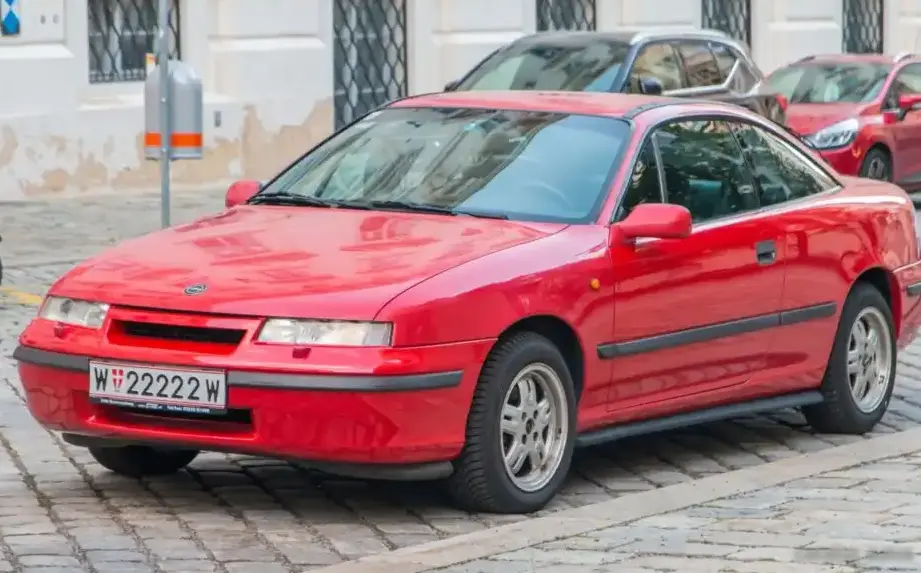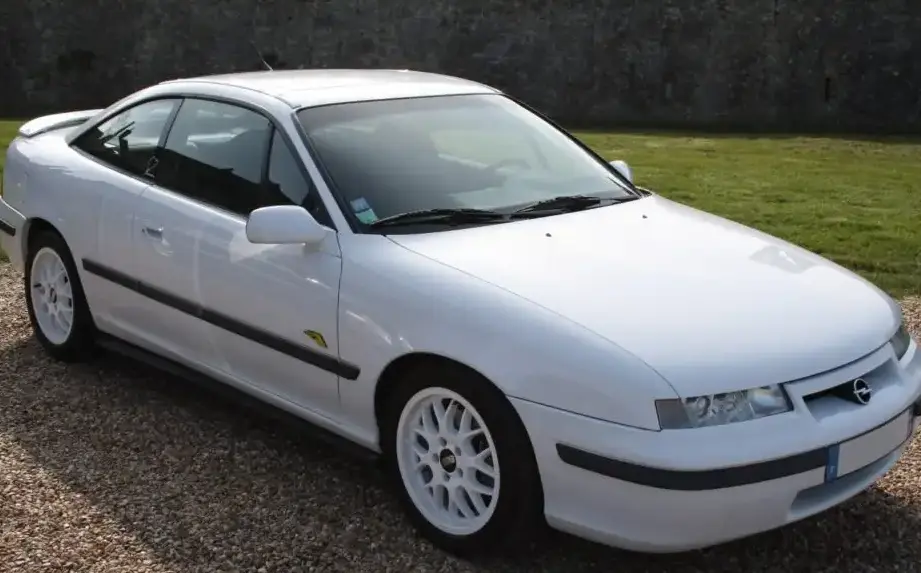
The Opel Calibra 2.0 16V Turbo 4×4, produced from 1994 to 1996, represents the pinnacle of Opel’s coupe offerings during that era. Positioned as the flagship model within the Calibra range, it combined a potent turbocharged engine with all-wheel drive, aiming to deliver a compelling blend of performance and all-weather capability. This facelifted version, introduced in 1994, featured subtle styling revisions and refinements over the original Calibra launched in 1989. The Calibra itself was built upon the GM410 platform, shared with the Vectra A, and was intended to be a more stylish and aerodynamic alternative to traditional saloons and hatchbacks, appealing to a younger, more performance-oriented demographic in Europe.
Technical Specifications
| Brand | Opel |
| Model | Calibra |
| Generation | Calibra (facelift 1994) |
| Type (Engine) | 2.0 16V Turbo (204 Hp) 4×4 |
| Start of production | 1994 |
| End of production | 1996 |
| Powertrain Architecture | Internal Combustion engine |
| Body type | Coupe |
| Seats | 4 |
| Doors | 3 |
| Fuel consumption (urban) | 11.8 l/100 km (19.9 US mpg, 23.9 UK mpg, 8.5 km/l) |
| Fuel consumption (extra urban) | 6.9 l/100 km (34.1 US mpg, 40.9 UK mpg, 14.5 km/l) |
| Fuel consumption (combined) | 9 l/100 km (26.1 US mpg, 31.4 UK mpg, 11.1 km/l) |
| Fuel Type | Petrol (Gasoline) |
| Acceleration 0 – 100 km/h | 6.8 sec |
| Acceleration 0 – 62 mph | 6.8 sec |
| Acceleration 0 – 60 mph | 6.5 sec |
| Maximum speed | 245 km/h (152.24 mph) |
| Weight-to-power ratio | 6.7 kg/Hp, 148.4 Hp/tonne |
| Weight-to-torque ratio | 4.9 kg/Nm, 203.6 Nm/tonne |
| Power | 204 Hp @ 5600 rpm |
| Power per litre | 102.1 Hp/l |
| Torque | 280 Nm @ 2400 rpm (206.52 lb.-ft. @ 2400 rpm) |
| Engine layout | Front, Transverse |
| Engine Model/Code | C20LET |
| Engine displacement | 1998 cm3 (121.93 cu. in.) |
| Number of cylinders | 4 |
| Engine configuration | Inline |
| Cylinder Bore | 86 mm (3.39 in.) |
| Piston Stroke | 86 mm (3.39 in.) |
| Compression ratio | 9:1 |
| Number of valves per cylinder | 4 |
| Fuel injection system | Multi-port manifold injection |
| Engine aspiration | Turbocharger, Intercooler |
| Valvetrain | DOHC |
| Engine oil capacity | 4.5 l (4.76 US qt | 3.96 UK qt) |
| Coolant | 7.2 l (7.61 US qt | 6.34 UK qt) |
| Kerb Weight | 1375 kg (3031.36 lbs.) |
| Max. weight | 1760 kg (3880.14 lbs.) |
| Max load | 385 kg (848.78 lbs.) |
| Trunk (boot) space – minimum | 300 l (10.59 cu. ft.) |
| Trunk (boot) space – maximum | 980 l (34.61 cu. ft.) |
| Fuel tank capacity | 63 l (16.64 US gal | 13.86 UK gal) |
| Length | 4492 mm (176.85 in.) |
| Width | 1688 mm (66.46 in.) |
| Height | 1320 mm (51.97 in.) |
| Wheelbase | 2600 mm (102.36 in.) |
| Front track | 1426 mm (56.14 in.) |
| Rear (Back) track | 1446 mm (56.93 in.) |
| Drag coefficient (Cd) | 0.26 |
| Minimum turning circle | 11.45 m (37.57 ft.) |
| Drivetrain Architecture | The Internal combustion engine (ICE) drives permanently the four wheels of the vehicle. |
| Drive wheel | All wheel drive (4×4) |
| Number of gears | 6 |
| Type of gearbox | Manual transmission |
| Front suspension | Independent type McPherson, Transverse stabilizer |
| Rear suspension | Transverse stabilizer, Trailing arm |
| Front brakes | Ventilated discs |
| Rear brakes | Disc |
| Assisting systems | ABS (Anti-lock braking system) |
| Steering type | Steering rack and pinion |
| Power steering | Hydraulic Steering |
| Tires size | 205/50 R16 |
| Wheel rims size | 6J x 16 |
Powertrain & Engine Architecture
The heart of the Calibra 2.0 16V Turbo 4×4 is the C20LET engine, a 1998cc inline-four cylinder powerplant. This engine is a derivative of the Opel/Vauxhall ‘Red Top’ family, known for its robust construction and tuning potential. The C20LET distinguishes itself through the addition of a Garrett T25 turbocharger and an intercooler, boosting power output significantly. Fuel delivery is managed by a Bosch Motronic multi-port fuel injection system, carefully calibrated to optimize performance and efficiency. The engine features a dual overhead camshaft (DOHC) valvetrain with four valves per cylinder, enhancing breathing and contributing to its high specific output. The 6-speed manual transmission, a Getrag unit, was specifically chosen to handle the engine’s substantial torque. This transmission offered close ratios, allowing the driver to keep the engine within its optimal power band.
Driving Characteristics
The Calibra 2.0 16V Turbo 4×4 delivers a noticeably more engaging driving experience than its naturally aspirated counterparts. The turbocharger provides a surge of power in the mid-range, resulting in strong acceleration. The 0-60 mph sprint takes approximately 6.5 seconds, and it can achieve a top speed of 152 mph. The all-wheel-drive system provides excellent traction, particularly on slippery surfaces, enhancing stability and confidence. However, the all-wheel-drive system does add weight, slightly diminishing the car’s agility compared to rear-wheel-drive alternatives. The 6-speed gearbox is well-matched to the engine’s characteristics, offering precise shifts and allowing the driver to exploit the engine’s powerband effectively. Compared to the base 1.8L models, the 2.0 Turbo 4×4 offers a dramatically different level of performance, appealing to drivers seeking a more spirited driving experience.
Equipment & Trim Levels
The Calibra 2.0 16V Turbo 4×4 was generally well-equipped, reflecting its position as the range-topping model. Standard features typically included power windows, central locking, power steering, and an upgraded sound system. The interior featured sport seats upholstered in a combination of cloth and leather, and a leather-wrapped steering wheel. Optional extras included a sunroof, air conditioning, and upgraded audio systems. The dashboard layout was functional and driver-focused, with clear instrumentation and logically placed controls. The Calibra’s interior, while not luxurious, was well-built and offered a comfortable environment for both driver and passengers.
Chassis & Braking
The Calibra’s chassis was designed to provide a balance between comfort and handling. The front suspension utilizes independent McPherson struts with a transverse stabilizer, while the rear suspension employs a trailing arm setup with a stabilizer bar. This configuration delivers a relatively compliant ride while maintaining good body control. The braking system consists of ventilated discs at the front and solid discs at the rear, providing adequate stopping power. An anti-lock braking system (ABS) was standard, enhancing safety and stability during hard braking. The all-wheel-drive system contributes to improved braking performance, particularly on loose surfaces.
Market Reception & Comparison
The Calibra 2.0 16V Turbo 4×4 was generally well-received by automotive critics, who praised its performance, handling, and styling. However, some reviewers noted the relatively high price compared to other coupes in its class. Fuel economy, while reasonable for a turbocharged engine, was not a strong point. Compared to the naturally aspirated Calibra models, the 2.0 Turbo 4×4 offered a significant performance upgrade, but at a higher cost and with slightly increased running expenses. Against rivals like the Ford Escort Cosworth and the Mitsubishi Galant VR-4, the Calibra offered a compelling combination of performance, practicality, and value.
Legacy
The Opel Calibra 2.0 16V Turbo 4×4 has gained a cult following among enthusiasts. The C20LET engine is known for its durability and potential for modification, making it a popular choice for tuners. While not without its quirks, the Calibra 2.0 Turbo 4×4 remains a capable and enjoyable sports coupe. Today, well-maintained examples are becoming increasingly collectible, and prices have been steadily rising. The car represents a significant chapter in Opel’s history, showcasing the brand’s engineering prowess and design flair during the 1990s. Finding parts can sometimes be a challenge, but a dedicated aftermarket support network exists to cater to Calibra owners.