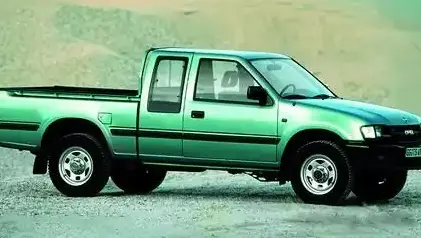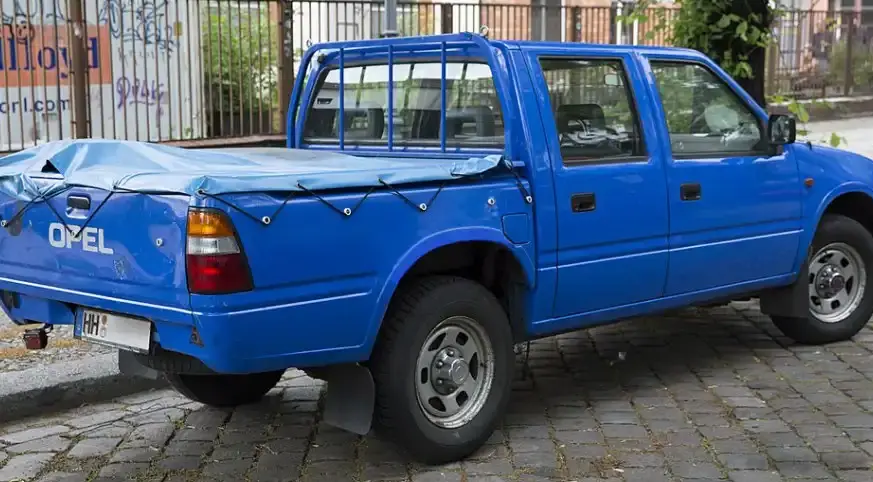
The Opel Campo Double Cab 2.3, produced from 1994 to 1995, represented a practical and affordable entry into the burgeoning double-cab pickup truck market in Europe. Positioned as a workhorse vehicle, it offered a blend of commercial utility and limited passenger comfort. The Campo, based on the Isuzu Faster platform following Opel’s collaboration with Isuzu, aimed to provide a versatile vehicle for both tradespeople and families needing occasional hauling capabilities. This 2.3-liter variant, producing 98 horsepower, was a mainstay of the Campo lineup, offering a balance between cost and performance. It was primarily sold in European markets, where smaller pickup trucks were more common than their full-size American counterparts.
Technical Specifications
| Brand | Opel |
| Model | Campo |
| Generation | Campo Double Cab |
| Type (Engine) | 2.3 (98 Hp) |
| Start of production | 1994 |
| End of production | 1995 |
| Powertrain Architecture | Internal Combustion engine |
| Body type | Pick-up |
| Seats | 5 |
| Doors | 4 |
| Fuel Type | Petrol (Gasoline) |
| Power | 98 Hp @ 5000 rpm |
| Power per litre | 43.5 Hp/l |
| Engine Model/Code | 4ZD1 |
| Engine displacement | 2255 cm3 / 137.61 cu. in. |
| Number of cylinders | 4 |
| Engine configuration | Inline |
| Cylinder Bore | 89.3 mm / 3.52 in. |
| Piston Stroke | 90 mm / 3.54 in. |
| Number of valves per cylinder | 2 |
| Engine aspiration | Naturally aspirated engine |
| Valvetrain | SOHC |
| Engine oil capacity | 3.5 l / 3.7 US qt | 3.08 UK qt |
| Coolant | 9 l / 9.51 US qt | 7.92 UK qt |
| Length | 4980 mm / 196.06 in. |
| Width | 1690 mm / 66.54 in. |
| Height | 1710 mm / 67.32 in. |
| Wheelbase | 3025 mm / 119.09 in. |
| Drivetrain Architecture | The Internal combustion engine (ICE) drives the rear wheels of the vehicle. |
| Drive wheel | Rear wheel drive |
| Number of gears and type of gearbox | 5 gears, manual transmission |
| Front suspension | Independent coil spring |
| Rear suspension | dependent spring suspension |
| Front brakes | Ventilated discs |
| Rear brakes | Drum |
Powertrain & Engine Architecture
The Opel Campo Double Cab 2.3 was powered by the 4ZD1 engine, a 2.3-liter inline-four cylinder gasoline engine. This engine, sourced from Isuzu as part of the collaborative agreement, was a relatively simple design featuring a single overhead camshaft (SOHC) valvetrain and two valves per cylinder. Fuel delivery was managed by a carburetor system, a common feature for vehicles of this era, prioritizing simplicity and cost-effectiveness over the more advanced fuel injection systems. The 4ZD1 produced 98 horsepower at 5000 rpm and approximately 138 lb-ft of torque. The engine’s design emphasized durability and low-end torque, suitable for hauling and light off-road work. The five-speed manual transmission was the only transmission option available with this engine, providing a reasonable spread of gears for both on-road cruising and tackling challenging terrain.
Driving Characteristics
The driving experience in the Campo 2.3 was utilitarian rather than sporty. The 98 horsepower engine, while adequate for everyday driving, didn’t offer brisk acceleration. The five-speed manual transmission allowed drivers to keep the engine in its optimal power band, but overtaking maneuvers required careful planning. The gear ratios were geared towards maximizing fuel economy and providing sufficient torque for hauling loads. The rear-wheel-drive configuration provided a stable platform for carrying cargo, but it also meant that traction could be limited on slippery surfaces. The suspension, while providing a reasonably comfortable ride on paved roads, was tuned for durability and load-carrying capacity, resulting in a somewhat bouncy ride when unladen. Compared to potential higher-output engines (which weren’t offered in the Campo), the 2.3-liter engine prioritized fuel efficiency and lower maintenance costs.
Equipment & Trim Levels
The Opel Campo Double Cab 2.3 was not a luxury vehicle, and its equipment levels reflected this. Standard features typically included basic instrumentation, vinyl or cloth upholstery, and a simple dashboard layout. Power steering was often included, but air conditioning and power windows were typically optional extras. The double-cab configuration provided seating for five passengers, although rear seat space was somewhat limited. Trim levels were minimal, with most Campos being equipped with a basic level of features. Optional extras included a rear window defogger, upgraded audio systems, and various accessories for the cargo bed, such as bed liners and tie-down points. The interior was designed for practicality and ease of cleaning, with durable materials used throughout.
Chassis & Braking
The Campo Double Cab featured a body-on-frame construction, typical of pickup trucks of the era. The front suspension utilized independent coil springs, providing a degree of ride comfort and handling precision. The rear suspension employed a dependent leaf spring setup, chosen for its durability and load-carrying capacity. Braking duties were handled by ventilated disc brakes at the front and drum brakes at the rear. The braking system was adequate for the vehicle’s weight and performance, but it lacked the sophistication of more modern braking systems. The steering was a recirculating ball system, providing a direct but somewhat unrefined steering feel. The chassis was designed to withstand the rigors of commercial use, with a robust frame and durable suspension components.
Market Reception & Comparison
The Opel Campo Double Cab 2.3 was generally well-received as a practical and affordable pickup truck. Critics praised its versatility and load-carrying capacity, but noted its lack of refinement and limited performance. Compared to other double-cab pickups available in Europe at the time, such as the Toyota Hilux and the Mitsubishi L200, the Campo offered a more budget-friendly option. However, it lacked the reputation for reliability and durability of its Japanese competitors. Fuel economy was reasonable for a vehicle of its type, but it was not particularly outstanding. The Campo’s main appeal lay in its affordability and its ability to serve as both a work vehicle and a family transport.
Legacy
The Opel Campo Double Cab 2.3, while not a groundbreaking vehicle, played a role in popularizing the double-cab pickup truck concept in Europe. The 4ZD1 engine proved to be reasonably reliable, although maintenance costs could be higher than those of more modern engines. Today, the Campo is a relatively rare sight on the roads, but it has gained a following among enthusiasts who appreciate its simplicity and ruggedness. Parts availability can be a challenge, but many components are still available through specialist suppliers. The Campo’s legacy lies in its practicality and affordability, offering a no-frills solution for those needing a versatile and durable pickup truck.