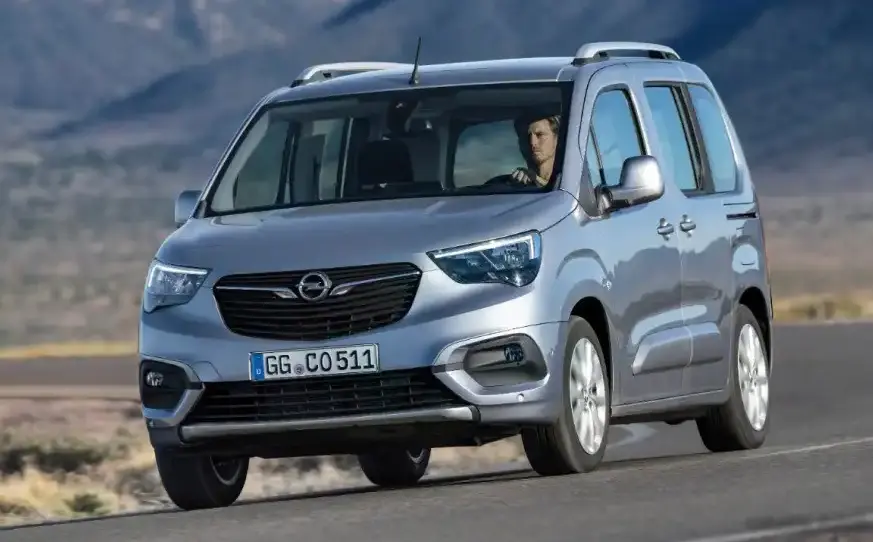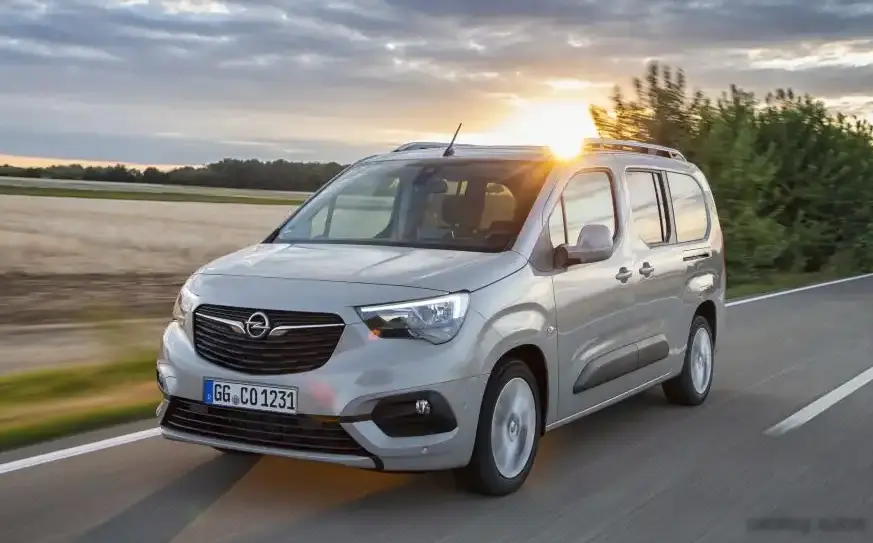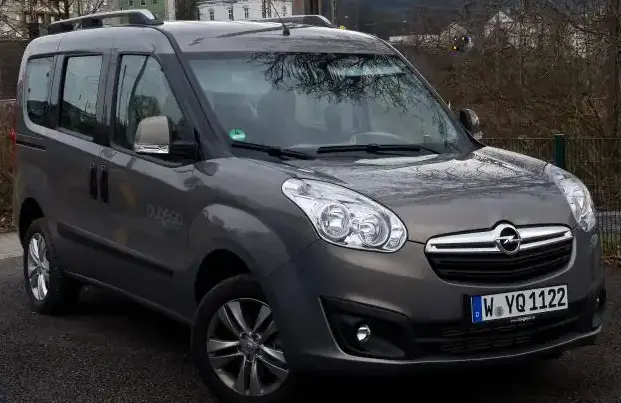
The Opel Combo Tour D 1.4 CNG (120 hp) Turbo Ecotec, produced from February 2012 to June 2017, represents a unique offering within the Combo Tour D generation. This variant combined the practicality of the Combo Tour – a compact, five-seater minivan – with a dedicated Compressed Natural Gas (CNG) powertrain, aimed at providing a more environmentally friendly and economically viable option for fleet operators and budget-conscious buyers in European markets. It occupied a niche position within the lineup, bridging the gap between the standard petrol and diesel offerings, and appealing to those seeking lower running costs and reduced emissions.
Technical Specifications
| Brand | Opel |
| Model | Combo |
| Generation | Combo Tour D |
| Type (Engine) | 1.4 CNG (120 Hp) Turbo Ecotec |
| Start of production | February, 2012 |
| End of production | June, 2017 |
| Powertrain Architecture | Internal Combustion engine |
| Body type | Minivan |
| Seats | 5 |
| Doors | 5 |
| CO2 emissions | 134 g/km |
| Fuel Type | Petrol / CNG |
| Acceleration 0 – 100 km/h | 12.3 sec |
| Acceleration 0 – 62 mph | 12.3 sec |
| Acceleration 0 – 60 mph | 11.7 sec |
| Maximum speed | 172 km/h (106.88 mph) |
| Emission standard | Euro 5 |
| Power | 120 Hp @ 5000 rpm |
| Power per litre | 87.7 Hp/l |
| Torque | 206 Nm @ 3000 rpm (151.94 lb.-ft. @ 3000 rpm) |
| Engine layout | Front, Transverse |
| Engine Model/Code | A14FC, B14FC |
| Engine displacement | 1368 cm3 (83.48 cu. in.) |
| Number of cylinders | 4 |
| Engine configuration | Inline |
| Cylinder Bore | 72 mm (2.83 in.) |
| Piston Stroke | 84 mm (3.31 in.) |
| Fuel injection system | Multi-port manifold injection |
| Engine aspiration | Turbocharger |
| Engine oil capacity | 2.7 l (2.85 US qt | 2.38 UK qt) |
| Coolant | 5.8 l (6.13 US qt | 5.1 UK qt) |
| Trunk (boot) space – maximum | 3200 l (113.01 cu. ft.) |
| Fuel tank capacity | 60 l (15.85 US gal | 13.2 UK gal) |
| Length | 4390 mm (172.83 in.) |
| Width | 1831 mm (72.09 in.) |
| Height | 1845-2100 mm (72.64 – 82.68 in.) |
| Wheelbase | 2755 mm (108.46 in.) |
| Front track | 1510 mm (59.45 in.) |
| Rear (Back) track | 1530 mm (60.24 in.) |
| Minimum turning circle | 11.2 m (36.75 ft.) |
| Drivetrain Architecture | The Internal combustion engine (ICE) drives the front wheels of the vehicle. |
| Drive wheel | Front wheel drive |
| Number of gears and type of gearbox | 6 gears, manual transmission |
| Assisting systems | ABS (Anti-lock braking system) |
| Steering type | Steering rack and pinion |
Powertrain & Engine Architecture
At the heart of the Combo Tour D 1.4 CNG lies the A14FC or B14FC engine code, a 1.4-liter inline-four cylinder gasoline engine specifically adapted for bi-fuel operation. This means it could run on either gasoline or Compressed Natural Gas (CNG), or a combination of both. The engine utilizes a turbocharger to boost power output to 120 horsepower at 5000 rpm and 206 Nm (151.94 lb-ft) of torque at 3000 rpm. The fuel injection system is a multi-port manifold injection, delivering fuel to each cylinder individually. The engine’s CNG system incorporates a high-pressure fuel tank, a pressure regulator, and a dedicated fuel injector for CNG delivery. When operating on CNG, the engine’s compression ratio is optimized for the cleaner-burning fuel. The 6-speed manual transmission was the only gearbox option available with this engine, providing a balance between fuel efficiency and drivability.
Driving Characteristics
The 1.4 CNG Turbo Ecotec, paired with the 6-speed manual, offered a driving experience geared towards practicality and economy rather than outright performance. Acceleration from 0-100 km/h (0-62 mph) took approximately 12.3 seconds, which was noticeably slower than the petrol or diesel variants. However, the turbocharger helped to mitigate some of the power deficit, providing reasonable responsiveness in everyday driving situations. The gear ratios were tuned for fuel efficiency, with taller gearing in higher gears to reduce engine speed at cruising speeds. The CNG operation resulted in a slightly different engine character, often exhibiting smoother power delivery and reduced engine noise compared to gasoline operation. The overall driving experience was comfortable and predictable, making it well-suited for urban commuting and light commercial use.
Equipment & Trim Levels
The Combo Tour D 1.4 CNG typically came with a fairly basic level of equipment, reflecting its positioning as a value-oriented vehicle. Standard features generally included power steering, ABS brakes, a driver’s airbag, and basic audio system. Interior upholstery was typically cloth, and the dashboard featured a functional, if somewhat utilitarian, design. Optional extras included air conditioning, electric windows, and a passenger airbag. Trim levels were often limited, with the CNG variant typically offered as a single, well-equipped specification. The focus was on providing a practical and affordable vehicle for those prioritizing low running costs.
Chassis & Braking
The Combo Tour D utilized a relatively simple chassis design, featuring a MacPherson strut front suspension and a twist-beam rear suspension. The braking system consisted of disc brakes on the front wheels and drum brakes on the rear wheels. Stabilizer bars were fitted to both the front and rear axles to reduce body roll during cornering. The suspension was tuned for comfort and practicality, prioritizing ride quality over sporty handling. The braking performance was adequate for the vehicle’s weight and power output, with ABS providing enhanced safety in emergency braking situations.
Market Reception & Comparison
The Opel Combo Tour D 1.4 CNG was generally well-received by critics as a practical and economical option for those seeking a low-emission vehicle. Its primary advantage was its significantly lower running costs compared to petrol or diesel alternatives, particularly in countries with favorable CNG pricing and infrastructure. However, the limited availability of CNG refueling stations and the slightly lower performance compared to other engine options were noted as drawbacks. Compared to the 1.3 CDTi diesel variant, the CNG model offered similar fuel economy but with lower emissions. Compared to the 1.4 petrol, the CNG offered lower running costs but with reduced power and acceleration. It appealed to a specific niche of buyers – fleet operators, environmentally conscious individuals, and those with access to affordable CNG fuel.
Legacy
The Opel Combo Tour D 1.4 CNG represents an interesting chapter in the development of alternative fuel vehicles. While CNG never achieved widespread adoption in many markets, the Combo Tour D CNG demonstrated the viability of the technology for light commercial vehicles. Today, used examples of the Combo Tour D 1.4 CNG are relatively rare, but they can be found at affordable prices. The engine is generally considered to be reliable, although the CNG system requires periodic maintenance to ensure proper operation. The long-term durability of the CNG components is dependent on regular servicing and the quality of the CNG fuel used. For those seeking a unique and economical vehicle, the Combo Tour D 1.4 CNG offers a compelling proposition, provided access to a CNG refueling infrastructure is available.