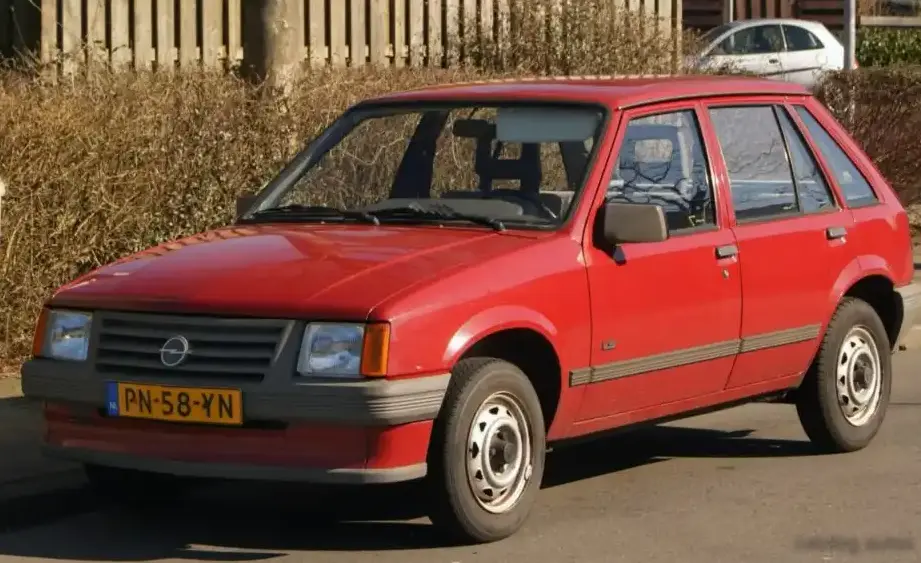
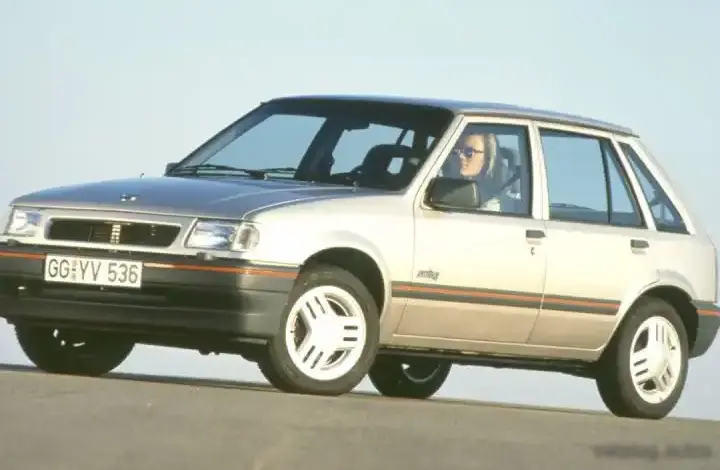
The Opel Corsa A Sedan (facelift 1987) 1.5 TD, produced from 1988 to 1990, represented a practical and economical offering within the burgeoning European small car segment. This variant, powered by a turbocharged diesel engine, was positioned as the fuel-efficient choice in the Corsa A Sedan lineup, appealing to buyers prioritizing low running costs over outright performance. It was a key part of Opel’s strategy to offer a diverse range of options within the A Corsa platform, catering to a broad spectrum of customer needs. The facelifted Corsa A, introduced in 1987, brought subtle styling updates and refinements to the original model launched in 1982.
Technical Specifications
| Brand | Opel |
| Model | Corsa |
| Generation | Corsa A Sedan (facelift 1987) |
| Type (Engine) | 1.5 TD (67 Hp) |
| Start of production | 1988 |
| End of production | 1990 |
| Powertrain Architecture | Internal Combustion engine |
| Body type | Sedan |
| Seats | 5 |
| Doors | 4 |
| Fuel consumption (urban) | 6 l/100 km (39.2 US mpg, 47.1 UK mpg, 16.7 km/l) |
| Fuel consumption (extra urban) | 4 l/100 km (58.8 US mpg, 70.6 UK mpg, 25 km/l) |
| Fuel consumption (combined) | 5.7 l/100 km (41.3 US mpg, 49.6 UK mpg, 17.5 km/l) |
| Fuel Type | Diesel |
| Acceleration 0 – 100 km/h | 13 sec |
| Acceleration 0 – 62 mph | 13 sec |
| Acceleration 0 – 60 mph | 12.4 sec |
| Maximum speed | 166 km/h (103.15 mph) |
| Weight-to-power ratio | 13 kg/Hp, 77 Hp/tonne |
| Weight-to-torque ratio | 6.6 kg/Nm, 151.7 Nm/tonne |
| Power | 67 Hp @ 4600 rpm |
| Power per litre | 45 Hp/l |
| Torque | 132 Nm @ 2600 rpm (97.36 lb.-ft. @ 2600 rpm) |
| Engine layout | Front, Transverse |
| Engine Model/Code | 15TD, T4EC1 |
| Engine displacement | 1488 cm3 (90.8 cu. in.) |
| Number of cylinders | 4 |
| Engine configuration | Inline |
| Cylinder Bore | 76 mm (2.99 in.) |
| Piston Stroke | 82 mm (3.23 in.) |
| Compression ratio | 22.5:1 |
| Number of valves per cylinder | 2 |
| Fuel injection system | Precombustion chamber injection |
| Engine aspiration | Turbocharger |
| Engine oil capacity | 3.75 l (3.96 US qt, 3.3 UK qt) |
| Coolant capacity | 6.4 l (6.76 US qt, 5.63 UK qt) |
| Kerb Weight | 870 kg (1918.02 lbs.) |
| Max. weight | 1330 kg (2932.15 lbs.) |
| Max load | 460 kg (1014.13 lbs.) |
| Trunk (boot) space – minimum | 430 l (15.19 cu. ft.) |
| Fuel tank capacity | 42 l (11.1 US gal, 9.24 UK gal) |
| Length | 3955 mm (155.71 in.) |
| Width | 1540 mm (60.63 in.) |
| Height | 1360 mm (53.54 in.) |
| Wheelbase | 2343 mm (92.24 in.) |
| Front track | 1320 mm (51.97 in.) |
| Rear (Back) track | 1307 mm (51.46 in.) |
| Ride height (ground clearance) | 140 mm (5.51 in.) |
| Drag coefficient (Cd) | 0.38 |
| Drivetrain Architecture | The Internal combustion engine (ICE) drives the front wheels of the vehicle. |
| Drive wheel | Front wheel drive |
| Number of gears and type of gearbox | 5 gears, manual transmission |
| Front suspension | Coil spring |
| Rear suspension | Coil spring |
| Front brakes | Disc |
| Rear brakes | Disc |
| Assisting systems | ABS (Anti-lock braking system) |
| Steering type | Steering rack and pinion |
| Tires size | 165/70 R13 |
| Wheel rims size | 13 |
Powertrain & Engine Architecture
The heart of the Corsa A Sedan 1.5 TD was the 15TD engine, identifiable by the code T4EC1. This 1.5-liter inline-four diesel engine featured a turbocharger, a relatively uncommon feature for diesel engines of this era, and precombustion chamber injection. This system, utilizing a small pre-chamber to ignite the fuel-air mixture before it entered the main cylinder, improved combustion efficiency and reduced engine noise compared to direct injection systems. The engine produced 67 horsepower at 4600 rpm and 132 Nm (97.36 lb-ft) of torque at 2600 rpm. The five-speed manual transmission was the only gearbox option available with this engine, optimized for maximizing fuel economy and providing reasonable acceleration. The engine’s transverse mounting contributed to a more compact engine bay and improved front-wheel-drive packaging.
Driving Characteristics
The 1.5 TD Corsa A Sedan offered a distinctly different driving experience compared to its gasoline-powered siblings. While lacking the outright punch of the 1.6-liter petrol engines, the diesel provided a usable amount of torque from low engine speeds. This made it surprisingly capable in everyday driving situations, particularly for navigating urban environments and tackling inclines. However, acceleration was modest, taking around 13 seconds to reach 62 mph. The five-speed gearbox was well-matched to the engine’s characteristics, allowing drivers to keep the engine in its optimal torque band. The turbocharger provided a noticeable boost in power, but turbo lag was present, requiring drivers to anticipate acceleration needs. Compared to the more sporty gasoline versions, the 1.5 TD prioritized fuel efficiency and practicality over dynamic performance.
Equipment & Trim Levels
The 1.5 TD variant of the Corsa A Sedan typically came with a fairly basic level of equipment, reflecting its position as the entry-level diesel option. Standard features generally included cloth upholstery, a basic instrument cluster, and manual windows and door locks. Power steering was often an optional extra. The interior design was functional and durable, prioritizing practicality over luxury. Optional extras could include a radio, upgraded seat fabrics, and central locking. The trim level was generally consistent across the 1.5 TD models, with limited opportunities for customization.
Chassis & Braking
The Corsa A Sedan utilized a relatively simple chassis design, featuring coil spring suspension at both the front and rear. The front suspension employed MacPherson struts, while the rear utilized a twist beam setup. This configuration provided a comfortable ride quality, although handling was not particularly sharp. Braking duties were handled by disc brakes on all four wheels, a notable feature for a car in this class. An Anti-lock Braking System (ABS) was available as an option, enhancing safety and control during emergency braking situations. The relatively lightweight construction of the Corsa A Sedan contributed to its nimble handling characteristics.
Market Reception & Comparison
The Opel Corsa A Sedan 1.5 TD was well-received in European markets as a fuel-efficient and affordable small car. Critics praised its low running costs and practicality, but noted its modest performance. Compared to the gasoline-powered Corsas, the 1.5 TD offered significantly better fuel economy, making it an attractive option for high-mileage drivers. However, the gasoline engines provided more responsive acceleration and a more engaging driving experience. The 1.5 TD competed with other small diesel cars of the era, such as the Peugeot 205 Diesel and the Renault 5 Diesel, offering a comparable level of fuel efficiency and practicality.
Legacy
The 1.5 TD engine proved to be a durable and reliable unit, capable of covering high mileages with proper maintenance. Today, well-maintained examples of the Corsa A Sedan 1.5 TD are becoming increasingly sought after by classic car enthusiasts and collectors. While not a performance icon, this variant represents a significant chapter in Opel’s history, demonstrating the brand’s commitment to providing affordable and economical transportation. The engine’s simplicity and robust construction contribute to its continued reliability, making it a viable option for those seeking a classic diesel car.