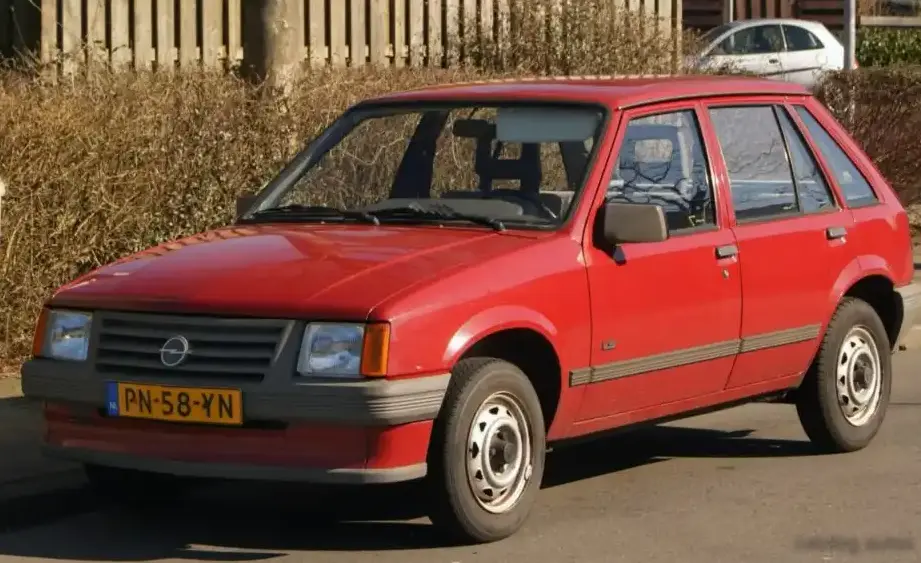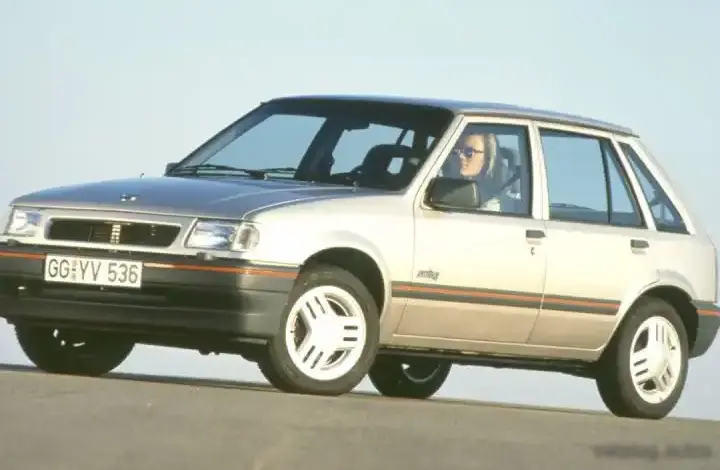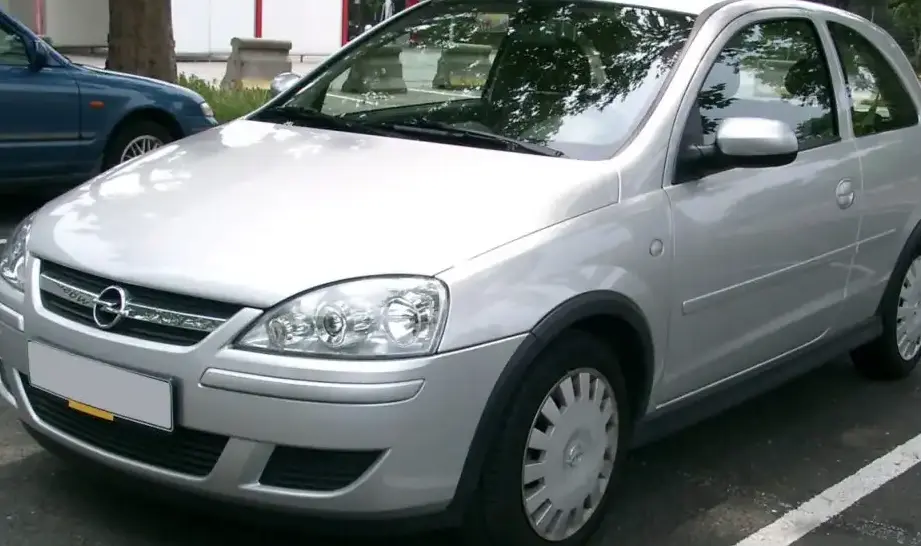
The Opel Corsa C (facelift, introduced in 2003) 1.7 CDTI, producing 100 horsepower, represented a significant step in offering diesel efficiency within the popular subcompact Corsa range. Produced from July 2003 to June 2006, this variant aimed to bridge the gap between the entry-level petrol models and the more expensive, higher-performance trims. It was primarily marketed in Europe, where diesel engines held a substantial market share, offering a compelling blend of fuel economy and acceptable performance for everyday driving. This model sat within the Corsa C facelift range, which itself was a refresh of the original Corsa C (launched in 1997), incorporating styling updates and mechanical improvements.
Technical Specifications
| Brand | Opel |
| Model | Corsa |
| Generation | Corsa C (facelift 2003) |
| Type (Engine) | 1.7 CDTI (100 Hp) |
| Start of production | July, 2003 |
| End of production | June, 2006 |
| Powertrain Architecture | Internal Combustion engine |
| Body type | Hatchback |
| Seats | 5 |
| Doors | 3-5 |
| Fuel consumption (urban) | 6.4 l/100 km (36.8 US mpg, 44.1 UK mpg, 15.6 km/l) |
| Fuel consumption (extra urban) | 3.9 l/100 km (60.3 US mpg, 72.4 UK mpg, 25.6 km/l) |
| Fuel consumption (combined) | 4.8 l/100 km (49 US mpg, 58.9 UK mpg, 20.8 km/l) |
| CO2 emissions | 130 g/km |
| Fuel Type | Diesel |
| Acceleration 0 – 100 km/h | 11.5 sec |
| Acceleration 0 – 62 mph | 11.5 sec |
| Acceleration 0 – 60 mph | 10.9 sec |
| Maximum speed | 188 km/h (116.82 mph) |
| Weight-to-power ratio | 10.8 kg/Hp, 92.6 Hp/tonne |
| Weight-to-torque ratio | 4.5 kg/Nm, 222.2 Nm/tonne |
| Power | 100 Hp @ 4400 rpm |
| Power per litre | 59.3 Hp/l |
| Torque | 240 Nm @ 2300 rpm (177.01 lb.-ft. @ 2300 rpm) |
| Engine layout | Front, Transverse |
| Engine Model/Code | Z17DTH |
| Engine displacement | 1686 cm3 (102.89 cu. in.) |
| Number of cylinders | 4 |
| Engine configuration | Inline |
| Cylinder Bore | 79 mm (3.11 in.) |
| Piston Stroke | 86 mm (3.39 in.) |
| Compression ratio | 18.4:1 |
| Number of valves per cylinder | 4 |
| Fuel injection system | Diesel Commonrail |
| Engine aspiration | Turbocharger, Intercooler |
| Valvetrain | DOHC |
| Engine oil capacity | 4.5 l (4.76 US qt | 3.96 UK qt) |
| Coolant | 7.1 l (7.5 US qt | 6.25 UK qt) |
| Kerb Weight | 1080 kg (2380.99 lbs.) |
| Max. weight | 1580 kg (3483.3 lbs.) |
| Max load | 500 kg (1102.31 lbs.) |
| Trunk (boot) space – minimum | 260 l (9.18 cu. ft.) |
| Trunk (boot) space – maximum | 1060 l (37.43 cu. ft.) |
| Fuel tank capacity | 44 l (11.62 US gal | 9.68 UK gal) |
| Length | 3839 mm (151.14 in.) |
| Width | 1646 mm (64.8 in.) |
| Height | 1440 mm (56.69 in.) |
| Wheelbase | 2491 mm (98.07 in.) |
| Front track | 1429 mm (56.26 in.) |
| Rear (Back) track | 1420 mm (55.91 in.) |
| Ride height (ground clearance) | 140 mm (5.51 in.) |
| Drag coefficient (Cd) | 0.32 |
| Drivetrain Architecture | The Internal combustion engine (ICE) drives the front wheels of the vehicle. |
| Drive wheel | Front wheel drive |
| Number of gears and type of gearbox | 5 gears, manual transmission |
| Front suspension | Coil spring |
| Rear suspension | Coil spring |
| Front brakes | Ventilated discs |
| Rear brakes | Drum |
| Steering type | Steering rack and pinion |
| Tires size | 175/65 R14 |
| Wheel rims size | 5.5J X 14 |
Powertrain & Engine Architecture
The heart of the Corsa C 1.7 CDTI is the Z17DTH engine, a 1.7-liter inline-four cylinder diesel. This engine is a member of Opel/Fiat’s family of common rail direct injection diesels. The Z17DTH utilizes a turbocharger with an intercooler to boost power output to 100 horsepower and 240 Nm (177 lb-ft) of torque. The common rail diesel injection system, supplied by Bosch, allowed for precise fuel delivery and optimized combustion, contributing to both performance and fuel efficiency. The engine features a double overhead camshaft (DOHC) valvetrain with four valves per cylinder, enhancing breathing and overall engine efficiency. The 5-speed manual transmission was the standard offering, chosen for its balance of cost and efficiency. The engine’s design prioritized low-end torque, making it well-suited for everyday driving conditions.
Driving Characteristics
The 1.7 CDTI with the 5-speed manual transmission offered a noticeable step up in performance compared to the smaller displacement petrol engines available in the Corsa C range. While not a sports car, the 100 hp and 240 Nm of torque provided adequate acceleration for merging onto highways and overtaking slower traffic. The turbocharger did introduce a degree of turbo lag, meaning there was a slight delay between pressing the accelerator and feeling the full power delivery. However, once the turbo spooled up, the engine provided a strong and usable surge of power. The gear ratios were well-chosen for maximizing fuel economy and providing reasonable acceleration in each gear. Compared to the more powerful (and expensive) Corsa GSi, the 1.7 CDTI prioritized fuel efficiency and usability over outright performance.
Equipment & Trim Levels
The 1.7 CDTI typically came equipped with a reasonable level of standard equipment. This generally included power steering, central locking, electric front windows, and an adjustable steering column. Interior upholstery was typically cloth, with a functional and durable design. Optional extras included air conditioning, alloy wheels, a CD player, and upgraded interior trim. Trim levels varied slightly depending on the market, but the 1.7 CDTI generally occupied a mid-range position in the Corsa C lineup, offering a good balance of features and affordability.
Chassis & Braking
The Corsa C 1.7 CDTI utilized a relatively simple chassis design. Front suspension consisted of coil springs and MacPherson struts, while the rear suspension employed a torsion beam setup. This configuration provided a comfortable ride quality, although it wasn’t particularly sporty. Braking was handled by ventilated discs on the front wheels and drum brakes on the rear. The braking system was adequate for the car’s weight and performance, but it lacked the stopping power of more advanced braking systems found on higher-performance vehicles. Stabilizer bars were fitted to both the front and rear axles to reduce body roll during cornering.
Market Reception & Comparison
The Opel Corsa C 1.7 CDTI was generally well-received by automotive critics. It was praised for its fuel efficiency, strong low-end torque, and comfortable ride. However, some critics noted the presence of turbo lag and the relatively basic interior. Compared to other diesel-powered subcompacts of the time, such as the Peugeot 206 HDi and the Volkswagen Polo TDI, the Corsa C 1.7 CDTI offered a competitive combination of performance, economy, and price. The Corsa’s diesel variants were often seen as a more practical and economical choice than the petrol versions, particularly for drivers who covered high mileage.
Legacy
The Z17DTH engine, while generally reliable, is known to have some potential issues, including occasional problems with the turbocharger and the fuel injectors. However, with regular maintenance and proper care, these engines can provide many years of reliable service. Today, the Corsa C 1.7 CDTI can be found on the used car market at very affordable prices. It remains a popular choice for budget-conscious buyers looking for an economical and practical small car. Its fuel efficiency and relatively low running costs continue to make it an attractive option, even after two decades on the road. The Corsa C 1.7 CDTI represents a significant step in the evolution of the Corsa, bringing diesel efficiency and practicality to a wider audience.