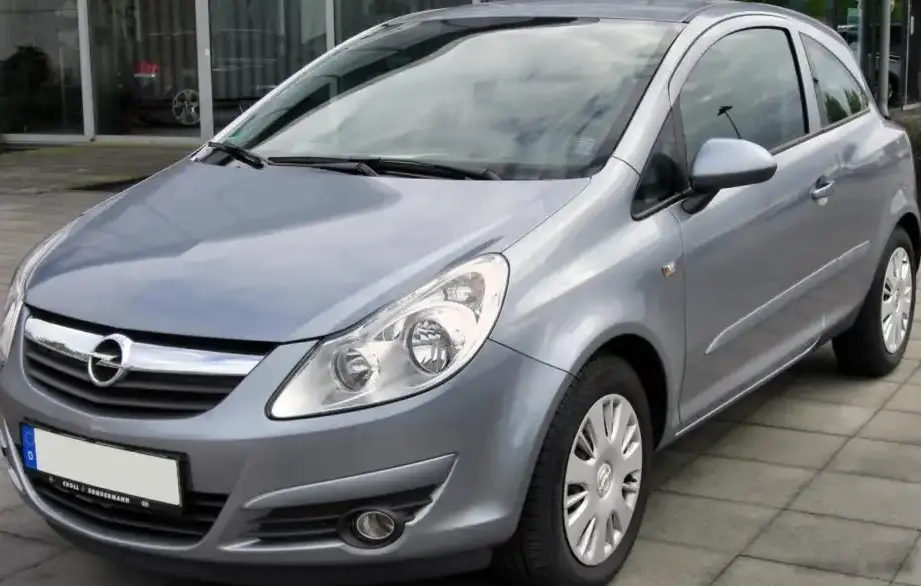
The Opel Corsa D 3-door 1.2 LPG (80/78 hp) ecoFLEX was a variant of the fourth-generation Corsa (D) produced between July 2009 and November 2010. Positioned as an economy-focused option within the Corsa D range, it combined a small-displacement petrol engine with a dedicated Liquefied Petroleum Gas (LPG) conversion, aiming to reduce running costs and emissions. This model was primarily sold in European markets, where LPG infrastructure was more established, and represented a response to growing fuel price concerns and environmental regulations.
Technical Specifications
| Brand | Opel |
| Model | Corsa |
| Generation | Corsa D 3-door |
| Type (Engine) | 1.2 LPG (80/78 Hp) ecoFLEX |
| Start of production | July, 2009 |
| End of production | November, 2010 |
| Powertrain Architecture | Internal Combustion engine |
| Body type | Hatchback |
| Seats | 5 |
| Doors | 3 |
| Fuel consumption (economy) – combined | 6.1 l/100 km (38.6 US mpg, 46.3 UK mpg, 16.4 km/l) |
| Fuel consumption (economy) – combined (LPG) | 7.8 l/100 km |
| CO2 emissions | 146 g/km |
| CO2 emissions (LPG) | 127 g/km |
| Fuel Type | Petrol / LPG |
| Acceleration 0 – 100 km/h | 13.9 sec |
| Acceleration 0 – 62 mph | 13.9 sec |
| Acceleration 0 – 100 km/h (LPG) | 14.1 sec |
| Acceleration 0 – 60 mph (Calculated) | 13.2 sec |
| Maximum speed | 168 km/h (104.39 mph) |
| Maximum speed (LPG) | 166 km/h |
| Emission standard | Euro 4 |
| Weight-to-power ratio | 14.1 kg/Hp, 70.8 Hp/tonne |
| Weight-to-torque ratio | 9.8 kg/Nm, 101.8 Nm/tonne |
| Power | 80 Hp @ 5600 rpm |
| Power per litre | 65.1 Hp/l |
| Power (LPG) | 78 Hp @ 5600 rpm |
| Power per litre (LPG) | 63.5 Hp/l |
| Torque | 115 Nm @ 4000 rpm (84.82 lb.-ft. @ 4000 rpm) |
| Torque (LPG) | 105 Nm @ 4000 rpm |
| Engine layout | Front, Transverse |
| Engine Model/Code | Z12XEP |
| Engine displacement | 1229 cm3 (75 cu. in.) |
| Number of cylinders | 4 |
| Engine configuration | Inline |
| Compression ratio | 10.5:1 |
| Number of valves per cylinder | 4 |
| Fuel injection system | Multi-port manifold injection |
| Engine oil capacity | 3.5 l (3.7 US qt | 3.08 UK qt) |
| Kerb Weight | 1130 kg (2491.22 lbs.) |
| Max. weight | 1555 kg (3428.19 lbs.) |
| Max load | 425 kg (936.96 lbs.) |
| Length | 3999 mm (157.44 in.) |
| Width | 1737 mm (68.39 in.) |
| Width including mirrors | 1944 mm (76.54 in.) |
| Height | 1488 mm (58.58 in.) |
| Wheelbase | 2511 mm (98.86 in.) |
| Front track | 1485 mm (58.46 in.) |
| Rear track | 1478 mm (58.19 in.) |
| Ride height (ground clearance) | 140 mm (5.51 in.) |
| Drag coefficient (Cd) | 0.32 |
| Minimum turning circle | 10.4 m (34.12 ft.) |
| Drivetrain Architecture | ICE to Front Wheels |
| Drive wheel | Front wheel drive |
| Number of gears | 5 gears, manual transmission |
| Front brakes | Ventilated discs |
| Rear brakes | Drum |
| Assisting systems | ABS (Anti-lock braking system) |
| Steering type | Steering rack and pinion |
| Tires size | 185/65 R15 |
| Wheel rims size | 15 |
INTRODUCTION
The Opel Corsa D 1.2 LPG ecoFLEX represented a niche offering within the Corsa D lineup, launched in 2009 and continuing through 2010. Built on the GM’s 1HX0/A3 platform, the Corsa D aimed to provide affordable and practical transportation. The ecoFLEX variant specifically targeted environmentally conscious buyers and those seeking to minimize fuel expenses, particularly in countries with favorable LPG pricing and infrastructure. It was a 3-door hatchback, offering a more sporty aesthetic compared to the 5-door version, and positioned as a budget-friendly option.
Powertrain & Engine Architecture
At the heart of the Corsa D 1.2 LPG ecoFLEX was the Z12XEP engine, a 1.2-liter (1229 cc) inline-four cylinder petrol engine. This engine featured multi-point fuel injection and a compression ratio of 10.5:1. The key difference, of course, was the factory-installed LPG conversion. This system allowed the engine to run on either petrol or LPG, switching automatically between the two fuels. When running on LPG, power output was slightly reduced to 78 hp, compared to the 80 hp available on petrol. The engine utilized a conventional valvetrain with four valves per cylinder. The transmission was a five-speed manual gearbox, chosen for its efficiency and cost-effectiveness. The LPG system itself was a dedicated setup, not a simple vaporized gas system, ensuring optimized combustion and reduced emissions.
Driving Characteristics
The 1.2 LPG ecoFLEX offered modest performance. With 80 hp (or 78 hp on LPG), acceleration from 0-100 km/h took around 13.9 seconds. The car’s lightweight construction (1130 kg) helped to mitigate the effects of the relatively low power output. The five-speed manual transmission was geared for economy, with taller ratios prioritizing fuel efficiency over rapid acceleration. Compared to other Corsa D variants, such as the 1.4-liter or 1.7 CDTi diesel, the 1.2 LPG felt noticeably slower, particularly when fully loaded or tackling inclines. However, the LPG system provided a distinct driving experience, with a slightly different engine note and a smoother power delivery in some instances. The LPG system also resulted in a slight reduction in available horsepower.
Equipment & Trim Levels
The Corsa D 1.2 LPG ecoFLEX was typically offered with a relatively basic level of equipment, reflecting its position as an entry-level model. Standard features generally included power steering, central locking, electric front windows, and an ABS anti-lock braking system. Interior upholstery was typically cloth, and the dashboard featured a simple, functional design. Optional extras could include air conditioning, alloy wheels, and a CD/radio system. The ecoFLEX trim also included specific badges to denote its alternative fuel capability. The focus was on providing essential features at an affordable price point, rather than luxury or advanced technology.
Chassis & Braking
The Corsa D 1.2 LPG ecoFLEX utilized a MacPherson strut front suspension and a torsion beam rear suspension. The braking system consisted of ventilated discs on the front wheels and drum brakes on the rear. This configuration was typical for vehicles in this weight class and price range. The suspension was tuned for comfort and ride quality, rather than sporty handling. The steering was a rack and pinion system, providing adequate precision and feedback. The relatively light weight of the vehicle helped to compensate for the less powerful braking system.
Market Reception & Comparison
The Corsa D 1.2 LPG ecoFLEX was generally well-received by critics as a practical and economical option. Its primary appeal lay in its reduced running costs, thanks to the lower price of LPG compared to petrol or diesel in many European markets. Compared to the petrol-only 1.2-liter Corsa D, the LPG variant offered similar performance but with lower fuel bills. However, it was slower and less refined than higher-specification Corsa D models, such as the 1.4-liter or 1.7 CDTi. The LPG version also required access to LPG refueling stations, which were not as widespread as petrol stations. Reliability was generally good, although the LPG system itself required periodic maintenance and inspection.
Legacy
The Opel Corsa D 1.2 LPG ecoFLEX represents a period of increasing interest in alternative fuels and reduced emissions. While LPG never achieved widespread adoption in many markets, the Corsa D ecoFLEX demonstrated Opel’s commitment to offering environmentally friendly options. Today, these vehicles can be found on the used car market, often appealing to buyers seeking a low-cost and fuel-efficient runabout. The Z12XEP engine is known for its relative reliability, although the LPG system requires regular checks to ensure proper operation. The Corsa D 1.2 LPG ecoFLEX remains a testament to a time when LPG was considered a viable alternative to conventional fuels.