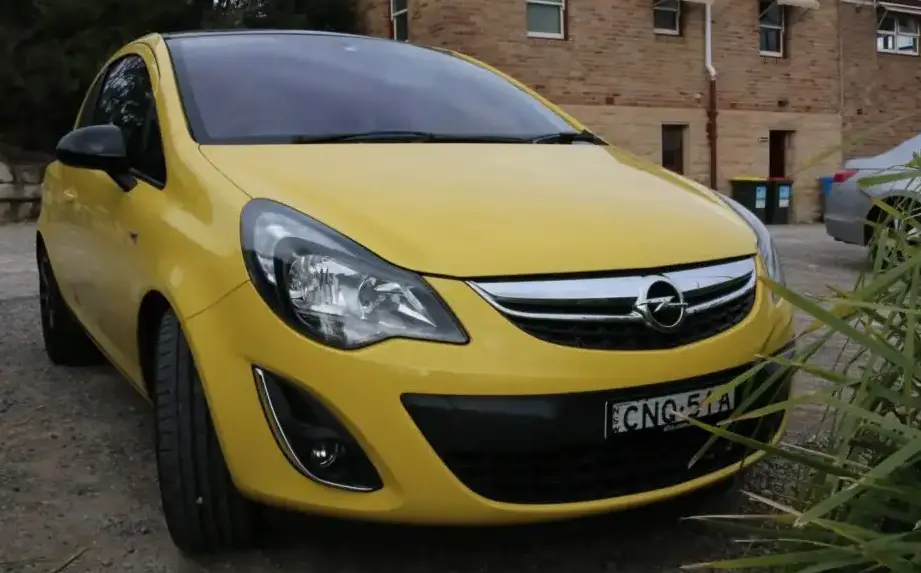
The Opel Corsa D (Facelift, produced from July 2011 to August 2014) 3-door 1.2 LPG variant represented an economical entry point into the Corsa D range, particularly in European markets. Positioned as a fuel-conscious option, it combined a small-displacement petrol engine with the flexibility of LPG (Liquefied Petroleum Gas) conversion. This model aimed at buyers seeking low running costs and practicality in a compact hatchback format. It sat below the more powerful 1.4L petrol and 1.3L diesel variants in the lineup, offering a more affordable purchase price and lower fuel bills, albeit with reduced performance.
Technical Specifications
| Brand | Opel |
| Model | Corsa |
| Generation | Corsa D (Facelift 2011) 3-door |
| Type (Engine) | 1.2 LPG (85/83 Hp) |
| Start of production | July, 2011 |
| End of production | August, 2014 |
| Powertrain Architecture | Internal Combustion engine |
| Body type | Hatchback |
| Seats | 5 |
| Doors | 3 |
| Fuel consumption (economy) – combined | 5.6 l/100 km (42 US mpg, 50.4 UK mpg, 17.9 km/l) |
| Fuel consumption (economy) – combined (LPG) | 7.1 l/100 km |
| CO2 emissions | 132 g/km |
| CO2 emissions (LPG) | 115 g/km |
| Fuel Type | Petrol / LPG |
| Acceleration 0 – 100 km/h | 13.9 sec |
| Acceleration 0 – 62 mph | 13.9 sec |
| Acceleration 0 – 100 km/h (LPG) | 14.1 sec |
| Acceleration 0 – 60 mph (Calculated) | 13.2 sec |
| Maximum speed | 168 km/h (104.39 mph) |
| Maximum speed (LPG) | 155 km/h |
| Emission standard | Euro 5 |
| Weight-to-power ratio | 13.3 kg/Hp, 75.2 Hp/tonne |
| Weight-to-torque ratio | 9.8 kg/Nm, 101.8 Nm/tonne |
| Power | 85 Hp @ 5600 rpm |
| Power per litre | 69.2 Hp/l |
| Power (LPG) | 83 Hp @ 5600 rpm |
| Power per litre (LPG) | 67.5 Hp/l |
| Torque | 115 Nm @ 4000 rpm (84.82 lb.-ft. @ 4000 rpm) |
| Torque (LPG) | 110 Nm @ 4000 rpm |
| Engine layout | Front, Transverse |
| Engine Model/Code | A12XER |
| Engine displacement | 1229 cm3 (75 cu. in.) |
| Number of cylinders | 4 |
| Engine configuration | Inline |
| Compression ratio | 10.5:1 |
| Number of valves per cylinder | 4 |
| Fuel injection system | Multi-port manifold injection |
| Engine oil capacity | 4 l (4.23 US qt | 3.52 UK qt) |
| Coolant capacity | 6 l (6.34 US qt | 5.28 UK qt) |
| Kerb Weight | 1130 kg (2491.22 lbs) |
| Max. weight | 1555 kg (3428.19 lbs) |
| Max load | 425 kg (936.96 lbs) |
| Length | 3999 mm (157.44 in) |
| Width | 1737 mm (68.39 in) |
| Width including mirrors | 1944 mm (76.54 in) |
| Height | 1488 mm (58.58 in) |
| Wheelbase | 2511 mm (98.86 in) |
| Front track | 1485 mm (58.46 in) |
| Rear track | 1478 mm (58.19 in) |
| Ride height (ground clearance) | 140 mm (5.51 in) |
| Drag coefficient (Cd) | 0.32 |
| Minimum turning circle | 10.4 m (34.12 ft) |
| Drivetrain Architecture | Front wheel drive |
| Number of gears and type of gearbox | 5 gears, manual transmission |
| Front brakes | Ventilated discs |
| Rear brakes | Drum |
| Assisting systems | ABS (Anti-lock braking system) |
| Steering type | Steering rack and pinion |
| Tires size | 185/65 R15 |
| Wheel rims size | 15 |
INTRODUCTION
The Corsa D, launched in 2006 and facelifted in 2011, was Opel’s contender in the highly competitive European subcompact (B-segment) market. The 3-door version, like this 1.2 LPG model, catered to buyers prioritizing style and affordability. The facelift brought revised styling, improved safety features, and updated engine options. The 1.2 LPG variant was specifically designed to appeal to cost-conscious drivers, offering a dual-fuel capability that allowed operation on either petrol or significantly cheaper LPG. This model was primarily sold in Europe, where LPG infrastructure was more developed than in North America.
Powertrain & Engine Architecture
The heart of this Corsa variant is the A12XER engine, a 1.2-liter (1229cc) inline-four cylinder petrol engine. This engine utilizes multi-point fuel injection and features a single overhead camshaft (SOHC) valvetrain with four valves per cylinder. The LPG conversion is typically a factory-fitted system, integrating seamlessly with the engine management system to switch between fuels. The engine produces 85 horsepower at 5600 rpm and 115 Nm (84.82 lb-ft) of torque at 4000 rpm when running on petrol, with a slight reduction in output when operating on LPG (83 hp). The engine is transversely mounted, driving the front wheels. The transmission is a five-speed manual gearbox, chosen for its simplicity and efficiency. While an automatic transmission was available on other Corsa D models, it was not offered with the 1.2 LPG engine.
Driving Characteristics
The 1.2 LPG Corsa D is not a performance-oriented vehicle. Acceleration from 0-60 mph takes around 13.2 seconds, and its top speed is approximately 104 mph. The engine feels relatively underpowered, especially when fully loaded or tackling inclines. The five-speed gearbox is well-matched to the engine’s characteristics, but frequent downshifts are often required to maintain momentum. Compared to the 1.4L petrol version, the 1.2 LPG offers noticeably less power and acceleration. However, it provides a smoother and more economical driving experience, particularly in urban environments. The LPG system delivers a slightly different power delivery, often feeling a bit less responsive than petrol, but the cost savings can be substantial.
Equipment & Trim Levels
The 1.2 LPG variant typically came with a basic level of equipment. Standard features generally included power steering, central locking, electric front windows, and an ABS anti-lock braking system. Interior upholstery was typically cloth, and the dashboard featured a simple, functional design. Optional extras included air conditioning, alloy wheels, a CD/radio system, and front fog lights. Trim levels varied slightly depending on the market, but the 1.2 LPG was generally positioned as the entry-level model, focusing on affordability and practicality.
Chassis & Braking
The Corsa D utilizes a MacPherson strut front suspension and a torsion beam rear suspension. The suspension setup is tuned for comfort rather than sporty handling. The front brakes are ventilated discs, providing adequate stopping power, while the rear brakes are drums, a cost-saving measure common in this segment. The steering is a rack and pinion system, offering reasonable precision. The 1.2 LPG model, being one of the lighter variants, benefits from a slightly more agile feel compared to the heavier-engined versions.
Market Reception & Comparison
The 1.2 LPG Corsa D was well-received by buyers seeking an economical and practical hatchback. Critics praised its low running costs and fuel efficiency, particularly when utilizing LPG. However, the engine’s lack of power was a common criticism. Compared to the 1.4L petrol version, the 1.2 LPG offered significantly lower performance but a substantial reduction in fuel expenses. The 1.3L diesel variant provided better fuel economy and more torque, but at a higher purchase price. The LPG model found its niche among drivers who covered high mileages and had access to affordable LPG fuel.
Legacy
The A12XER engine, while not known for being particularly robust, generally proves reliable with regular maintenance. The LPG conversion system, if properly installed and maintained, can add years of service. Today, used examples of the 1.2 LPG Corsa D are relatively affordable and represent a budget-friendly option for those seeking a small, economical hatchback. However, potential buyers should be aware of the need for regular LPG system checks and maintenance to ensure optimal performance and safety. The availability of LPG refueling stations is also a consideration, as infrastructure varies significantly by region.