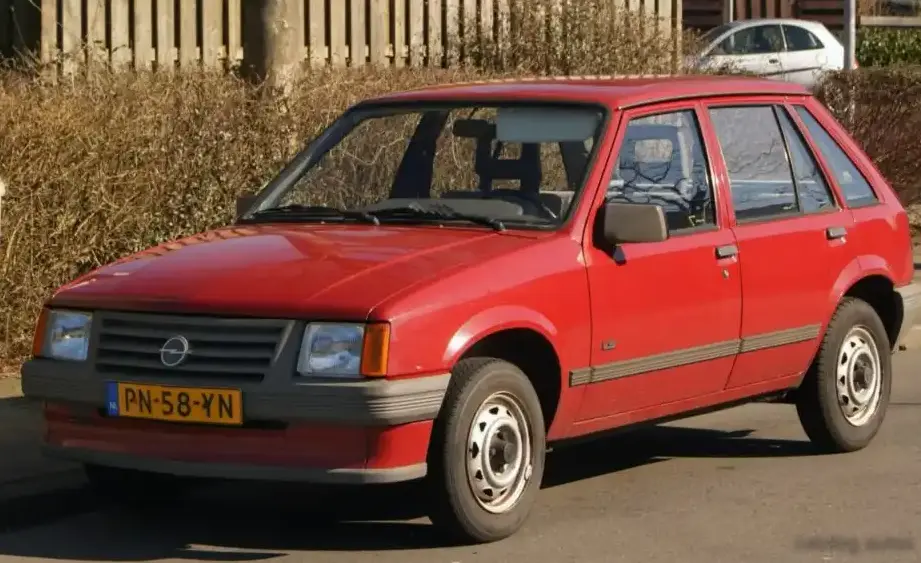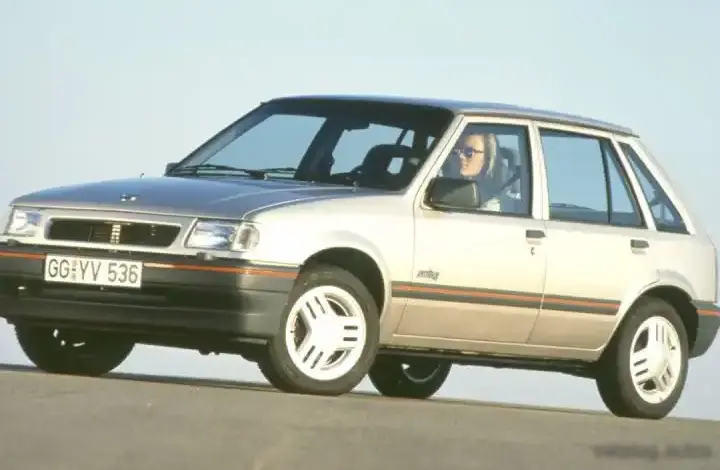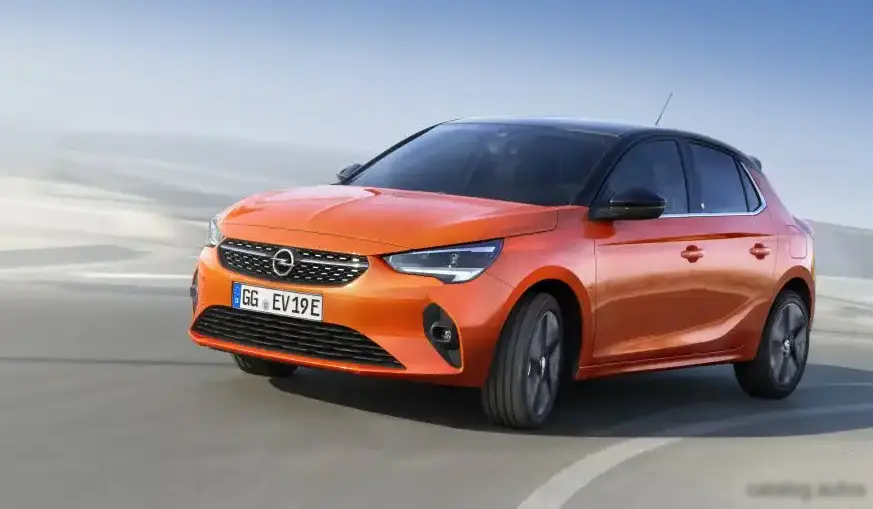
The Opel Corsa F 1.5 Diesel (102 hp) was a front-wheel-drive hatchback produced from July 2019 to June 2023. It represented a key entry point into the sixth generation (F) Corsa lineup, positioned as a fuel-efficient and practical option for European buyers. Built on the Common Module Platform (CMP) shared with Peugeot and Citroën, the Corsa F marked a significant departure from its predecessors, offering improved technology and a lighter overall construction. This particular diesel variant aimed to balance affordability with reasonable performance and low running costs, appealing to drivers prioritizing economy.
Technical Specifications
| Brand | Opel |
| Model | Corsa |
| Generation | Corsa F |
| Type (Engine) | 1.5 Diesel (102 Hp) |
| Start of production | July, 2019 |
| End of production | June, 2023 |
| Powertrain Architecture | Internal Combustion engine |
| Body type | Hatchback |
| Seats | 5 |
| Doors | 5 |
| Fuel consumption (urban) | 3.7-3.8 l/100 km (63.6 – 61.9 US mpg) |
| Fuel consumption (extra urban) | 2.9-3.0 l/100 km (81.1 – 78.4 US mpg) |
| Fuel consumption (combined) | 3.2-3.3 l/100 km (73.5 – 71.3 US mpg) |
| CO2 emissions | 85-87 g/km |
| Fuel Type | Diesel |
| Acceleration 0 – 100 km/h | 10.2 sec |
| Acceleration 0 – 62 mph | 10.2 sec |
| Acceleration 0 – 60 mph | 9.7 sec |
| Maximum speed | 188 km/h (116.82 mph) |
| Emission standard | Euro 6d-Temp |
| Weight-to-power ratio | 10.7 kg/Hp |
| Weight-to-torque ratio | 4.4 kg/Nm |
| Power | 102 Hp @ 3500 rpm |
| Torque | 250 Nm @ 1750 rpm (184.39 lb.-ft. @ 1750 rpm) |
| Engine layout | Front, Transverse |
| Engine Model/Code | D15DT, F15DT |
| Engine displacement | 1499 cm3 (91.47 cu. in.) |
| Number of cylinders | 4 |
| Engine configuration | Inline |
| Compression ratio | 16.5:1 |
| Fuel injection system | Diesel Commonrail |
| Engine aspiration | Turbocharger, Intercooler |
| Engine oil capacity | 4 l (4.23 US qt | 3.52 UK qt) |
| Kerb Weight | 1090 kg (2403.04 lbs.) |
| Max. weight | 1660 kg (3659.67 lbs.) |
| Max load | 570 kg (1256.63 lbs.) |
| Trunk (boot) space – minimum | 309 l (10.91 cu. ft.) |
| Fuel tank capacity | 41 l (10.83 US gal | 9.02 UK gal) |
| AdBlue tank | 15 l (3.96 US gal | 3.3 UK gal) |
| Permitted trailer load with brakes (12%) | 1200 kg (2645.55 lbs.) |
| Permitted trailer load without brakes | 580 kg (1278.68 lbs.) |
| Length | 4060 mm (159.84 in.) |
| Width with mirrors folded | 1765 mm (69.49 in.) |
| Width including mirrors | 1960 mm (77.17 in.) |
| Height | 1435 mm (56.5 in.) |
| Wheelbase | 2538 mm (99.92 in.) |
| Front track | 1501 mm (59.09 in.) |
| Rear (Back) track | 1500 mm (59.06 in.) |
| Drivetrain Architecture | Front wheel drive |
| Number of gears and type of gearbox | 6 gears, manual transmission |
| Assisting systems | ABS (Anti-lock braking system) |
| Tires size | 185/65 R15; 195/55 R16 |
| Wheel rims size | 6J x 15; 6.5J x 16 |
Powertrain & Engine Architecture
The Corsa F 1.5 Diesel utilized the D15DT or F15DT engine code, a 1.5-liter inline-four cylinder diesel engine. This engine was part of Opel’s (and subsequently Stellantis’) modular engine family. It featured a turbocharger with an intercooler to boost power and efficiency. The engine employed a common-rail direct fuel injection system, delivering fuel directly into the combustion chamber at extremely high pressure for optimized combustion. The 16.5:1 compression ratio was typical for a diesel engine, contributing to its thermal efficiency. The engine’s output of 102 horsepower at 3500 rpm and 250 Nm (184 lb-ft) of torque at 1750 rpm provided adequate, though not exceptional, performance for everyday driving. The engine was paired with a six-speed manual transmission, which was the standard offering for this variant. While an automatic transmission was available on other Corsa F models, it wasn’t offered with this specific 1.5-liter diesel engine.
Driving Characteristics
The 1.5 Diesel with the six-speed manual transmission offered a practical and economical driving experience. Acceleration to 60 mph took approximately 9.7 seconds, and top speed was around 116.82 mph. The engine’s torque peak at 1750 rpm meant that usable power was available from low engine speeds, making it suitable for city driving and overtaking maneuvers. The gear ratios were tuned for fuel efficiency, with higher gears designed for relaxed cruising on the highway. Compared to the more powerful petrol (gasoline) versions of the Corsa F, the diesel felt less responsive, but it compensated with significantly better fuel economy. The manual transmission allowed for greater driver control, but required more engagement than an automatic. The relatively lightweight construction of the Corsa F helped to mitigate the performance deficit compared to larger vehicles.
Equipment & Trim Levels
The 1.5 Diesel 102 hp variant typically came in lower to mid-range trim levels, such as ‘Edition’ or ‘Sport’. Standard equipment generally included air conditioning, a touchscreen infotainment system with Bluetooth connectivity, power windows, and central locking. Safety features like ABS, electronic stability control, and multiple airbags were also standard. Optional extras included alloy wheels, a rear parking sensor, a more advanced infotainment system with navigation, and a panoramic sunroof. Interior upholstery was typically cloth, with a functional and durable design. The dashboard layout was modern and driver-focused, with easy-to-read instruments.
Chassis & Braking
The Corsa F featured a MacPherson strut front suspension and a torsion beam rear suspension. This setup provided a good balance between ride comfort and handling. The torsion beam rear suspension was a cost-effective solution, but it didn’t offer the same level of sophistication as a multi-link setup found on some higher-end trims. Braking was typically handled by disc brakes on the front wheels and drum brakes on the rear wheels, although some higher-spec models featured rear disc brakes. The ABS system provided effective stopping power and stability in emergency braking situations. The steering was electrically assisted, offering light and precise control.
Market Reception & Comparison
The Opel Corsa F 1.5 Diesel was generally well-received by critics for its fuel efficiency and practicality. It was seen as a strong competitor to other small diesel hatchbacks, such as the Volkswagen Polo, Renault Clio, and Peugeot 208. However, some reviewers noted that the engine could be somewhat noisy and lacked the refinement of some of its rivals. The manual transmission was praised for its smooth operation, but some drivers preferred the convenience of an automatic. Fuel economy was a major selling point, with the Corsa F 1.5 Diesel achieving combined fuel consumption figures of around 73.5 mpg. Reliability was generally good, although diesel particulate filter (DPF) issues could occur with frequent short journeys.
Legacy
The Opel Corsa F 1.5 Diesel represents a significant step forward in terms of fuel efficiency and technology for the Corsa model line. While diesel engines are becoming less common due to tightening emissions regulations, the 1.5-liter unit proved to be a reliable and economical option for many European drivers. On the used car market, these models continue to offer good value for money, particularly for those seeking a fuel-efficient and practical hatchback. The CMP platform upon which the Corsa F is built has proven to be a successful foundation for multiple Stellantis vehicles, ensuring its continued relevance in the automotive landscape. The engine’s relatively simple design and robust construction suggest that well-maintained examples should continue to provide reliable service for years to come.