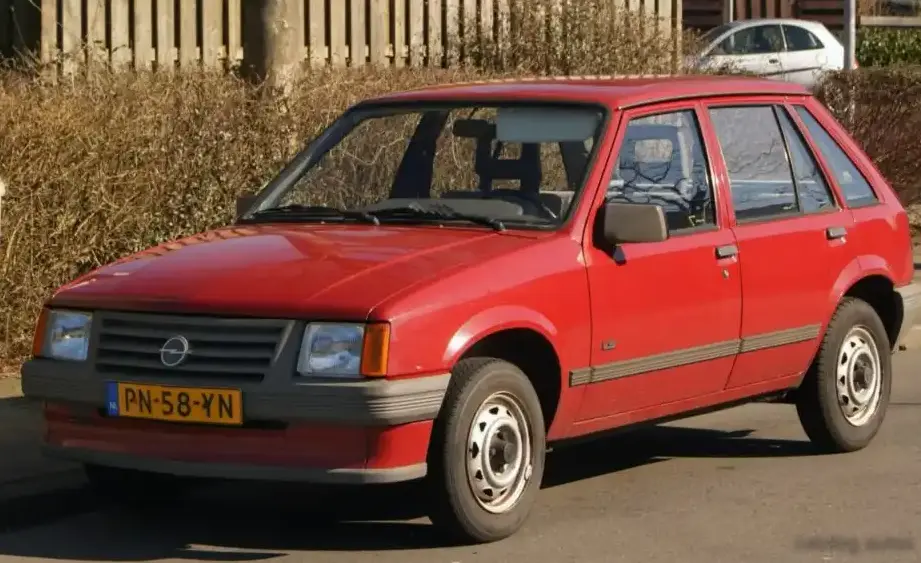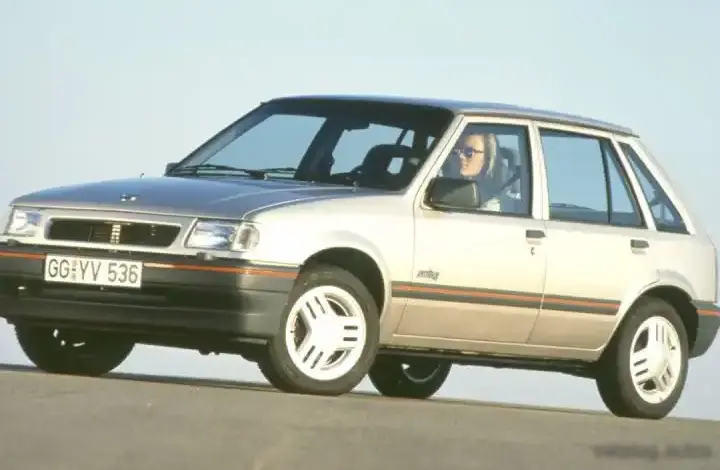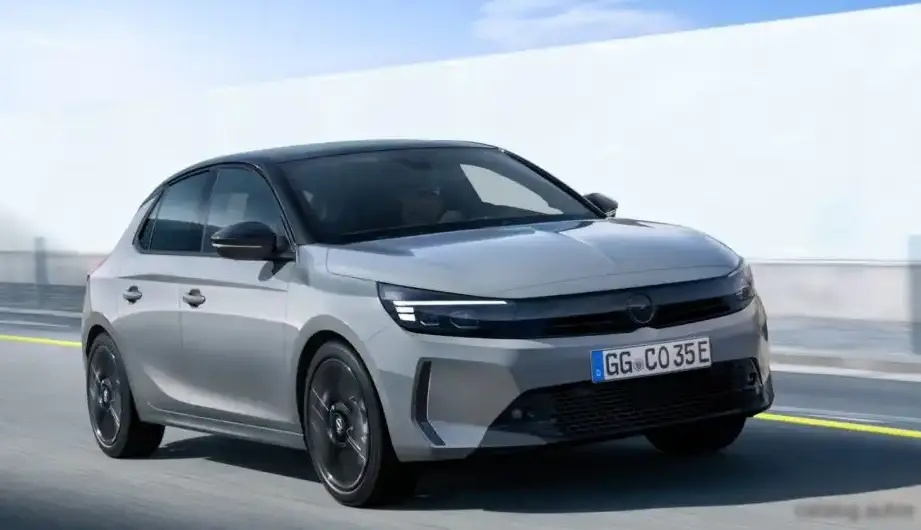
The Opel Corsa F (facelift, introduced in July 2023) 1.2 Turbo, producing 100 horsepower, represents a key variant within the sixth generation of Opel’s popular supermini. Positioned as a mainstream offering in the Corsa F range, it aimed to balance fuel efficiency with acceptable performance for everyday driving. This facelift brought updated styling and technology to the Corsa lineup, building upon the foundation established by the initial F generation launch, which utilized the Common Modular Platform (CMP) shared with Peugeot and Citroën. The 1.2 Turbo model served as a bridge between the entry-level naturally aspirated engines and the more potent performance-oriented trims.
Technical Specifications
| Brand | Opel |
| Model | Corsa |
| Generation | Corsa F (facelift 2023) |
| Type (Engine) | 1.2 Turbo (100 Hp) |
| Start of production | July, 2023 |
| Powertrain Architecture | Internal Combustion engine |
| Body type | Hatchback |
| Seats | 5 |
| Doors | 5 |
| Fuel consumption at Low speed (WLTP) | 6.4-6.5 l/100 km (36.8 – 36.2 US mpg, 44.1 – 43.5 UK mpg, 15.6 – 15.4 km/l) |
| Fuel consumption at Medium speed (WLTP) | 4.9-5.1 l/100 km (48 – 46.1 US mpg, 57.6 – 55.4 UK mpg, 20.4 – 19.6 km/l) |
| Fuel consumption at high speed (WLTP) | 4.4 l/100 km (53.5 US mpg, 64.2 UK mpg, 22.7 km/l) |
| Fuel consumption at very high speed (WLTP) | 5.2-5.3 l/100 km (45.2 – 44.4 US mpg, 54.3 – 53.3 UK mpg, 19.2 – 18.9 km/l) |
| Combined fuel consumption (WLTP) | 5.1-5.4 l/100 km (46.1 – 43.6 US mpg, 55.4 – 52.3 UK mpg, 19.6 – 18.5 km/l) |
| CO2 emissions (WLTP) | 114-116 g/km |
| Fuel Type | Petrol (Gasoline) |
| Acceleration 0 – 100 km/h | 9.9 sec |
| Acceleration 0 – 62 mph | 9.9 sec |
| Acceleration 0 – 60 mph | 9.4 sec |
| Maximum speed | 194 km/h (120.55 mph) |
| Emission standard | Euro 6d |
| Weight-to-power ratio | 11 kg/Hp, 90.9 Hp/tonne |
| Weight-to-torque ratio | 5.4 kg/Nm, 186.4 Nm/tonne |
| Power | 100 Hp @ 5500 rpm |
| Power per litre | 83.4 Hp/l |
| Torque | 205 Nm @ 1750 rpm (151.2 lb.-ft. @ 1750 rpm) |
| Engine layout | Front, Transverse |
| Engine Model/Code | HN05 |
| Engine displacement | 1199 cm3 (73.17 cu. in.) |
| Number of cylinders | 3 |
| Engine configuration | Inline |
| Compression ratio | 10.5:1 |
| Number of valves per cylinder | 4 |
| Fuel injection system | Direct injection |
| Engine aspiration | Turbocharger, Intercooler |
| Engine oil capacity | 3.5 l (3.7 US qt | 3.08 UK qt) |
| Kerb Weight | 1100 kg (2425.08 lbs.) |
| Max. weight | 1620 kg (3571.49 lbs.) |
| Max load | 520 kg (1146.4 lbs.) |
| Trunk (boot) space – minimum | 309 l (10.91 cu. ft.) |
| Trunk (boot) space – maximum | 1081 l (38.18 cu. ft.) |
| Fuel tank capacity | 44 l (11.62 US gal | 9.68 UK gal) |
| Max. roof load | 70 kg (154.32 lbs.) |
| Permitted trailer load with brakes (12%) | 1200 kg (2645.55 lbs.) |
| Permitted trailer load without brakes | 580 kg (1278.68 lbs.) |
| Permitted towbar download | 55 kg (121.25 lbs.) |
| Length | 4061 mm (159.88 in.) |
| Width | 1765 mm (69.49 in.) |
| Width including mirrors | 1960 mm (77.17 in.) |
| Height | 1435 mm (56.5 in.) |
| Wheelbase | 2538 mm (99.92 in.) |
| Front track | 1501 mm (59.09 in.) |
| Rear (Back) track | 1500 mm (59.06 in.) |
| Front overhang | 832 mm (32.76 in.) |
| Rear overhang | 691 mm (27.2 in.) |
| Minimum turning circle (turning diameter) | 10.7 m (35.1 ft.) |
| Drivetrain Architecture | The Internal combustion engine (ICE) drives the front wheels of the vehicle. |
| Drive wheel | Front wheel drive |
| Number of gears and type of gearbox | 6 gears, manual transmission |
| Front brakes | Ventilated discs |
| Rear brakes | Disc |
| Assisting systems | ABS (Anti-lock braking system) |
| Steering type | Steering rack and pinion |
| Power steering | Electric Steering |
| Tires size | 195/55 R16; 205/45 R17 |
| Wheel rims size | 6.5J x 16; 7J x 17 |
Powertrain & Engine Architecture
The heart of this Corsa variant is the HN05, a 1.2-liter turbocharged three-cylinder gasoline engine. This engine is part of Peugeot-Citroën-Opel’s “PureTech” family, known for its compact size and efficiency. The HN05 utilizes direct fuel injection, a technology that improves combustion efficiency and power output. The turbocharger, coupled with an intercooler, forces more air into the cylinders, boosting power to 100 horsepower at 5500 rpm and 205 Nm (151.2 lb-ft) of torque at a low 1750 rpm. This torque curve provides good responsiveness in everyday driving situations. The engine features a timing chain, intended to reduce maintenance compared to timing belts. The engine is paired with a six-speed manual transmission, delivering power to the front wheels. This transmission choice was common for this trim level in European markets, offering a balance between cost and driver engagement.
Driving Characteristics
The 1.2 Turbo 100 hp Corsa F offers a noticeable step up in performance compared to the base naturally aspirated engines. While not a sports car, it provides adequate acceleration for merging onto highways and overtaking slower traffic. The 0-60 mph time of around 9.4 seconds is respectable for a supermini. The turbocharger provides a noticeable boost in power, but it’s not overly aggressive, resulting in a relatively smooth and predictable power delivery. The six-speed manual transmission allows drivers to keep the engine in its optimal power band. Compared to higher-output Corsa variants, such as those with more powerful turbo engines, this version prioritizes fuel economy and affordability over outright performance. The gear ratios are tuned for efficiency, meaning the engine doesn’t rev as high at cruising speeds, contributing to lower fuel consumption.
Equipment & Trim Levels
The 1.2 Turbo 100 hp Corsa F typically came equipped with a reasonable level of standard features. These generally included air conditioning, power windows, central locking, a touchscreen infotainment system with Bluetooth connectivity, and basic safety features like ABS and multiple airbags. Higher trim levels, often denoted by names like “Edition” or “Elegance,” added features such as alloy wheels, a more advanced infotainment system with navigation, parking sensors, and climate control. Interior upholstery was typically cloth, with options for upgraded materials on higher trims. Optional extras could include a panoramic sunroof, adaptive cruise control, and a premium sound system.
Chassis & Braking
The Corsa F utilizes a MacPherson strut front suspension and a torsion beam rear suspension. This setup is typical for vehicles in this class, offering a good balance between ride comfort and handling. The torsion beam rear suspension is a cost-effective solution, but it doesn’t offer the same level of sophistication as a multi-link setup. The front brakes are ventilated discs, providing good stopping power, while the rear brakes are discs. The steering is electric power-assisted, offering light and precise steering feel. Stabilizer bars are fitted to both the front and rear axles to reduce body roll during cornering.
Market Reception & Comparison
The Opel Corsa F 1.2 Turbo 100 hp was generally well-received by automotive critics as a practical and efficient supermini. It was praised for its fuel economy, comfortable ride, and decent performance. However, some reviewers noted that the interior materials weren’t as premium as those found in some competitors. Compared to other trims in the Corsa lineup, this variant offered a sweet spot between price and performance. The higher-output engines provided more excitement, but at a higher cost and with slightly lower fuel economy. The base engines were more affordable, but lacked the punch of the turbo engine. Competitors in this segment included the Volkswagen Polo, Ford Fiesta, Renault Clio, and Peugeot 208.
Legacy
The HN05 1.2 Turbo engine has proven to be a relatively reliable powertrain, although some early versions of the PureTech engine experienced issues with coolant leaks and oil consumption. These issues were largely addressed in later revisions. The Corsa F 1.2 Turbo 100 hp remains a popular choice in the used car market, offering a good balance of affordability, fuel efficiency, and practicality. Its compact size and easy driving characteristics make it well-suited for urban environments. Regular maintenance, including oil changes and timing chain inspections, is crucial to ensure the long-term reliability of this powertrain.