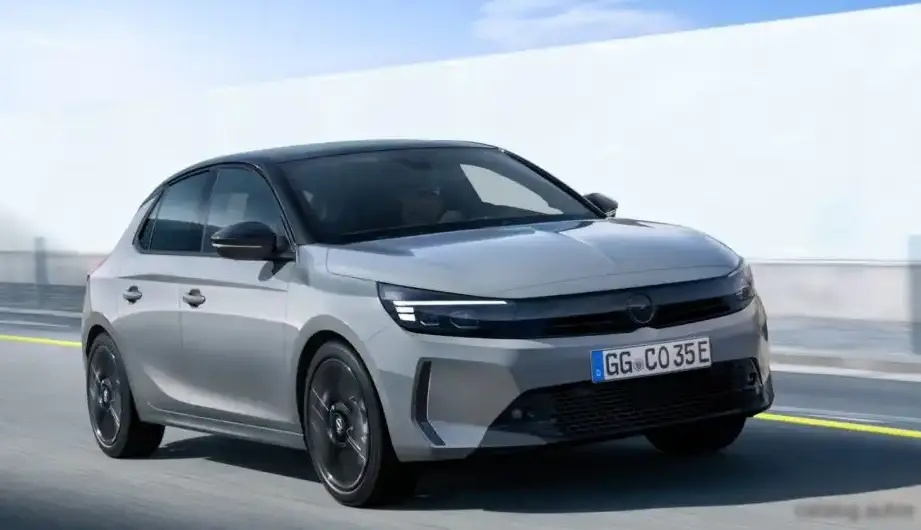
The Opel Corsa F, specifically the all-electric variant equipped with the 51 kWh battery pack and producing 156 horsepower, represents a significant step in Opel’s electrification strategy. Introduced with the facelift in July 2023, this model builds upon the foundation of the sixth-generation Corsa (F), which debuted in 2019 and is based on the Common Modular Platform (CMP) shared with Peugeot and Citroën. The Corsa-e, as it’s often referred to, aims to provide a practical and affordable entry point into the electric vehicle market, particularly within Europe, where Opel has a strong brand presence. This variant occupies a mid-range position within the Corsa F lineup, offering a balance between range, performance, and price compared to lower-powered or more expensive trims.
Technical Specifications
| Brand | Opel |
| Model | Corsa |
| Generation | Corsa F (facelift 2023) |
| Type (Engine) | e 51 kWh (156 Hp) |
| Start of production | July, 2023 |
| Powertrain Architecture | BEV (Electric Vehicle) |
| Body type | Hatchback |
| Seats | 5 |
| Doors | 5 |
| Fuel Type | Electricity |
| Acceleration 0 – 100 km/h | 8.1 sec |
| Acceleration 0 – 62 mph | 8.1 sec |
| Acceleration 0 – 60 mph | 7.7 sec |
| Maximum speed | 150 km/h (93.21 mph) |
| Weight-to-power ratio | 9.4 kg/Hp, 106.2 Hp/tonne |
| Weight-to-torque ratio | 5.7 kg/Nm, 177 Nm/tonne |
| Gross battery capacity | 51 kWh |
| Battery technology | Lithium nickel manganese cobalt oxides (Li-NMC) |
| Battery location | Under the rear seats, Under the front seats |
| All-electric range (WLTP) | 402 km (249.79 mi) |
| Average Energy consumption (WLTP) | 14.3-14.6 kWh/100 km (23.01 – 23.5 kWh/100 mi) |
| Average Energy consumption (MPGe) | 146 – 143 |
| Average Energy consumption (km/kWh) | 7 – 6.8 |
| Average Energy consumption (mi/kWh) | 4.3 – 4.3 |
| Electric motor power | 156 Hp |
| Electric motor Torque | 260 Nm (191.77 lb.-ft.) |
| Electric motor model/code | ZK02 |
| Electric motor location | Front axle, Transverse |
| Electric motor type | Synchronous |
| System power | 156 Hp |
| System torque | 260 Nm (191.77 lb.-ft.) |
| Kerb Weight | 1469 kg (3238.59 lbs.) |
| Trunk (boot) space – minimum | 267 l (9.43 cu. ft.) |
| Trunk (boot) space – maximum | 1042 l (36.8 cu. ft.) |
| Length | 4061 mm (159.88 in.) |
| Width | 1765 mm (69.49 in.) |
| Width including mirrors | 1960 mm (77.17 in.) |
| Height | 1435 mm (56.5 in.) |
| Wheelbase | 2538 mm (99.92 in.) |
| Front track | 1501 mm (59.09 in.) |
| Rear (Back) track | 1500 mm (59.06 in.) |
| Front overhang | 832 mm (32.76 in.) |
| Rear overhang | 691 mm (27.2 in.) |
| Minimum turning circle | 10.7 m (35.1 ft.) |
| Drivetrain | Front wheel drive, BEV |
| Number of gears | 1, automatic transmission |
| Front brakes | Disc |
| Rear brakes | Drum |
| Tires size | 195/55 R16; 205/45 R17 |
| Wheel rims size | 6.5J x 16; 7J x 17 |
Powertrain & Engine Architecture
The Corsa-e 51 kWh utilizes a fully electric powertrain. At its heart is a permanent magnet synchronous motor, designated ZK02, producing 156 horsepower and 260 Nm (191.77 lb.-ft.) of torque. This motor is mounted transversely at the front axle, driving the front wheels. The 51 kWh lithium-ion battery pack, employing Lithium Nickel Manganese Cobalt Oxide (Li-NMC) chemistry, is split and positioned both under the front and rear seats, contributing to a lower center of gravity and improved handling. The battery supports fast charging, capable of an 80% charge in approximately 30 minutes using a compatible DC fast charger. The vehicle employs a single-speed automatic transmission, typical of electric vehicles, simplifying the driving experience and maximizing efficiency. The power electronics and thermal management systems are integrated to optimize battery performance and longevity.
Driving Characteristics
The 156 hp electric motor provides brisk acceleration, achieving 0-60 mph in around 7.7 seconds. While not a performance-oriented vehicle, the instant torque delivery characteristic of electric motors provides a responsive and engaging driving experience. The single-speed transmission offers seamless acceleration, eliminating the need for gear changes. Compared to the gasoline-powered Corsa F variants, the Corsa-e offers a quieter and smoother ride. The lower center of gravity, thanks to the battery placement, contributes to improved stability and cornering ability. The regenerative braking system allows for one-pedal driving in certain conditions, further enhancing efficiency and convenience. Compared to higher-output electric vehicles, the Corsa-e prioritizes efficiency and affordability over outright speed.
Equipment & Trim Levels
The Corsa-e 51 kWh typically comes well-equipped, reflecting its position as a mid-range offering. Standard features often include a touchscreen infotainment system with Apple CarPlay and Android Auto compatibility, digital instrument cluster, automatic climate control, and a suite of safety features such as lane departure warning, automatic emergency braking, and pedestrian detection. Interior upholstery is typically cloth, with options for upgraded materials. Available optional extras include a panoramic sunroof, adaptive cruise control, and premium audio system. Trim levels vary by market, but generally offer increasing levels of luxury and technology.
Chassis & Braking
The Corsa-e utilizes a MacPherson strut front suspension and a torsion beam rear suspension. The front brakes are disc brakes, while the rear brakes are drum brakes – a cost-saving measure common in this segment. The electric power steering provides light and precise steering feel. ABS (Anti-lock Braking System) is standard, enhancing braking performance and stability. The suspension is tuned to provide a comfortable ride while maintaining reasonable handling characteristics. The weight distribution, influenced by the battery placement, contributes to balanced handling.
Market Reception & Comparison
The Opel Corsa-e has been generally well-received by critics, praised for its practicality, affordability, and decent range. Compared to other gasoline-powered Corsa F variants, the Corsa-e offers significantly lower running costs due to the elimination of fuel expenses and reduced maintenance requirements. However, the initial purchase price is higher. Compared to competitors like the Renault Zoe and Peugeot e-208, the Corsa-e offers a competitive range and performance profile. Reliability reports are still emerging, but early indications suggest that the electric powertrain is proving to be robust.
Legacy
The Corsa-e 51 kWh represents a pivotal moment for Opel, signaling its commitment to electric mobility. The powertrain, while not groundbreaking in terms of technology, provides a reliable and efficient solution for everyday driving. As the electric vehicle market matures, the Corsa-e is likely to become a popular choice in the used car market, offering a cost-effective and environmentally friendly transportation option. The lessons learned from the development of the Corsa-e will undoubtedly inform Opel’s future electric vehicle offerings, paving the way for a fully electrified lineup in the years to come.