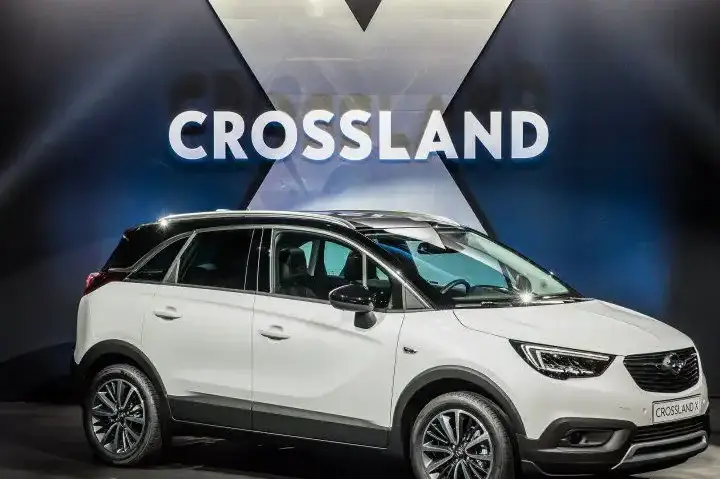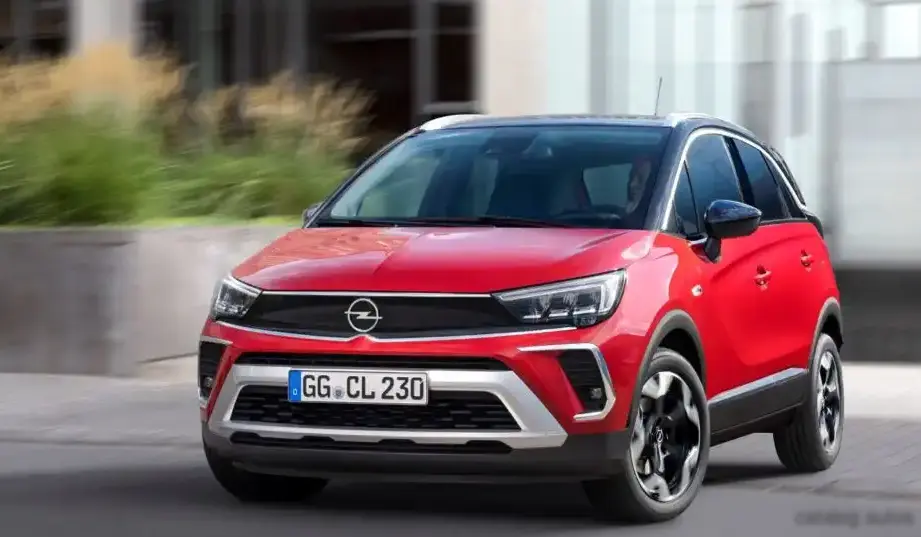
The Opel Crossland, particularly the facelifted version introduced in October 2020, represents Opel’s entry into the subcompact SUV segment. This variant, equipped with the 1.5-liter diesel engine producing 110 horsepower, aimed to balance fuel efficiency with practicality for European buyers. Positioned as a mid-range offering within the Crossland lineup, it slotted between the lower-powered diesel options and the more expensive petrol variants. The Crossland itself is a collaborative effort, sharing its platform with the Peugeot 2008 and Citroën C3 Aircross, a result of the Stellantis (then PSA Group) partnership.
Technical Specifications
| Brand | Opel |
| Model | Crossland |
| Generation | Crossland (facelift 2020) |
| Type (Engine) | 1.5d (110 Hp) |
| Start of production | October, 2020 |
| Powertrain Architecture | Internal Combustion engine |
| Body type | SUV |
| Seats | 5 |
| Doors | 5 |
| Combined fuel consumption (WLTP) | 4.5-4.8 l/100 km (52.3 – 49 US mpg, 62.8 – 58.9 UK mpg, 22.2 – 20.8 km/l) |
| CO2 emissions (WLTP) | 118-126 g/km |
| Fuel consumption (urban) | 4.8 l/100 km (49 US mpg, 58.9 UK mpg, 20.8 km/l) |
| Fuel consumption (extra urban) | 3.6-3.7 l/100 km (65.3 – 63.6 US mpg, 78.5 – 76.3 UK mpg, 27.8 – 27 km/l) |
| Fuel consumption (combined) | 3.5-3.6 l/100 km (67.2 – 65.3 US mpg, 80.7 – 78.5 UK mpg, 28.6 – 27.8 km/l) |
| CO2 emissions (NEDC) | 93-94 g/km |
| Fuel Type | Diesel |
| Acceleration 0 – 100 km/h | 11.8 sec |
| Acceleration 0 – 62 mph | 11.8 sec |
| Acceleration 0 – 60 mph | 11.2 sec |
| Maximum speed | 185 km/h (114.95 mph) |
| Emission standard | Euro 6d |
| Weight-to-power ratio | 11 kg/Hp, 90.6 Hp/tonne |
| Weight-to-torque ratio | 4.9 kg/Nm, 205.9 Nm/tonne |
| Power | 110 Hp @ 3500 rpm |
| Torque | 250 Nm @ 1750 rpm (184.39 lb.-ft. @ 1750 rpm) |
| Engine layout | Front, Transverse |
| Engine Model/Code | F15DT |
| Engine displacement | 1499 cm3 (91.47 cu. in.) |
| Number of cylinders | 4 |
| Engine configuration | Inline |
| Number of valves per cylinder | 4 |
| Fuel injection system | Diesel Commonrail |
| Engine aspiration | Turbocharger, Intercooler |
| Engine oil capacity | 4 l (4.23 US qt, 3.52 UK qt) |
| Kerb Weight | 1214 kg (2676.41 lbs.) |
| Max. weight | 1820 kg (4012.41 lbs.) |
| Max load | 606 kg (1336 lbs.) |
| Trunk (boot) space – minimum | 410 l (14.48 cu. ft.) |
| Trunk (boot) space – maximum | 1255 l (44.32 cu. ft.) |
| Fuel tank capacity | 45 l (11.89 US gal, 9.9 UK gal) |
| AdBlue tank | 15 l (3.96 US gal, 3.3 UK gal) |
| Max. roof load | 50 kg (110.23 lbs.) |
| Permitted trailer load (braked) | 840 kg (1851.88 lbs.) |
| Permitted trailer load (unbraked) | 620 kg (1366.87 lbs.) |
| Permitted towbar download | 65 kg (143.3 lbs.) |
| Length | 4217-4229 mm (166.02 – 166.5 in.) |
| Width with mirrors folded | 1825 mm (71.85 in.) |
| Width including mirrors | 1976 mm (77.8 in.) |
| Height | 1605 mm (63.19 in.) |
| Wheelbase | 2604 mm (102.52 in.) |
| Front track | 1518 mm (59.76 in.) |
| Rear track | 1491 mm (58.7 in.) |
| Minimum turning circle | 11.2 m (36.75 ft.) |
| Drivetrain | Front wheel drive |
| Number of gears | 6 |
| Gearbox type | Manual transmission |
| Front brakes | Disc |
| Rear brakes | Disc |
| Tire size | 195/65 R15 91T; 195/60 R16 89H; 215/50 R17 95V |
Powertrain & Engine Architecture
The 2020 Opel Crossland 1.5d (110 Hp) utilizes the F15DT engine, a 1.5-liter inline-four cylinder diesel engine. This engine is part of Opel’s (and wider Stellantis) modular engine family. It features a turbocharger with an intercooler to enhance power output and efficiency. The engine employs a common-rail direct fuel injection system, delivering fuel directly into the combustion chamber at high pressure for optimized combustion. The engine produces 110 horsepower at 3500 rpm and 250 Nm (184 lb-ft) of torque at 1750 rpm. The engine is paired with a 6-speed manual transmission, sending power to the front wheels. This configuration prioritizes fuel economy over outright performance.
Driving Characteristics
The 1.5-liter diesel with 110 hp in the Crossland provides adequate, but not exhilarating, performance. Acceleration from 0-100 km/h takes around 11.8 seconds. The engine’s torque peak at 1750 rpm provides reasonable responsiveness for everyday driving situations, such as merging onto highways or overtaking. The 6-speed manual transmission is well-matched to the engine, allowing drivers to keep the engine in its optimal power band. Compared to higher-powered petrol versions of the Crossland, this diesel variant feels noticeably slower, but offers significantly better fuel economy. The manual transmission provides more driver engagement than an automatic would, but requires more effort in stop-and-go traffic.
Equipment & Trim Levels
The 1.5d (110 Hp) Crossland typically came equipped with a respectable level of standard features. These included air conditioning, a touchscreen infotainment system with Bluetooth connectivity, power windows, and power door mirrors. Safety features such as ABS, ESP (Electronic Stability Program), and multiple airbags were also standard. Higher trim levels offered additional features like alloy wheels, a rear parking sensor, a reversing camera, and a more advanced infotainment system with navigation. Interior upholstery was typically cloth, with options for upgraded materials on higher trims.
Chassis & Braking
The Crossland utilizes a front-wheel-drive chassis with a MacPherson strut suspension in the front and a torsion beam suspension in the rear. The braking system consists of disc brakes on all four wheels. The torsion beam rear suspension is a cost-effective solution that provides adequate ride comfort for everyday driving. The front disc brakes provide sufficient stopping power for the vehicle’s weight and performance capabilities. The steering is a rack and pinion system, offering reasonable precision and feedback.
Market Reception & Comparison
The Opel Crossland 1.5d (110 Hp) was generally well-received by automotive critics as a practical and fuel-efficient option in the subcompact SUV segment. It was praised for its comfortable ride, spacious interior, and competitive fuel economy. However, some critics noted that the engine lacked outright power and refinement compared to some of its rivals. Compared to the petrol versions of the Crossland, the diesel offered superior fuel economy but less performance. Against competitors like the Renault Captur and Peugeot 2008, the Crossland held its own in terms of value and practicality.
Legacy
The F15DT engine has proven to be a relatively reliable unit, with few widespread issues reported. The Crossland, as a whole, has established itself as a popular choice in the used car market, particularly for buyers seeking a practical and economical SUV. The 1.5-liter diesel variant remains a desirable option for those prioritizing fuel efficiency and low running costs. While not a performance standout, the Crossland 1.5d (110 Hp) represents a solid and dependable choice for everyday transportation.