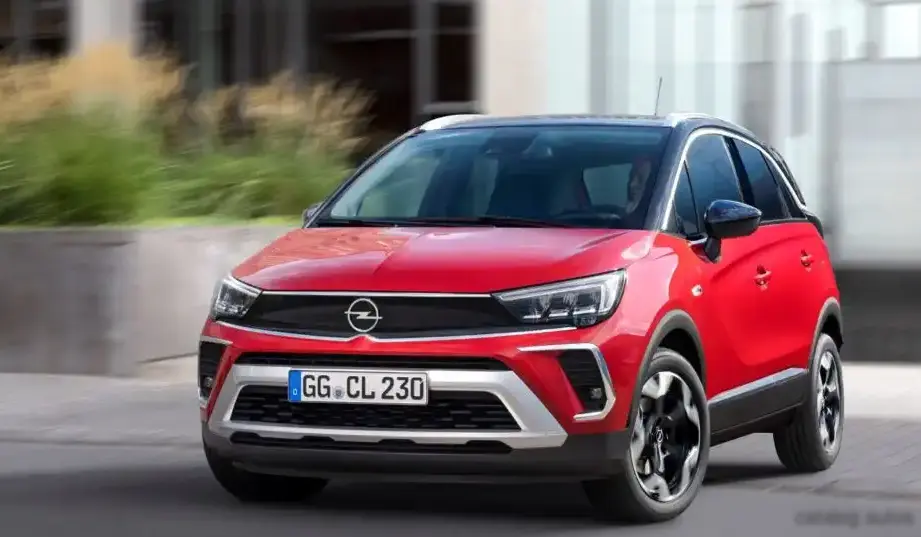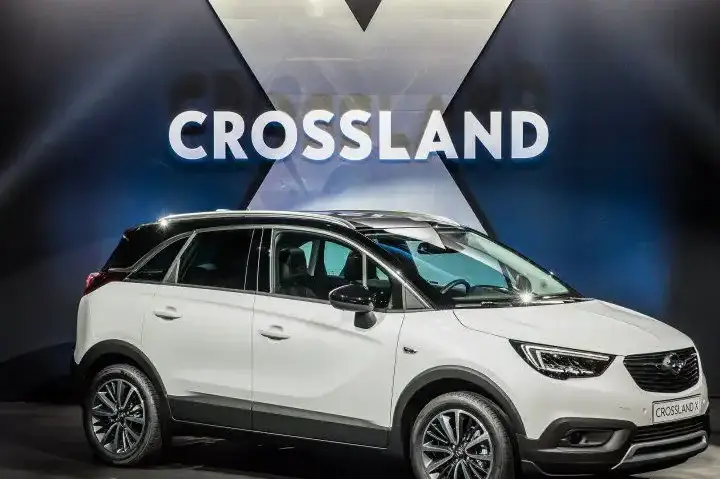
The Opel Crossland X 1.5d (102 hp) was a subcompact SUV produced by Opel between July 2018 and October 2020. Positioned as an entry-level diesel option within the Crossland X range, it aimed to provide fuel efficiency and practicality for urban and family use. The Crossland X itself was a significant model for Opel, representing a move towards a more crossover-focused lineup, and was developed in collaboration with PSA Peugeot Citroën following Opel’s acquisition by the group. This variant specifically targeted buyers seeking lower running costs without sacrificing the versatility of a small SUV.
Technical Specifications
| Brand | Opel |
| Model | Crossland |
| Generation | Crossland X |
| Type (Engine) | 1.5d (102 Hp) |
| Start of production | July, 2018 |
| End of production | October, 2020 |
| Powertrain Architecture | Internal Combustion engine |
| Body type | SUV |
| Seats | 5 |
| Doors | 5 |
| Fuel consumption (urban) | 4.7 l/100 km (50 US mpg, 60.1 UK mpg, 21.3 km/l) |
| Fuel consumption (extra urban) | 3.6 l/100 km (65.3 US mpg, 78.5 UK mpg, 27.8 km/l) |
| Fuel consumption (combined) | 4 l/100 km (58.8 US mpg, 70.6 UK mpg, 25 km/l) |
| CO2 emissions | 105 g/km |
| Fuel Type | Diesel |
| Acceleration 0 – 100 km/h | 11.7 sec |
| Acceleration 0 – 62 mph | 11.7 sec |
| Acceleration 0 – 60 mph | 11.1 sec |
| Maximum speed | 178 km/h (110.6 mph) |
| Emission standard | Euro 6d-Temp |
| Weight-to-power ratio | 11.9 kg/Hp, 84 Hp/tonne |
| Weight-to-torque ratio | 4.9 kg/Nm, 205.9 Nm/tonne |
| Power | 102 Hp @ 3750 rpm |
| Power per litre | 68 Hp/l |
| Torque | 250 Nm @ 1750 rpm (184.39 lb.-ft. @ 1750 rpm) |
| Engine layout | Front, Transverse |
| Engine Model/Code | D15DT |
| Engine displacement | 1499 cm3 (91.47 cu. in.) |
| Number of cylinders | 4 |
| Engine configuration | Inline |
| Cylinder Bore | 75 mm (2.95 in.) |
| Piston Stroke | 84.8 mm (3.34 in.) |
| Compression ratio | 16.5:1 |
| Number of valves per cylinder | 4 |
| Fuel injection system | Diesel Commonrail |
| Engine aspiration | Turbocharger, Intercooler |
| Engine oil capacity | 4 l (4.23 US qt | 3.52 UK qt) |
| Kerb Weight | 1214 kg (2676.41 lbs.) |
| Max. weight | 1820 kg (4012.41 lbs.) |
| Max load | 606 kg (1336 lbs.) |
| Trunk (boot) space – minimum | 410 l (14.48 cu. ft.) |
| Trunk (boot) space – maximum | 1255 l (44.32 cu. ft.) |
| Fuel tank capacity | 45 l (11.89 US gal | 9.9 UK gal) |
| Max. roof load | 50 kg (110.23 lbs.) |
| Permitted trailer load with brakes (12%) | 840 kg (1851.88 lbs.) |
| Permitted trailer load without brakes | 620 kg (1366.87 lbs.) |
| Permitted towbar download | 50 kg (110.23 lbs.) |
| Length | 4212 mm (165.83 in.) |
| Width | 1765 mm (69.49 in.) |
| Width including mirrors | 1976 mm (77.8 in.) |
| Height | 1605 mm (63.19 in.) |
| Wheelbase | 2604 mm (102.52 in.) |
| Front track | 1513 mm (59.57 in.) |
| Rear (Back) track | 1491 mm (58.7 in.) |
| Minimum turning circle | 11.2 m (36.75 ft.) |
| Drivetrain Architecture | The Internal combustion engine (ICE) drives the front wheels of the vehicle. |
| Drive wheel | Front wheel drive |
| Number of gears and type of gearbox | 6 gears, manual transmission |
| Front brakes | Disc |
| Rear brakes | Disc |
| Assisting systems | ABS (Anti-lock braking system) |
| Steering type | Steering rack and pinion |
| Power steering | Electric Steering |
| Tires size | 195/60 R16; 215/50 R17 |
| Wheel rims size | 6.5J x 16; 6.5J x 17 |
INTRODUCTION
The Opel Crossland X 1.5d (102 hp) was produced from 2018 to 2020 as part of the first generation (B28) Crossland X model line. Built on the PSA EMP1 platform (also known as the 1HX0/A3 platform), it shared its underpinnings with the Peugeot 2008 and Citroën C3 Aircross. This platform allowed for a flexible and efficient design, prioritizing interior space and modularity. The 1.5-liter diesel engine with 102 horsepower was positioned as a fuel-efficient option, aimed at buyers prioritizing economy over outright performance. It served as a key variant in markets where diesel remained popular, particularly in Europe.
Powertrain & Engine Architecture
The heart of the Crossland X 1.5d is the D15DT engine, a 1.5-liter inline-four cylinder diesel. This engine is part of Opel/PSA’s DV5 family of diesel engines, known for its relatively compact size and efficiency. It utilizes a common rail direct injection system, delivering fuel directly into the combustion chamber at extremely high pressure for optimized combustion. The engine also features a turbocharger with an intercooler, boosting power output and improving torque delivery. The 102 hp output is achieved at 3750 rpm, while peak torque of 250 Nm (184 lb-ft) is available from 1750 rpm. This provides a good balance of low-end grunt for everyday driving and sufficient power for highway cruising. The engine also incorporates a diesel particulate filter (DPF) to meet stringent Euro 6d-Temp emission standards. The engine was paired with a six-speed manual transmission, which was the standard offering for this variant.
Driving Characteristics
The 1.5d (102 hp) Crossland X offers a comfortable and practical driving experience, prioritizing fuel economy over sporty performance. Acceleration from 0-60 mph takes around 11.1 seconds, and the top speed is 110.6 mph. While not particularly quick, the engine provides adequate power for most driving situations. The turbocharger helps to mitigate turbo lag, delivering a reasonably responsive throttle. The six-speed manual transmission is well-matched to the engine’s characteristics, allowing drivers to keep the engine in its optimal torque band. Compared to higher-powered versions of the Crossland X, such as those with gasoline engines, the 1.5d feels less eager to rev, but offers significantly better fuel economy. The gear ratios are tuned for efficiency, with a relatively long final drive.
Equipment & Trim Levels
The 1.5d (102 hp) Crossland X typically came with a reasonable level of standard equipment. Base models included features such as air conditioning, a touchscreen infotainment system with Bluetooth connectivity, power windows, and central locking. Safety features included ABS, electronic stability control, and multiple airbags. Higher trim levels, such as ‘Edition’ or ‘Sport’, added features like alloy wheels, parking sensors, a rearview camera, and upgraded interior trim. Interior upholstery was typically cloth, with options for leather or partial leather upgrades. The dashboard layout was functional and user-friendly, with a focus on ergonomics. Optional extras included a panoramic sunroof, navigation system, and advanced driver-assistance systems.
Chassis & Braking
The Crossland X utilizes a front-wheel-drive chassis with a MacPherson strut suspension at the front and a torsion beam suspension at the rear. This setup provides a good balance of ride comfort and handling. The torsion beam rear suspension is a cost-effective solution that minimizes weight and complexity. Braking is handled by disc brakes on all four wheels, providing adequate stopping power. ABS (Anti-lock Braking System) is standard, enhancing safety during emergency braking situations. The steering is electrically assisted, providing light and precise steering feel. The suspension tuning is geared towards comfort, absorbing bumps and imperfections in the road surface effectively. Stabilizer bars are fitted to both the front and rear axles to reduce body roll during cornering.
Market Reception & Comparison
The Opel Crossland X 1.5d (102 hp) was generally well-received by critics as a practical and fuel-efficient small SUV. It was praised for its spacious interior, comfortable ride, and low running costs. However, some reviewers noted that the engine could feel underpowered, particularly when fully loaded or driving uphill. Compared to the gasoline-powered versions of the Crossland X, the 1.5d offered significantly better fuel economy, but at the expense of performance. It also compared favorably to other small diesel SUVs in its class, such as the Peugeot 2008 and Citroën C3 Aircross, offering a similar level of practicality and efficiency. The diesel engine was a key selling point for buyers in Europe, where fuel costs are high and diesel fuel is often cheaper than gasoline.
Legacy
The D15DT engine, found in the Crossland X 1.5d, has proven to be a relatively reliable powertrain. While diesel engines, in general, can be more complex and expensive to maintain than gasoline engines, the D15DT has a good track record for durability. The main maintenance concerns revolve around the diesel particulate filter (DPF), which can become clogged if the vehicle is primarily used for short trips at low speeds. Regular servicing and the use of high-quality diesel fuel are essential for maintaining the engine’s longevity. On the used car market, the Crossland X 1.5d represents a good value proposition for buyers seeking a fuel-efficient and practical small SUV. Its relatively low running costs and spacious interior make it a popular choice for families and commuters.