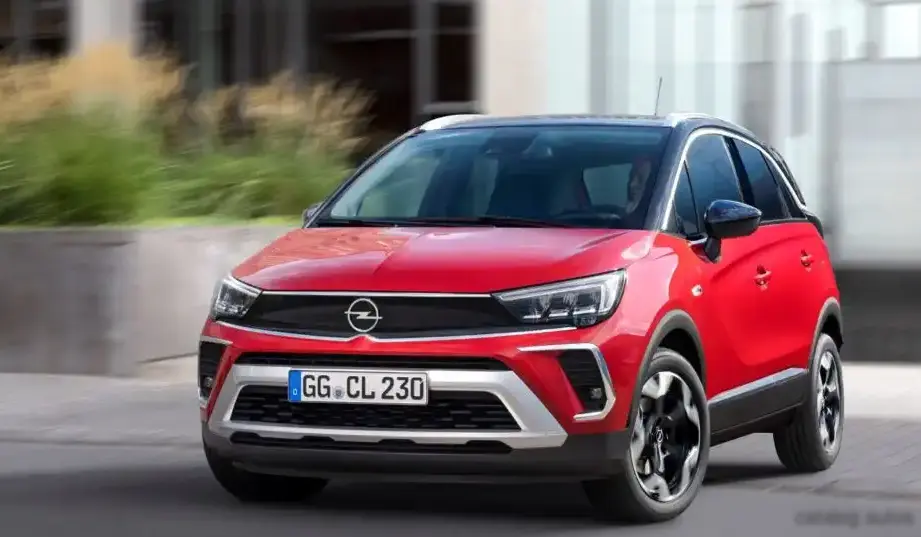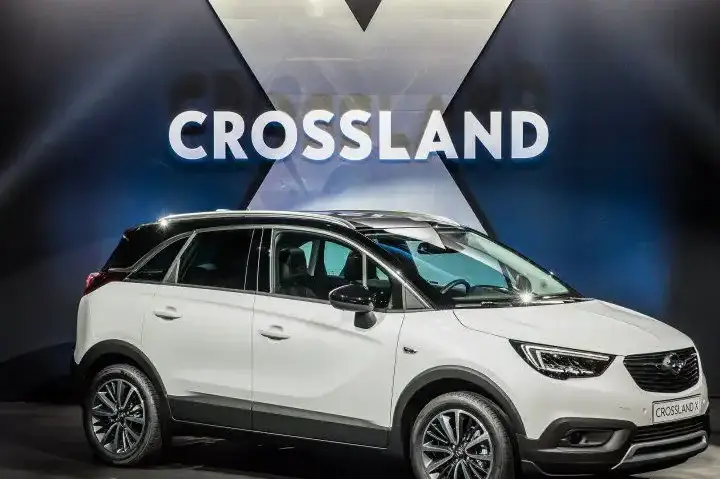
The Opel Crossland X 1.6 (99 hp) was a subcompact crossover SUV produced from June 2017 to June 2018. Positioned as an entry-level offering within the Crossland X range, it aimed to provide an affordable and economical option for families and urban drivers. The Crossland X itself was a collaborative effort between Opel (Vauxhall in the UK) and PSA Peugeot Citroën, built on the PF1 platform, also known as the 1HX0/A3 platform. This model represented Opel’s entry into the rapidly growing subcompact SUV segment, competing with vehicles like the Renault Captur and Nissan Juke. The 1.6-liter diesel variant, producing 99 horsepower, was specifically targeted at buyers prioritizing fuel efficiency and lower running costs.
Technical Specifications
| Brand | Opel |
| Model | Crossland |
| Generation | Crossland X |
| Type (Engine) | 1.6 (99 Hp) |
| Start of production | June, 2017 |
| End of production | June, 2018 |
| Powertrain Architecture | Internal Combustion engine |
| Body type | SUV |
| Seats | 5 |
| Doors | 5 |
| Fuel consumption (urban) | 4.4-4.5 l/100 km (53.5 – 52.3 US mpg) |
| Fuel consumption (extra urban) | 3.4-3.5 l/100 km (69.2 – 67.2 US mpg) |
| Fuel consumption (combined) | 3.8-3.9 l/100 km (61.9 – 60.3 US mpg) |
| CO2 emissions | 99-102 g/km |
| Fuel Type | Diesel |
| Acceleration 0 – 100 km/h | 11.6 sec |
| Acceleration 0 – 62 mph | 11.6 sec |
| Acceleration 0 – 60 mph | 11 sec |
| Maximum speed | 180 km/h (111.85 mph) |
| Emission standard | Euro 6 |
| Weight-to-power ratio | 12.2 kg/Hp |
| Weight-to-torque ratio | 4.7 kg/Nm |
| Power | 99 Hp @ 3750 rpm |
| Torque | 254 Nm @ 1750 rpm (187.34 lb.-ft. @ 1750 rpm) |
| Engine layout | Front, Transverse |
| Engine Model/Code | B16DT |
| Engine displacement | 1560 cm3 (95.2 cu. in.) |
| Number of cylinders | 4 |
| Engine configuration | Inline |
| Cylinder Bore | 75 mm (2.95 in.) |
| Piston Stroke | 88.3 mm (3.48 in.) |
| Compression ratio | 17:1 |
| Number of valves per cylinder | 4 |
| Fuel injection system | Diesel Commonrail |
| Engine aspiration | Turbocharger, Intercooler |
| Engine oil capacity | 3.8 l (4.02 US qt | 3.34 UK qt) |
| Coolant | 5.3 l (5.6 US qt | 4.66 UK qt) |
| Kerb Weight | 1203 kg (2652.16 lbs.) |
| Max. weight | 1820 kg (4012.41 lbs.) |
| Max load | 617 kg (1360.25 lbs.) |
| Trunk (boot) space – minimum | 410 l (14.48 cu. ft.) |
| Trunk (boot) space – maximum | 1255 l (44.32 cu. ft.) |
| Fuel tank capacity | 45 l (11.89 US gal | 9.9 UK gal) |
| Max. roof load | 50 kg (110.23 lbs.) |
| Permitted trailer load with brakes (12%) | 840 kg (1851.88 lbs.) |
| Permitted trailer load without brakes | 620 kg (1366.87 lbs.) |
| Permitted towbar download | 50 kg (110.23 lbs.) |
| Length | 4212 mm (165.83 in.) |
| Width | 1765 mm (69.49 in.) |
| Width with mirrors folded | 1825 mm (71.85 in.) |
| Width including mirrors | 1976 mm (77.8 in.) |
| Height | 1605 mm (63.19 in.) |
| Wheelbase | 2604 mm (102.52 in.) |
| Front track | 1513 mm (59.57 in.) |
| Rear (Back) track | 1491 mm (58.7 in.) |
| Minimum turning circle | 11.2 m (36.75 ft.) |
| Drivetrain Architecture | Front wheel drive |
| Number of gears and type of gearbox | 5 gears, manual transmission |
| Front brakes | Ventilated discs |
| Rear brakes | Disc |
Powertrain & Engine Architecture
The Opel Crossland X 1.6 (99 hp) was powered by the B16DT engine, a 1.6-liter inline-four cylinder diesel engine. This engine was part of Opel’s/PSA’s DV6 family of diesel engines, known for its relatively compact size and fuel efficiency. The B16DT featured a turbocharger with an intercooler to boost power output and improve combustion efficiency. It utilized a common rail direct injection system, delivering fuel directly into the cylinders at high pressure for optimized fuel atomization and combustion. The engine boasted 4 valves per cylinder, contributing to improved breathing and power delivery. The 99 horsepower output was achieved at 3750 rpm, while peak torque of 254 Nm (187 lb-ft) was available from 1750 rpm. This torque curve provided good low-end responsiveness, suitable for everyday driving. The engine was paired with a 5-speed manual transmission, which was the only transmission option available for this specific variant.
Driving Characteristics
The 1.6-liter diesel engine with 99 hp in the Crossland X provided adequate, but not exhilarating, performance. Acceleration from 0 to 62 mph (0-100 km/h) took approximately 11.6 seconds. The focus was clearly on fuel economy rather than outright speed. The turbocharger helped to mitigate some of the power deficit, providing a noticeable boost in acceleration when overtaking or climbing hills. The 5-speed manual transmission was well-matched to the engine’s characteristics, with gear ratios optimized for fuel efficiency and drivability. Compared to higher-output versions of the Crossland X, such as those equipped with the 1.2-liter turbocharged petrol engine, the 1.6 diesel felt noticeably slower. However, it offered significantly better fuel economy and a more relaxed driving experience, particularly on long journeys. The front-wheel-drive configuration provided predictable handling, although it lacked the all-weather capability of some competitors offering all-wheel drive.
Equipment & Trim Levels
The 1.6 (99 hp) Crossland X typically served as the entry-level trim, offering a reasonable level of standard equipment. Standard features generally included air conditioning, a basic infotainment system with Bluetooth connectivity, electric front windows, and central locking. Safety features such as ABS, ESP (Electronic Stability Program), and multiple airbags were also standard. Interior upholstery was typically cloth, and the dashboard featured a functional, if somewhat basic, design. Optional extras included alloy wheels, a more advanced infotainment system with a larger touchscreen display, parking sensors, and a rearview camera. Higher trim levels added features like automatic climate control, heated seats, and upgraded interior trim materials.
Chassis & Braking
The Crossland X featured a typical front-wheel-drive chassis configuration with MacPherson strut suspension at the front and a torsion beam suspension at the rear. The torsion beam setup was a cost-effective solution for the rear suspension, prioritizing space efficiency and simplicity. The braking system consisted of ventilated discs on the front wheels and solid discs on the rear wheels. ABS (Anti-lock Braking System) was standard, providing enhanced braking performance and stability. The steering was electrically assisted, offering light and precise steering feel. The suspension tuning was geared towards comfort, providing a relatively smooth ride quality, although it wasn’t particularly sporty.
Market Reception & Comparison
The Opel Crossland X 1.6 (99 hp) was generally well-received by critics as an affordable and economical option in the subcompact SUV segment. However, its performance was often criticized as being somewhat underwhelming, particularly when compared to competitors offering more powerful engines. Fuel economy was a major selling point, with the 1.6 diesel achieving combined fuel consumption figures of around 3.8-3.9 l/100 km (60-62 mpg US). Compared to the petrol-powered versions of the Crossland X, the diesel offered significantly better fuel economy but came with a higher purchase price. The 1.6 diesel was primarily targeted at buyers who prioritized fuel efficiency and low running costs over outright performance.
Legacy
The B16DT engine, while generally reliable, has been known to exhibit issues with the diesel particulate filter (DPF) if not properly maintained and driven on longer journeys. Regular servicing and the use of high-quality diesel fuel are crucial for ensuring the longevity of this engine. In the used car market, the Crossland X 1.6 (99 hp) represents a relatively affordable entry point into the subcompact SUV segment. Its fuel efficiency and practicality make it a suitable choice for urban commuters and small families. However, potential buyers should be aware of the potential DPF issues and ensure that the vehicle has been properly maintained.