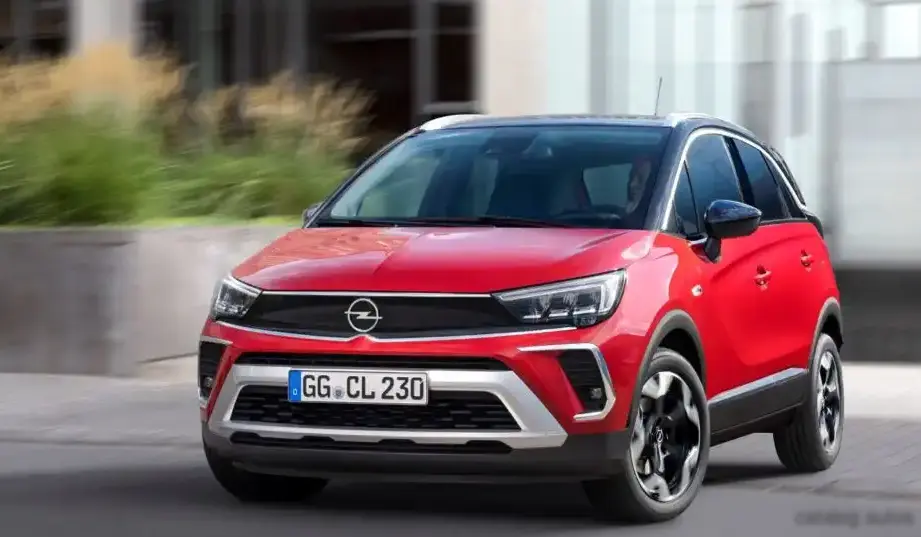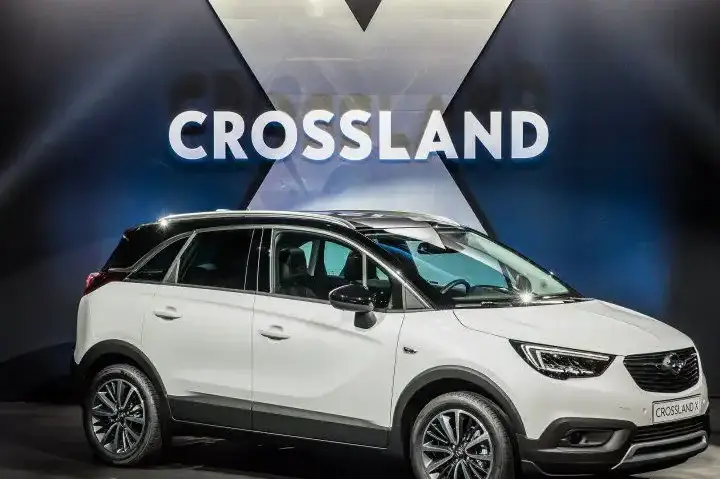
The Opel Crossland X 1.6 ECOTEC, producing 99 horsepower, was a subcompact crossover SUV manufactured between June 2017 and June 2018. Positioned as an entry-level offering within the Crossland X range, it aimed to provide an affordable and fuel-efficient option for buyers seeking a practical and versatile vehicle. The Crossland X itself was a collaborative effort between Opel (Vauxhall in the UK) and PSA Peugeot Citroën, sharing its platform with the Peugeot 2008 and Citroën C3 Aircross. This model represented Opel’s entry into the rapidly growing subcompact SUV segment, offering a blend of practicality, affordability, and modern styling.
Technical Specifications
| Brand | Opel |
| Model | Crossland |
| Generation | Crossland X |
| Type (Engine) | 1.6 ECOTEC (99 Hp) |
| Start of production | June, 2017 |
| End of production | June, 2018 |
| Powertrain Architecture | Internal Combustion engine |
| Body type | SUV |
| Seats | 5 |
| Doors | 5 |
| Fuel consumption (urban) | 4.1-4.2 l/100 km (57.4 – 56 US mpg) |
| Fuel consumption (extra urban) | 3.3-3.4 l/100 km (71.3 – 69.2 US mpg) |
| Fuel consumption (combined) | 3.3-3.7 l/100 km (71.3 – 63.6 US mpg) |
| CO2 emissions | 93-95 g/km |
| Fuel Type | Diesel |
| Acceleration 0 – 100 km/h | 12 sec |
| Acceleration 0 – 62 mph | 12 sec |
| Acceleration 0 – 60 mph | 11.4 sec |
| Maximum speed | 180 km/h (111.85 mph) |
| Emission standard | Euro 6 |
| Weight-to-power ratio | 12.3 kg/Hp |
| Weight-to-torque ratio | 4.8 kg/Nm |
| Power | 99 Hp @ 3750 rpm |
| Torque | 254 Nm @ 1750 rpm (187.34 lb.-ft. @ 1750 rpm) |
| Engine layout | Front, Transverse |
| Engine Model/Code | B16DT |
| Engine displacement | 1560 cm3 (95.2 cu. in.) |
| Number of cylinders | 4 |
| Engine configuration | Inline |
| Cylinder Bore | 75 mm (2.95 in.) |
| Piston Stroke | 88.3 mm (3.48 in.) |
| Compression ratio | 17:1 |
| Number of valves per cylinder | 4 |
| Fuel injection system | Diesel Commonrail |
| Engine aspiration | Turbocharger, Intercooler |
| Engine oil capacity | 3.8 l (4.02 US qt | 3.34 UK qt) |
| Coolant | 5.3 l (5.6 US qt | 4.66 UK qt) |
| Kerb Weight | 1214 kg (2676.41 lbs.) |
| Max. weight | 1820 kg (4012.41 lbs.) |
| Max load | 606 kg (1336 lbs.) |
| Trunk (boot) space – minimum | 410 l (14.48 cu. ft.) |
| Trunk (boot) space – maximum | 1255 l (44.32 cu. ft.) |
| Fuel tank capacity | 45 l (11.89 US gal | 9.9 UK gal) |
| Max. roof load | 50 kg (110.23 lbs.) |
| Permitted trailer load with brakes (12%) | 840 kg (1851.88 lbs.) |
| Permitted trailer load without brakes | 620 kg (1366.87 lbs.) |
| Permitted towbar download | 50 kg (110.23 lbs.) |
| Length | 4212 mm (165.83 in.) |
| Width | 1765 mm (69.49 in.) |
| Width with mirrors folded | 1825 mm (71.85 in.) |
| Width including mirrors | 1976 mm (77.8 in.) |
| Height | 1605 mm (63.19 in.) |
| Wheelbase | 2604 mm (102.52 in.) |
| Front track | 1513 mm (59.57 in.) |
| Rear (Back) track | 1491 mm (58.7 in.) |
| Minimum turning circle | 11.2 m (36.75 ft.) |
| Drivetrain Architecture | Front wheel drive |
| Number of gears and type of gearbox | 5 gears, manual transmission |
| Front brakes | Ventilated discs |
| Rear brakes | Disc |
| Tires size | 195/60 R16 |
| Wheel rims size | 16 |
Powertrain & Engine Architecture
The 1.6 ECOTEC engine, specifically the B16DT diesel variant, is a four-cylinder, inline engine utilizing a turbocharger and intercooler to enhance performance and efficiency. This engine featured a common rail direct injection system, delivering fuel directly into the combustion chamber at high pressure for optimized combustion. The engine produced 99 horsepower at 3750 rpm and 254 Nm (187 lb-ft) of torque at 1750 rpm. The engine’s 17:1 compression ratio is typical for a diesel engine, contributing to its thermal efficiency. The engine was paired with a five-speed manual transmission, which was the standard offering for this variant. While an automatic transmission was available on other Crossland X trims, it was not offered with the 99 hp engine.
Driving Characteristics
The 99 hp 1.6 ECOTEC with a manual transmission provided adequate, though not exhilarating, performance. Acceleration from 0 to 60 mph took approximately 11.4 seconds, and top speed was around 112 mph. The engine’s torque delivery was relatively flat, providing usable power for everyday driving situations. However, when fully loaded or tackling steep inclines, the engine could feel strained. The five-speed manual transmission offered a reasonable spread of gears, but the lack of a sixth gear meant that engine speeds could be relatively high at highway speeds, potentially impacting fuel economy and noise levels. Compared to the more powerful 1.2-liter turbocharged petrol engine or the higher-output diesel variants, this 1.6-liter diesel felt less refined and offered slower acceleration.
Equipment & Trim Levels
The 1.6 ECOTEC 99 hp variant typically came with a basic level of equipment, focusing on practicality and affordability. Standard features generally included air conditioning, power windows, central locking, and a basic audio system with Bluetooth connectivity. Safety features such as ABS, ESP (Electronic Stability Program), and multiple airbags were also standard. Higher trim levels, such as ‘Edition’ or ‘Sport’, added features like alloy wheels, a touchscreen infotainment system, cruise control, and parking sensors. Interior upholstery was typically cloth, and the dashboard featured a functional, if somewhat basic, design.
Chassis & Braking
The Crossland X utilized a front-wheel-drive chassis with a MacPherson strut suspension at the front and a torsion beam suspension at the rear. The front brakes were ventilated discs, while the rear brakes were solid discs. The suspension setup was tuned for comfort, providing a relatively smooth ride over most road surfaces. Steering was electrically assisted, offering light and easy steering feel. The relatively low weight of the vehicle (around 1214 kg or 2676 lbs) helped to compensate for the modest engine output, providing reasonable handling characteristics.
Market Reception & Comparison
The Opel Crossland X 1.6 ECOTEC 99 hp was generally well-received as an affordable and fuel-efficient option within the subcompact SUV segment. Critics praised its practicality, spacious interior, and comfortable ride. However, the engine was often criticized for being underpowered, particularly when compared to competitors offering more potent engines. Fuel economy was a strong point, with combined fuel consumption figures ranging from 3.3 to 3.7 liters per 100 kilometers (71.3 to 63.6 US mpg). Compared to the petrol-powered Crossland X variants, the diesel offered superior fuel economy but lacked the refinement and responsiveness of the petrol engine.
Legacy
The Opel Crossland X 1.6 ECOTEC (99 hp) represents a practical and economical entry point into the subcompact SUV market. While not known for its performance, the powertrain proved to be relatively reliable, and well-maintained examples continue to be available on the used car market. The B16DT engine, while not a high-performance unit, is generally considered durable and capable of covering high mileage with proper maintenance. Today, these vehicles offer an affordable and fuel-efficient option for buyers seeking a small, versatile SUV.