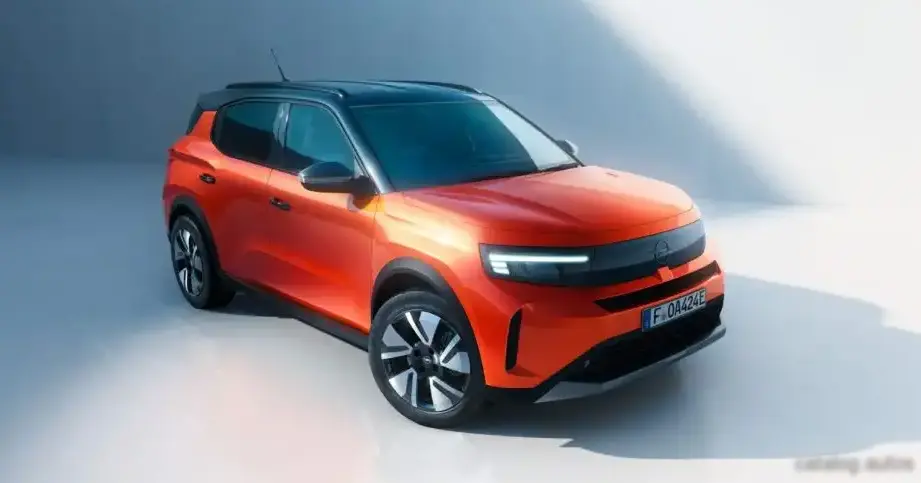
The Opel Frontera (2024) 1.2 Turbo (136 hp) Mild Hybrid e-DCT 7-Seat represents Opel’s re-entry into the mid-size SUV segment, launched in July 2024 and running through March 2025. Positioned as a practical and family-oriented vehicle, this variant offers a blend of fuel efficiency and space, catering to buyers seeking a versatile seven-seater. It’s built on Opel’s modern platform, aiming to compete with established players in the European SUV market. This particular configuration, combining a turbocharged three-cylinder engine with a mild hybrid system and a seven-speed dual-clutch transmission, is intended to provide a balance between performance and economy, making it a key offering within the Frontera lineup.
Technical Specifications
| Brand | Opel |
| Model | Frontera |
| Generation | Frontera (2024) |
| Type | 1.2 Turbo (136 Hp) Mild Hybrid e-DCT 7 Seat |
| Start of production | July, 2024 |
| End of production | March, 2025 |
| Powertrain Architecture | MHEV (Mild Hybrid Electric Vehicle) |
| Body type | SUV |
| Seats | 7 |
| Doors | 5 |
| Fuel consumption at Low speed (WLTP) | 4.9 l/100 km (48 US mpg, 57.6 UK mpg, 20.4 km/l) |
| Fuel consumption at Medium speed (WLTP) | 4.9 l/100 km (48 US mpg, 57.6 UK mpg, 20.4 km/l) |
| Fuel consumption at high speed (WLTP) | 5.1 l/100 km (46.1 US mpg, 55.4 UK mpg, 19.6 km/l) |
| Fuel consumption at very high speed (WLTP) | 6.6 l/100 km (35.6 US mpg, 42.8 UK mpg, 15.2 km/l) |
| Combined fuel consumption (WLTP) | 5.5 l/100 km (42.8 US mpg, 51.4 UK mpg, 18.2 km/l) |
| CO2 emissions (WLTP) | 126 g/km |
| Fuel Type | Petrol (Gasoline) |
| Acceleration 0 – 100 km/h | 9 sec |
| Acceleration 0 – 62 mph | 9 sec |
| Acceleration 0 – 60 mph | 8.6 sec |
| Maximum speed | 190 km/h (118.06 mph) |
| Emission standard | Euro 6e |
| Weight-to-power ratio | 9.6 kg/Hp |
| Weight-to-torque ratio | 5.7 kg/Nm |
| Battery voltage | 48 V |
| Battery technology | Lithium-ion (Li-Ion) |
| Electric motor power | 28 Hp |
| Power | 136 Hp @ 5500 rpm |
| Torque | 230 Nm @ 1750 rpm (169.64 lb.-ft. @ 1750 rpm) |
| Engine displacement | 1199 cm3 (73.17 cu. in.) |
| Number of cylinders | 3 |
| Cylinder Bore | 75 mm (2.95 in.) |
| Piston Stroke | 90.5 mm (3.56 in.) |
| Engine oil capacity | 3.5 l (3.7 US qt | 3.08 UK qt) |
| Kerb Weight | 1301 kg (2868.21 lbs.) |
| Max. weight | 2020 kg (4453.34 lbs.) |
| Max load | 719 kg (1585.12 lbs.) |
| Trunk (boot) space – maximum | 1594 l (56.29 cu. ft.) |
| Fuel tank capacity | 44 l (11.62 US gal | 9.68 UK gal) |
| Length | 4385 mm (172.64 in.) |
| Width | 1795 mm (70.67 in.) |
| Height | 1655 mm (65.16 in.) |
| Wheelbase | 2670 mm (105.12 in.) |
| Number of gears | 6 |
| Type of gearbox | automatic transmission e-DCT |
Powertrain & Engine Architecture
The Frontera 1.2 Turbo Mild Hybrid utilizes a 1.2-liter, three-cylinder turbocharged gasoline engine (engine code likely to be part of Opel’s newer engine family). This engine produces 136 horsepower at 5500 rpm and 230 Nm (169.64 lb-ft) of torque at 1750 rpm. The mild hybrid system incorporates a 48-volt lithium-ion battery and a 28 hp electric motor integrated into the transmission. This system provides assistance during acceleration and allows for regenerative braking, improving fuel efficiency. The engine features direct fuel injection and a double overhead camshaft (DOHC) valvetrain. The e-DCT seven-speed dual-clutch transmission offers quick and smooth gear changes, contributing to a more responsive driving experience. The turbocharger and intercooler enhance the engine’s power output and efficiency.
Driving Characteristics
The 1.2 Turbo Mild Hybrid e-DCT offers a comfortable and refined driving experience. While not a performance-oriented variant, the combination of the turbocharged engine and the electric motor provides adequate acceleration, achieving 0-100 km/h (0-62 mph) in approximately 9 seconds. The e-DCT transmission contributes to smooth gear changes, and the mild hybrid system provides a noticeable boost during initial acceleration. Compared to potential higher-output versions (if offered), this variant prioritizes fuel economy and ease of driving over outright performance. The gear ratios are tuned for efficiency, and the power delivery is linear and predictable. The front-wheel-drive configuration provides decent handling, although it may not offer the same level of grip as an all-wheel-drive system.
Equipment & Trim Levels
The Frontera 1.2 Turbo Mild Hybrid 7-Seat typically comes with a generous level of standard equipment. This includes features such as a touchscreen infotainment system with smartphone integration (Apple CarPlay and Android Auto), automatic climate control, and a suite of safety features like automatic emergency braking, lane departure warning, and traffic sign recognition. Interior upholstery is likely to be a combination of cloth and durable plastics, with a focus on practicality. Optional extras may include a larger touchscreen, navigation system, premium audio system, and parking assist features. The seven-seat configuration provides flexibility for families, although the third-row seats are best suited for occasional use.
Chassis & Braking
The Frontera utilizes an independent McPherson strut suspension at the front and a torsion beam suspension at the rear. This setup provides a good balance between ride comfort and handling. The front suspension incorporates a coil spring and anti-roll bar to reduce body roll during cornering. The braking system features disc brakes at the front and drum brakes at the rear, with ABS (Anti-lock Braking System) as standard. The electric power steering provides light and precise steering feel. Tire sizes are typically 215/65 R16 or 215/60 R17, depending on the trim level.
Market Reception & Comparison
The Opel Frontera 1.2 Turbo Mild Hybrid 7-Seat is positioned as a value-oriented SUV, competing with models like the Peugeot 5008, Renault Austral, and Hyundai Tucson. Critics generally praise its spacious interior, fuel efficiency, and comfortable ride. However, some reviewers note that the 1.2-liter engine can feel strained when fully loaded or driving uphill. The mild hybrid system contributes to improved fuel economy compared to non-hybrid versions, with combined fuel consumption of around 5.5 l/100 km (42.8 US mpg). Reliability is expected to be good, based on Opel’s recent track record, but long-term data is still emerging.
Legacy
The long-term reliability of the 1.2 Turbo Mild Hybrid powertrain remains to be seen, as it is a relatively new engine and transmission combination. However, Opel’s newer engines have generally proven to be durable and reliable. The mild hybrid system is expected to contribute to reduced emissions and improved fuel economy over the vehicle’s lifespan. In the used car market, this variant is likely to appeal to buyers seeking a practical, fuel-efficient, and spacious seven-seater at a competitive price point. Its combination of features and affordability should ensure its continued popularity in the years to come.