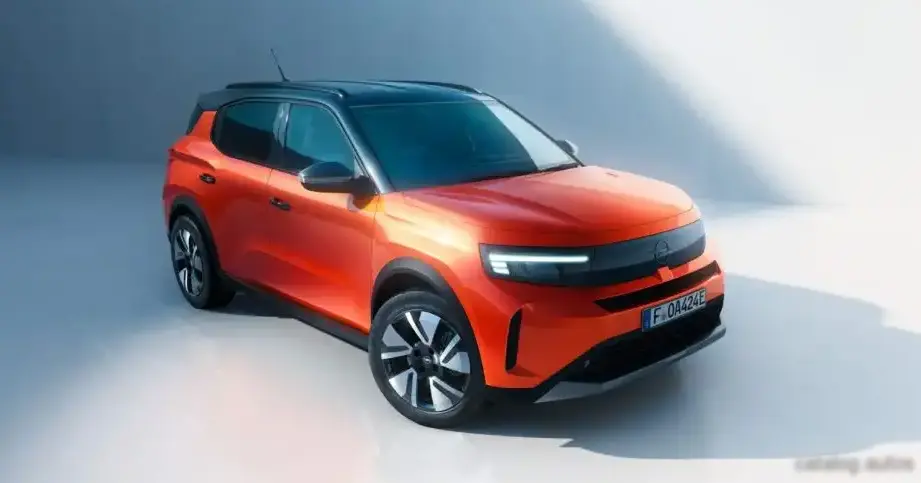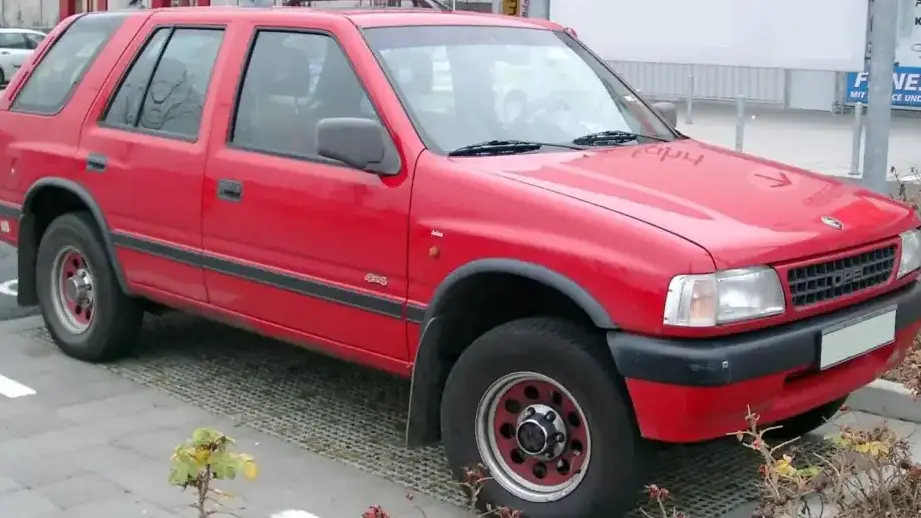
The Opel Frontera A 2.5 TDS 4×4, produced between May 1996 and June 1998, represented a significant offering in Opel’s foray into the mid-size SUV market. Positioned as a robust, capable vehicle aimed at those needing both on-road comfort and off-road ability, the 2.5 TDS variant occupied a middle ground within the Frontera A lineup, offering a balance between performance and fuel economy. It was part of the first generation Frontera (A), built on a body-on-frame chassis, and shared its platform with the Isuzu Rodeo and Honda Passport, reflecting a period of increased international collaboration within the automotive industry. The Frontera A aimed to compete with established SUVs like the Jeep Cherokee and Nissan Patrol in the European market.
Technical Specifications
| Brand | Opel |
| Model | Frontera |
| Generation | Frontera A |
| Type (Engine) | 2.5 TDS (115 Hp) 4×4 |
| Start of production | May, 1996 |
| End of production | June, 1998 |
| Powertrain Architecture | Internal Combustion engine |
| Body type | SUV |
| Seats | 5 |
| Doors | 5 |
| Fuel consumption (combined) | 10.2 l/100 km (23.1 US mpg, 27.7 UK mpg, 9.8 km/l) |
| CO2 emissions | 270 g/km |
| Fuel Type | Diesel |
| Acceleration 0 – 100 km/h | 16.8 sec |
| Acceleration 0 – 62 mph | 16.8 sec |
| Acceleration 0 – 60 mph | 16 sec |
| Maximum speed | 150 km/h (93.21 mph) |
| Emission standard | Euro 2 |
| Weight-to-power ratio | 16.7 kg/Hp, 59.9 Hp/tonne |
| Weight-to-torque ratio | 7.4 kg/Nm, 135.4 Nm/tonne |
| Power | 115 Hp @ 3600 rpm |
| Power per litre | 46 Hp/l |
| Torque | 260 Nm @ 1800 rpm (191.77 lb.-ft. @ 1800 rpm) |
| Engine layout | Front, Longitudinal |
| Engine Model/Code | VM41B |
| Engine displacement | 2499 cm3 (152.5 cu. in.) |
| Number of cylinders | 4 |
| Engine configuration | Inline |
| Cylinder Bore | 92 mm (3.62 in.) |
| Piston Stroke | 94 mm (3.7 in.) |
| Compression ratio | 21:1 |
| Number of valves per cylinder | 2 |
| Fuel injection system | Precombustion chamber injection |
| Engine aspiration | Turbocharger |
| Valvetrain | OHV |
| Engine oil capacity | 6.3 l (6.66 US qt | 5.54 UK qt) |
| Coolant | 8.8 l (9.3 US qt | 7.74 UK qt) |
| Kerb Weight | 1920 kg (4232.88 lbs.) |
| Max. weight | 2600 kg (5732.02 lbs.) |
| Max load | 680 kg (1499.14 lbs.) |
| Trunk (boot) space – minimum | 540 l (19.07 cu. ft.) |
| Trunk (boot) space – maximum | 1720 l (60.74 cu. ft.) |
| Fuel tank capacity | 80 l (21.13 US gal | 17.6 UK gal) |
| Length | 4692 mm (184.72 in.) |
| Width | 1764 mm (69.45 in.) |
| Height | 1753 mm (69.02 in.) |
| Wheelbase | 2760 mm (108.66 in.) |
| Front track | 1455 mm (57.28 in.) |
| Rear (Back) track | 1460 mm (57.48 in.) |
| Ride height (ground clearance) | 230 mm (9.06 in.) |
| Drive wheel | All wheel drive (4×4) |
| Number of gears and type of gearbox | 5 gears, manual transmission |
| Front suspension | Torsion |
| Rear suspension | Rigid axle suspension |
| Front brakes | Ventilated discs |
| Rear brakes | Ventilated discs |
| Assisting systems | ABS (Anti-lock braking system) |
| Steering type | Worm-reduction unit |
| Power steering | Hydraulic Steering |
| Tires size | 235/70 R16 |
| Wheel rims size | 7J x 16 |
Powertrain & Engine Architecture
The heart of the Frontera A 2.5 TDS was the VM41B engine, a 2.5-liter inline-four diesel engine developed by VM Motori, an Italian manufacturer specializing in diesel engines. This engine utilized a precombustion chamber injection system, a common technology in diesel engines of the era, designed to improve combustion efficiency and reduce noise. The turbocharger, integrated into the engine, boosted power output to 115 horsepower at 3600 rpm and 260 Nm (191.77 lb-ft) of torque at 1800 rpm. The engine’s OHV (Overhead Valve) valvetrain was a relatively simple and robust design, contributing to its durability. The 2.5 TDS was paired with a five-speed manual transmission, delivering power to all four wheels via a part-time four-wheel-drive system. The longitudinal engine layout was typical for vehicles designed with off-road capability, allowing for a more direct connection to the transfer case.
Driving Characteristics
The 2.5 TDS 4×4 Frontera offered a driving experience focused on practicality and capability rather than outright performance. Acceleration was modest, taking around 16.8 seconds to reach 62 mph, reflecting the engine’s torque-focused nature. The turbocharger provided a noticeable boost in power, but the engine lacked the responsiveness of more modern diesel engines. The five-speed manual transmission was well-matched to the engine’s characteristics, allowing drivers to keep the engine in its optimal torque band. Off-road, the Frontera A 2.5 TDS proved to be a competent performer, with its four-wheel-drive system and ample ground clearance enabling it to tackle moderately challenging terrain. The body-on-frame construction contributed to a robust feel, but also resulted in a less refined ride compared to more modern, unibody SUVs.
Equipment & Trim Levels
The Frontera A 2.5 TDS 4×4 typically came equipped with features considered standard for a mid-size SUV of its time. These included power steering, ABS brakes, and a basic audio system. Interior upholstery was typically cloth, with a functional, if somewhat utilitarian, dashboard layout. Optional extras included air conditioning, power windows, and upgraded audio systems. The trim level of the 2.5 TDS generally fell in the mid-range of the Frontera A lineup, offering a step up in performance and features compared to the base models, but lacking the luxury appointments of the higher-end trims.
Chassis & Braking
The Frontera A utilized a traditional body-on-frame construction, providing a robust and durable chassis. Front suspension consisted of torsion bars, while the rear employed a rigid axle suspension, a setup designed for both on-road comfort and off-road capability. Braking duties were handled by ventilated discs on all four wheels, providing adequate stopping power for the vehicle’s weight. The ABS system enhanced braking performance, particularly on slippery surfaces. The Frontera A’s relatively high ride height (230mm) contributed to its off-road prowess, allowing it to clear obstacles with ease.
Market Reception & Comparison
The Opel Frontera A 2.5 TDS 4×4 was generally well-received in the European market as a capable and affordable SUV. Critics praised its off-road ability and robust construction, but noted its relatively unrefined ride and modest performance. Compared to the lower-powered Frontera variants, the 2.5 TDS offered a significant improvement in performance, making it a more suitable choice for those who frequently towed trailers or drove on challenging terrain. However, it was less fuel-efficient than the smaller-displacement diesel engines available in the Frontera lineup. Compared to competitors like the Jeep Cherokee, the Frontera A offered a more affordable price point, but lacked the Cherokee’s established brand reputation.
Legacy
The Opel Frontera A 2.5 TDS 4×4, while not a groundbreaking vehicle, played a role in establishing Opel as a contender in the growing SUV market. The VM41B engine proved to be a durable and reliable powerplant, and many examples remain on the road today. In the used car market, the Frontera A 2.5 TDS 4×4 is often sought after by enthusiasts looking for a capable and affordable off-road vehicle. However, potential buyers should be aware of the potential for age-related issues, such as corrosion and wear on suspension components. The Frontera A paved the way for subsequent Opel SUV models, and its legacy can be seen in the company’s continued presence in the SUV segment.