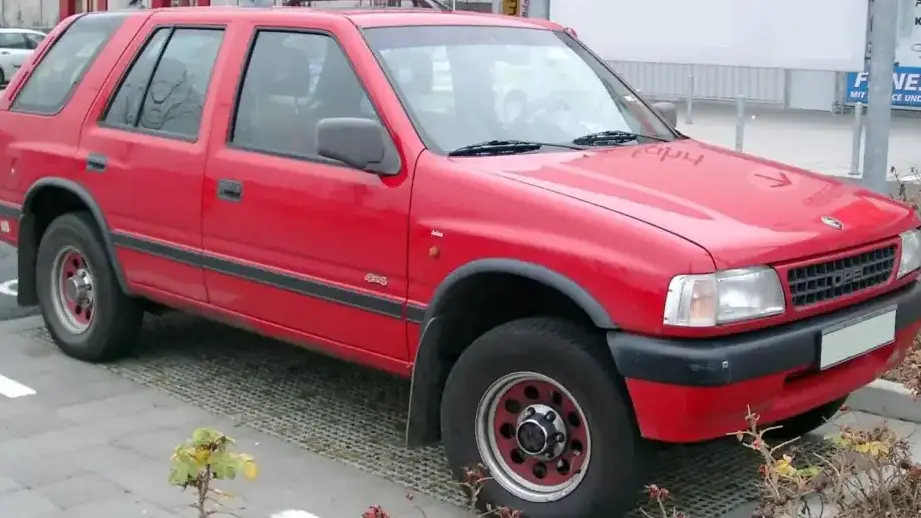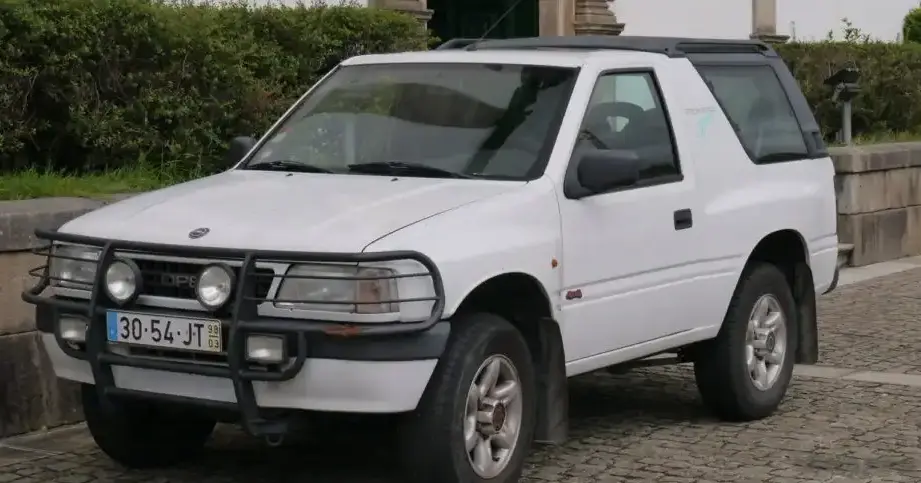
The Opel Frontera A Sport 2.0i, produced between February 1992 and February 1995, was a key variant within the first generation (Frontera A) of Opel’s popular SUV. Positioned as a more performance-oriented version of the standard Frontera, the Sport model aimed to appeal to drivers seeking a blend of off-road capability and on-road driving enjoyment. It was a significant offering in the European market, where demand for rugged, versatile vehicles was growing. The Frontera A series, built on the 60/80 platform, represented Opel’s entry into the increasingly competitive mid-size SUV segment. This particular 2.0i Sport model occupied a middle ground in the lineup, offering a step up in power and features compared to the base models, but remaining more accessible than the range-topping variants.
Technical Specifications
| Brand | Opel |
| Model | Frontera |
| Generation | Frontera A Sport |
| Type (Engine) | 2.0i (115 Hp) |
| Start of production | February, 1992 |
| End of production | February, 1995 |
| Powertrain Architecture | Internal Combustion engine |
| Body type | SUV |
| Seats | 5 |
| Doors | 3 |
| Fuel consumption (combined) | 12.1 l/100 km (19.4 US mpg, 23.3 UK mpg, 8.3 km/l) |
| CO2 emissions | 259 g/km |
| Fuel Type | Petrol (Gasoline) |
| Acceleration 0 – 100 km/h | 17.9 sec |
| Acceleration 0 – 62 mph | 17.9 sec |
| Acceleration 0 – 60 mph | 17 sec |
| Maximum speed | 158 km/h (98.18 mph) |
| Emission standard | Euro 1 |
| Weight-to-power ratio | 14.7 kg/Hp, 67.8 Hp/tonne |
| Weight-to-torque ratio | 10 kg/Nm, 100.2 Nm/tonne |
| Power | 115 Hp @ 5400 rpm |
| Power per litre | 57.6 Hp/l |
| Torque | 170 Nm @ 2600 rpm (125.39 lb.-ft. @ 2600 rpm) |
| Engine layout | Front, Longitudinal |
| Engine Model/Code | C20NE |
| Engine displacement | 1998 cm3 (121.93 cu. in.) |
| Number of cylinders | 4 |
| Engine configuration | Inline |
| Cylinder Bore | 86 mm (3.39 in.) |
| Piston Stroke | 86 mm (3.39 in.) |
| Compression ratio | 9.2:1 |
| Number of valves per cylinder | 2 |
| Fuel injection system | Multi-port manifold injection |
| Engine aspiration | Naturally aspirated engine |
| Valvetrain | OHC |
| Engine oil capacity | 4.5 l (4.76 US qt | 3.96 UK qt) |
| Coolant | 7.2 l (7.61 US qt | 6.34 UK qt) |
| Kerb Weight | 1696 kg (3739.04 lbs.) |
| Max. weight | 2200 kg (4850.17 lbs.) |
| Max load | 504 kg (1111.13 lbs.) |
| Trunk (boot) space – minimum | 300 l (10.59 cu. ft.) |
| Trunk (boot) space – maximum | 1160 l (40.97 cu. ft.) |
| Fuel tank capacity | 80 l (21.13 US gal | 17.6 UK gal) |
| Length | 4192 mm (165.04 in.) |
| Width | 1780 mm (70.08 in.) |
| Height | 1721 mm (67.76 in.) |
| Wheelbase | 2330 mm (91.73 in.) |
| Front track | 1455 mm (57.28 in.) |
| Rear (Back) track | 1460 mm (57.48 in.) |
| Ride height (ground clearance) | 205 mm (8.07 in.) |
| Drivetrain Architecture | The Internal combustion engine (ICE) drives the rear wheels of the vehicle. |
| Drive wheel | Rear wheel drive |
| Number of gears and type of gearbox | 5 gears, manual transmission |
| Front suspension | Torsion |
| Rear suspension | Leaf spring |
| Front brakes | Ventilated discs |
| Rear brakes | Ventilated discs |
| Assisting systems | ABS (Anti-lock braking system) |
| Steering type | Worm-reduction unit |
| Power steering | Hydraulic Steering |
| Tires size | 235/70 R16 |
| Wheel rims size | 7J x 16 |
Powertrain & Engine Architecture
The Frontera A Sport 2.0i was powered by the Opel C20NE engine, a 1998cc inline-four cylinder gasoline engine. This engine was a mainstay in Opel and Vauxhall vehicles throughout the early 1990s. The C20NE featured a cast iron block and an aluminum cylinder head, employing a single overhead camshaft (OHC) design with two valves per cylinder. Fuel delivery was managed by a Bosch multi-port fuel injection system, contributing to improved efficiency and responsiveness compared to earlier carbureted engines. The engine produced 115 horsepower at 5400 rpm and 170 Nm (125 lb-ft) of torque at 2600 rpm. The engine was mounted longitudinally in the chassis, driving the rear wheels. The standard transmission for this variant was a five-speed manual gearbox, offering a balance between fuel economy and driver control. The gear ratios were tuned for a mix of on-road cruising and off-road traction, though the relatively long gearing did impact acceleration.
Driving Characteristics
The 2.0i Sport, with its 115 hp and manual transmission, offered a noticeable step up in performance compared to the lower-powered Frontera variants. While not a sports car by any means, it provided adequate power for everyday driving and occasional off-road excursions. Acceleration from 0 to 100 km/h (0-62 mph) took around 17.9 seconds, and the top speed was approximately 158 km/h (98 mph). The engine’s torque delivery was relatively flat, making it tractable in various driving situations. However, the Frontera’s considerable weight (1696 kg / 3739 lbs) meant that it never felt particularly quick. Compared to the later 2.5-liter diesel or the more powerful 2.4-liter gasoline engines, the 2.0i Sport prioritized fuel economy and affordability over outright performance. The manual transmission allowed for greater driver engagement and control, particularly when navigating challenging terrain.
Equipment & Trim Levels
The Frontera A Sport 2.0i typically came equipped with a reasonable level of standard features for its time. These included power steering, ABS anti-lock brakes, and a basic audio system. Interior appointments were functional rather than luxurious, with cloth upholstery and durable plastic trim. The dashboard layout was straightforward and easy to use. Optional extras included air conditioning, electric windows, and a more advanced audio system. The “Sport” designation also included some cosmetic enhancements, such as unique wheel designs and potentially some exterior trim details. The interior space was generous, offering comfortable seating for five passengers and a reasonably sized cargo area (300-1160 liters).
Chassis & Braking
The Frontera A Sport featured a robust chassis designed to handle both on-road and off-road conditions. The front suspension utilized a torsion bar setup, providing a comfortable ride and good wheel articulation. The rear suspension employed leaf springs, which were well-suited for carrying loads and maintaining stability. The braking system consisted of ventilated discs on all four wheels, providing adequate stopping power for the vehicle’s weight. The ABS system helped to prevent wheel lockup during hard braking, enhancing safety. The steering was a worm-reduction type with hydraulic assistance, offering reasonable precision and ease of use.
Market Reception & Comparison
The Opel Frontera A Sport 2.0i was generally well-received by automotive critics as a capable and versatile SUV. It was praised for its ruggedness, practicality, and reasonable price point. However, some reviewers noted its relatively slow acceleration and somewhat dated interior. Compared to other SUVs in its class, such as the Suzuki Vitara or the Nissan Terrano, the Frontera offered a good balance of features and performance. The 2.0i Sport variant was often seen as a sensible choice for buyers who wanted a capable off-roader without the expense of the larger, more powerful engines. Fuel economy was a consideration, with the 2.0i offering better mileage than the larger displacement options, but still remaining relatively thirsty by modern standards.
Legacy
The Opel Frontera A Sport 2.0i, while not a particularly rare or collectible vehicle today, holds a place in automotive history as a representative of the early wave of popular SUVs in Europe. The C20NE engine is known for its durability and relative simplicity, making it a relatively easy engine to maintain. However, age and mileage can lead to issues such as oil leaks and worn components. In the used car market, these vehicles are often sought after by enthusiasts looking for a classic off-roader or a project vehicle. Parts availability is generally good, although some specific trim pieces may be difficult to find. The Frontera A Sport 2.0i remains a testament to Opel’s ability to produce practical, reliable, and versatile vehicles.