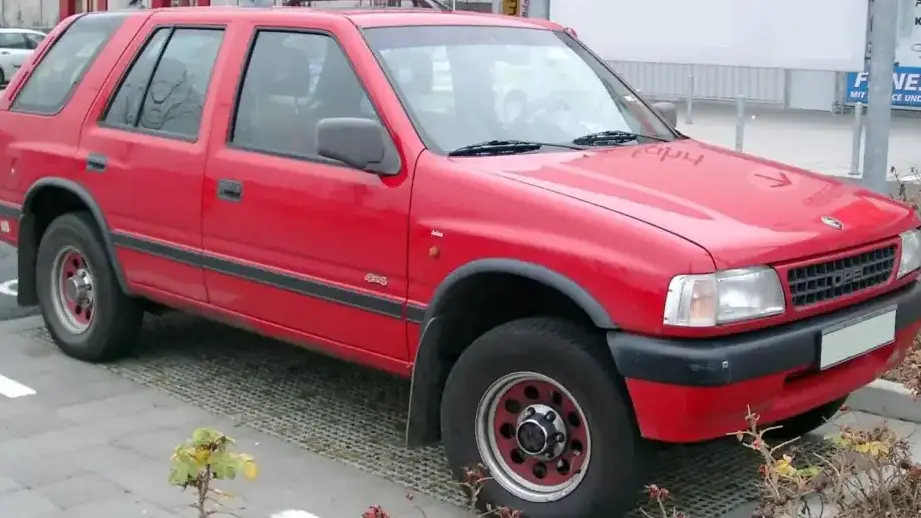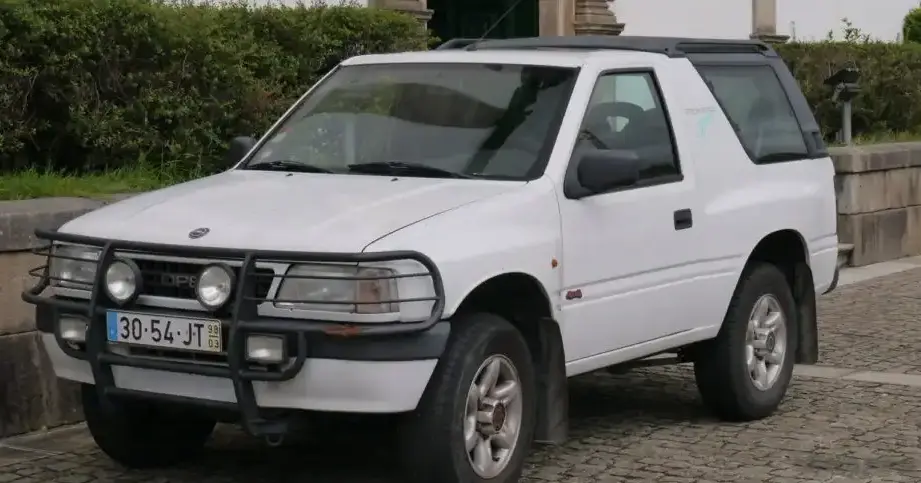
The Opel Frontera A Sport 2.0i 4×4, produced between February 1992 and February 1995, was a key variant within the first generation (Frontera A) of Opel’s popular SUV. Positioned as a more performance-oriented version of the Frontera, the Sport model aimed to appeal to drivers seeking off-road capability combined with a slightly more engaging driving experience. It occupied a middle ground in the Frontera A lineup, offering more power than the base models but remaining more accessible than the range-topping versions. The Frontera A itself was Opel’s response to the growing demand for sport utility vehicles in Europe, competing with models like the Nissan Patrol, Mitsubishi Pajero, and Toyota Land Cruiser, though at a more affordable price point.
Technical Specifications
| Brand | Opel |
| Model | Frontera |
| Generation | Frontera A Sport |
| Type (Engine) | 2.0i (115 Hp) 4×4 |
| Start of production | February, 1992 |
| End of production | February, 1995 |
| Powertrain Architecture | Internal Combustion engine |
| Body type | SUV |
| Seats | 5 |
| Doors | 3 |
| Fuel consumption (combined) | 12.1 l/100 km (19.4 US mpg, 23.3 UK mpg, 8.3 km/l) |
| CO2 emissions | 259 g/km |
| Fuel Type | Petrol (Gasoline) |
| Acceleration 0 – 100 km/h | 17.9 sec |
| Acceleration 0 – 62 mph | 17.9 sec |
| Acceleration 0 – 60 mph | 17 sec |
| Maximum speed | 158 km/h (98.18 mph) |
| Emission standard | Euro 1 |
| Weight-to-power ratio | 14.7 kg/Hp, 67.8 Hp/tonne |
| Weight-to-torque ratio | 10 kg/Nm, 100.2 Nm/tonne |
| Power | 115 Hp @ 5400 rpm |
| Power per litre | 57.6 Hp/l |
| Torque | 170 Nm @ 2600 rpm (125.39 lb.-ft. @ 2600 rpm) |
| Engine layout | Front, Transverse |
| Engine Model/Code | C20NE |
| Engine displacement | 1998 cm3 (121.93 cu. in.) |
| Number of cylinders | 4 |
| Engine configuration | Inline |
| Cylinder Bore | 86 mm (3.39 in.) |
| Piston Stroke | 86 mm (3.39 in.) |
| Compression ratio | 9.2:1 |
| Number of valves per cylinder | 2 |
| Fuel injection system | Multi-port manifold injection |
| Engine aspiration | Naturally aspirated engine |
| Valvetrain | OHC |
| Engine oil capacity | 4.5 l (4.76 US qt | 3.96 UK qt) |
| Coolant | 7.2 l (7.61 US qt | 6.34 UK qt) |
| Kerb Weight | 1696 kg (3739.04 lbs.) |
| Max. weight | 2200 kg (4850.17 lbs.) |
| Max load | 504 kg (1111.13 lbs.) |
| Trunk (boot) space – minimum | 300 l (10.59 cu. ft.) |
| Trunk (boot) space – maximum | 1160 l (40.97 cu. ft.) |
| Fuel tank capacity | 80 l (21.13 US gal | 17.6 UK gal) |
| Length | 4192 mm (165.04 in.) |
| Width | 1780 mm (70.08 in.) |
| Height | 1721 mm (67.76 in.) |
| Wheelbase | 2330 mm (91.73 in.) |
| Front track | 1455 mm (57.28 in.) |
| Rear (Back) track | 1460 mm (57.48 in.) |
| Ride height (ground clearance) | 230 mm (9.06 in.) |
| Drive wheel | All wheel drive (4×4) |
| Number of gears and type of gearbox | 5 gears, manual transmission |
| Front suspension | Torsion |
| Rear suspension | Leaf spring |
| Front brakes | Ventilated discs |
| Rear brakes | Ventilated discs |
| Assisting systems | ABS (Anti-lock braking system) |
| Steering type | Worm-reduction unit |
| Power steering | Hydraulic Steering |
| Tires size | 235/70 R16 |
| Wheel rims size | 7J x 16 |
Powertrain & Engine Architecture
The Frontera A Sport 2.0i 4×4 was powered by the Opel C20NE engine, a 1998cc inline-four cylinder gasoline engine. This engine was a mainstay in Opel and Vauxhall vehicles throughout the early 1990s. The C20NE featured a cast iron block and an aluminum cylinder head, employing a single overhead camshaft (OHC) design with two valves per cylinder. Fuel delivery was managed by a Bosch multi-port fuel injection system, providing a balance between performance and fuel efficiency for the time. The engine produced 115 horsepower at 5400 rpm and 170 Nm (125 lb-ft) of torque at 2600 rpm. The engine was transversely mounted, contributing to a more compact engine bay and improved packaging. The five-speed manual transmission was a robust unit, designed to handle the engine’s torque and the demands of off-road driving.
Driving Characteristics
The 2.0i engine, paired with the five-speed manual transmission, provided adequate, though not exhilarating, performance. Acceleration from 0 to 100 km/h (0-62 mph) took around 17.9 seconds, and the top speed was approximately 158 km/h (98 mph). Compared to the more powerful Frontera models equipped with larger engines, the 2.0i felt somewhat underpowered, particularly when fully loaded or tackling steep inclines. However, the engine’s torque delivery was relatively smooth, making it suitable for everyday driving and moderate off-road excursions. The manual transmission offered precise shifts, allowing drivers to maintain control and optimize engine performance. The gear ratios were well-suited for both on-road cruising and low-speed off-road maneuvering.
Equipment & Trim Levels
The Frontera A Sport 2.0i 4×4 typically came equipped with a relatively basic level of standard features. Interior appointments included cloth upholstery, a simple dashboard layout, and manual windows and door locks. Air conditioning was often an optional extra, as were features like power steering and a radio/cassette player. The Sport trim level did offer some visual enhancements over the base models, such as body-colored bumpers and wheel arch extensions. Optional extras included a sunroof, upgraded sound system, and alloy wheels. The interior was designed with practicality in mind, offering durable materials and ample space for passengers and cargo.
Chassis & Braking
The Frontera A utilized a body-on-frame construction, providing a robust and durable chassis capable of withstanding the rigors of off-road driving. The front suspension consisted of torsion bars, while the rear suspension employed leaf springs. This setup provided a comfortable ride on paved roads while maintaining good off-road articulation. The braking system featured ventilated discs on all four wheels, along with an anti-lock braking system (ABS) as standard equipment. The ABS helped to maintain steering control during emergency braking situations. The steering was a worm-reduction type, offering a direct feel but requiring more effort than more modern steering systems.
Market Reception & Comparison
The Frontera A Sport 2.0i 4×4 was generally well-received by automotive critics as a capable and affordable SUV. It was praised for its off-road capability, durable construction, and relatively low price point. However, some critics noted its lack of refinement and its somewhat underpowered engine. Compared to the higher-spec Frontera models, the 2.0i offered a more economical option for buyers who didn’t require the extra power or luxury features. Fuel economy was typical for a vehicle of its size and type, averaging around 12.1 l/100 km (19.4 mpg). Reliability was generally good, although the leaf spring rear suspension could be prone to wear and tear over time.
Legacy
The Opel Frontera A Sport 2.0i 4×4 remains a popular choice among enthusiasts and collectors today. The C20NE engine is known for its durability and relative simplicity, making it relatively easy to maintain and repair. While not a high-performance vehicle, the Frontera A Sport offers a unique blend of off-road capability, practicality, and affordability. Used examples are readily available, and prices vary depending on condition and mileage. The Frontera A paved the way for subsequent generations of Opel SUVs, establishing the brand as a player in the growing SUV market. The 2.0i variant, while not the most powerful, represents a sweet spot in the lineup, offering a good balance of performance, economy, and reliability.