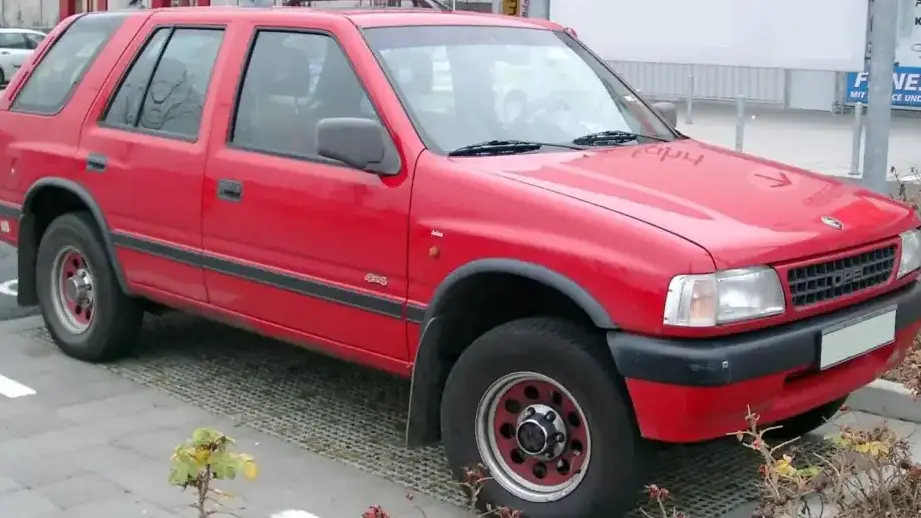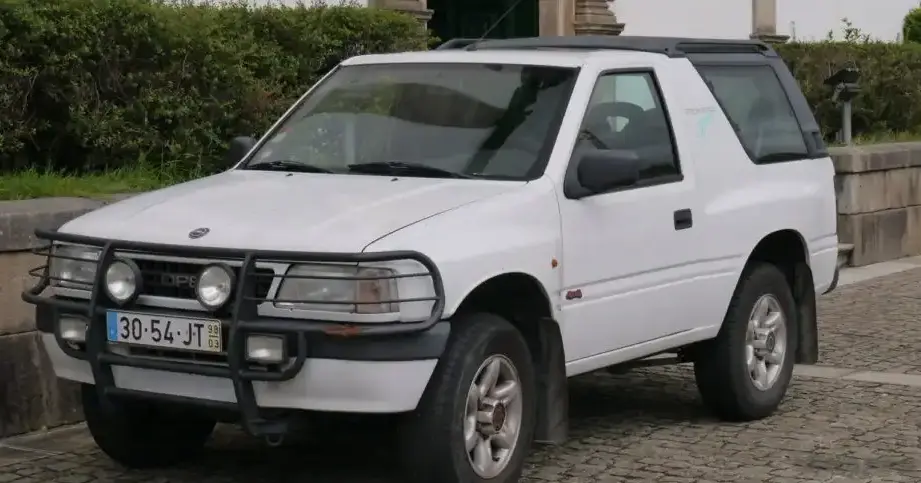
The Opel Frontera A Sport 2.8 TD 4×4, produced between February 1995 and April 1996, represented a robust and capable offering in Opel’s burgeoning SUV lineup. Positioned as a more performance-oriented variant within the Frontera A series, it aimed to appeal to drivers seeking off-road capability combined with a degree of on-road refinement. The Frontera A, launched in 1991, was Opel’s initial foray into the mid-size SUV segment, designed to compete with vehicles like the Nissan Patrol and Mitsubishi Pajero, primarily targeting the European market. This particular 2.8 TD Sport model occupied a mid-range position, offering a step up in power and features compared to the base models, but remaining more accessible than the top-of-the-line trims.
Technical Specifications
| Brand | Opel |
| Model | Frontera |
| Generation | Frontera A Sport |
| Type (Engine) | 2.8 TD (113 Hp) 4×4 |
| Start of production | February, 1995 |
| End of production | April, 1996 |
| Powertrain Architecture | Internal Combustion engine |
| Body type | SUV |
| Seats | 5 |
| Doors | 3 |
| Fuel consumption (urban) | 16 l/100 km (14.7 US mpg, 17.7 UK mpg, 6.3 km/l) |
| Fuel consumption (extra urban) | 8.5 l/100 km (27.7 US mpg, 33.2 UK mpg, 11.8 km/l) |
| Fuel consumption (combined) | 11 l/100 km (21.4 US mpg, 25.7 UK mpg, 9.1 km/l) |
| CO2 emissions | 249 g/km |
| Fuel Type | Diesel |
| Acceleration 0 – 100 km/h | 16.8 sec |
| Acceleration 0 – 62 mph | 16.8 sec |
| Acceleration 0 – 60 mph | 16 sec |
| Maximum speed | 149 km/h (92.58 mph) |
| Emission standard | Euro 2 |
| Weight-to-power ratio | 16.2 kg/Hp, 61.8 Hp/tonne |
| Weight-to-torque ratio | 7.6 kg/Nm, 132.4 Nm/tonne |
| Power | 113 Hp @ 3600 rpm |
| Power per litre | 40.8 Hp/l |
| Torque | 242 Nm @ 2100 rpm (178.49 lb.-ft. @ 2100 rpm) |
| Engine layout | Front, Longitudinal |
| Engine Model/Code | 4JB1-TC |
| Engine displacement | 2771 cm3 (169.1 cu. in.) |
| Number of cylinders | 4 |
| Engine configuration | Inline |
| Cylinder Bore | 93 mm (3.66 in.) |
| Piston Stroke | 102 mm (4.02 in.) |
| Compression ratio | 17.9:1 |
| Number of valves per cylinder | 2 |
| Fuel injection system | Precombustion chamber injection |
| Engine aspiration | Turbocharger |
| Valvetrain | OHV |
| Engine oil capacity | 5.5 l (5.81 US qt | 4.84 UK qt) |
| Coolant | 8.8 l (9.3 US qt | 7.74 UK qt) |
| Kerb Weight | 1828 kg (4030.05 lbs.) |
| Max. weight | 2510 kg (5533.6 lbs.) |
| Max load | 682 kg (1503.55 lbs.) |
| Trunk (boot) space – minimum | 300 l (10.59 cu. ft.) |
| Trunk (boot) space – maximum | 1160 l (40.97 cu. ft.) |
| Fuel tank capacity | 80 l (21.13 US gal | 17.6 UK gal) |
| Length | 4192 mm (165.04 in.) |
| Width | 1780 mm (70.08 in.) |
| Height | 1721 mm (67.76 in.) |
| Wheelbase | 2330 mm (91.73 in.) |
| Front track | 1455 mm (57.28 in.) |
| Rear (Back) track | 1460 mm (57.48 in.) |
| Ride height (ground clearance) | 230 mm (9.06 in.) |
| Drive wheel | All wheel drive (4×4) |
| Number of gears and type of gearbox | 5 gears, manual transmission |
| Front suspension | Torsion |
| Rear suspension | Leaf spring |
| Front brakes | Ventilated discs |
| Rear brakes | Ventilated discs |
| Assisting systems | ABS (Anti-lock braking system) |
| Steering type | Worm-reduction unit |
| Power steering | Hydraulic Steering |
| Tires size | 235/70 R16 |
| Wheel rims size | 7J x 16 |
Powertrain & Engine Architecture
The heart of the Frontera A Sport 2.8 TD was the 4JB1-TC, a 2.8-liter inline-four cylinder diesel engine. This engine, sourced from Isuzu (a long-time partner of Opel), was a robust and relatively simple design. It employed precombustion chamber injection, a system common in diesel engines of the era, which involved injecting fuel into a small pre-chamber to initiate combustion before it entered the main cylinder. This design aided in smoother combustion and reduced engine noise compared to direct injection systems. The engine was turbocharged, boosting power output to 113 horsepower at 3600 rpm and 242 Nm (178.49 lb-ft) of torque at 2100 rpm. The five-speed manual transmission was the only gearbox option available with this engine configuration. The longitudinal engine layout contributed to a more balanced weight distribution, beneficial for both on- and off-road handling.
Driving Characteristics
The 2.8 TD engine, while providing adequate power for its time, wasn’t known for blistering acceleration. The 0-100 km/h (0-62 mph) time of 16.8 seconds reflects this. However, the engine’s strength lay in its torque delivery. The 242 Nm of torque, available from relatively low engine speeds, made it a capable performer for towing and tackling challenging terrain. The manual transmission allowed for greater driver control, particularly when navigating off-road obstacles. Compared to the gasoline-powered Fronteras, the 2.8 TD offered significantly better fuel economy, albeit at the expense of outright performance. The gear ratios were tuned for practicality and off-road use, rather than sporty acceleration.
Equipment & Trim Levels
The Frontera A Sport 2.8 TD 4×4 typically included features such as power steering, ABS brakes, and a basic audio system. Interior appointments were functional rather than luxurious, with durable cloth upholstery and a straightforward dashboard layout. Optional extras could include air conditioning, upgraded audio systems, and alloy wheels. The “Sport” designation indicated a slightly more refined interior trim compared to the base Frontera models, but it still prioritized practicality and durability over outright luxury. The three-door body style emphasized its off-road focus, offering easier maneuverability in tight spaces.
Chassis & Braking
The Frontera A utilized a body-on-frame construction, a traditional SUV design that prioritized strength and durability. Front suspension consisted of torsion bars, while the rear employed leaf springs – a setup chosen for its robustness and load-carrying capacity. Brakes were ventilated discs on all four wheels, providing adequate stopping power for the vehicle’s weight. The 4×4 system was typically part-time, allowing the driver to switch between two-wheel drive and four-wheel drive as needed. Ground clearance of 230 mm (9.06 in) provided good off-road capability.
Market Reception & Comparison
The Frontera A Sport 2.8 TD 4×4 was generally well-received in the European market as a capable and affordable SUV. Critics praised its off-road ability and fuel efficiency, but noted its relatively slow acceleration and somewhat basic interior. Compared to the gasoline-powered Fronteras, the diesel version appealed to buyers prioritizing economy and torque. Against competitors like the Nissan Patrol and Mitsubishi Pajero, the Frontera offered a more affordable alternative, although it lacked some of their refinement and advanced features. The diesel engine’s reliability was a key selling point, making it a popular choice for those seeking a durable and long-lasting vehicle.
Legacy
The Opel Frontera A, and specifically the 2.8 TD variant, has developed a reputation for being a reliable and durable SUV. The Isuzu-sourced diesel engine is known for its longevity, provided it receives regular maintenance. Today, these vehicles are relatively affordable on the used car market, making them appealing to enthusiasts and those seeking a capable off-road vehicle on a budget. While not as popular as some of its competitors, the Frontera A Sport 2.8 TD 4×4 remains a testament to Opel’s early efforts in the SUV segment and a solid, if unspectacular, performer from the mid-1990s.