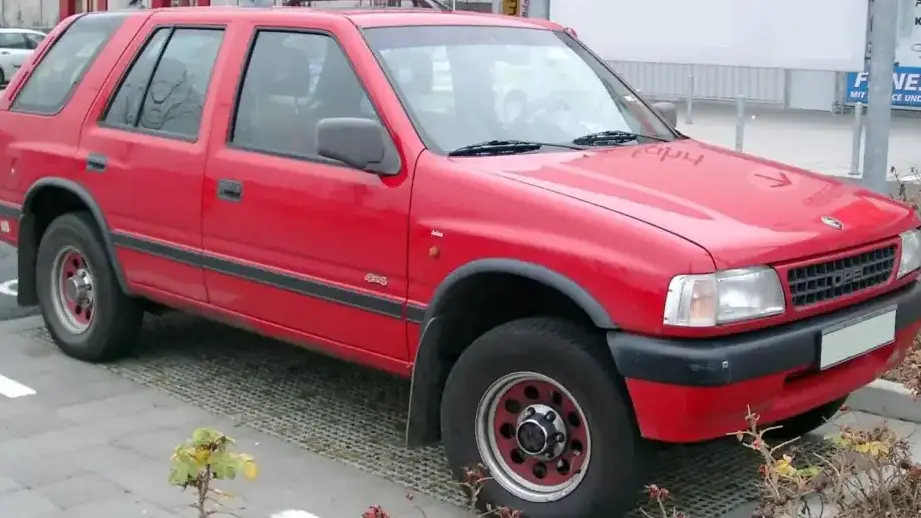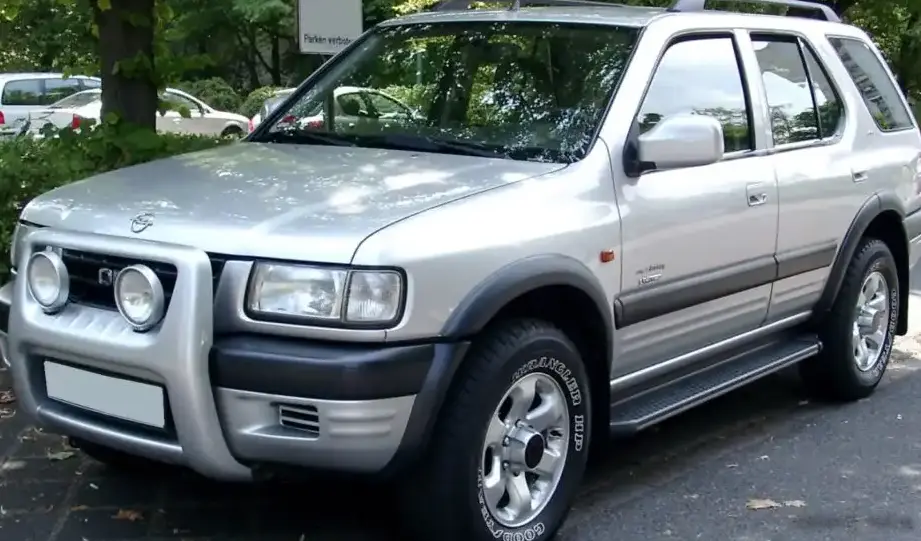
The Opel Frontera B 2.2 DTI 4×4 Automatic, produced from November 1998 to December 2003, represented a significant offering in Opel’s mid-size SUV lineup. Positioned as a practical and capable all-terrain vehicle, the Frontera B aimed to provide a blend of off-road ability, family-friendly space, and reasonable fuel economy. This particular variant, equipped with the 2.2-liter direct injection turbodiesel engine and a four-speed automatic transmission, was intended to appeal to buyers seeking convenience and ease of use, rather than outright performance. It sat in the middle of the Frontera B range, offering a step up in refinement and torque compared to the base gasoline models, but falling short of the more powerful and often more expensive gasoline options.
Technical Specifications
| Brand | Opel |
| Model | Frontera |
| Generation | Frontera B |
| Type (Engine) | 2.2 DTI (115 Hp) 4×4 Automatic |
| Start of production | November, 1998 |
| End of production | December, 2003 |
| Powertrain Architecture | Internal Combustion engine |
| Body type | SUV |
| Seats | 5 |
| Doors | 5 |
| Fuel consumption (urban) | 12.6 l/100 km (18.7 US mpg, 22.4 UK mpg, 7.9 km/l) |
| Fuel consumption (extra urban) | 8.2 l/100 km (28.7 US mpg, 34.4 UK mpg, 12.2 km/l) |
| Fuel consumption (combined) | 10.5 l/100 km (22.4 US mpg, 26.9 UK mpg, 9.5 km/l) |
| Fuel Type | Diesel |
| Acceleration 0 – 100 km/h | 15.8 sec |
| Acceleration 0 – 62 mph | 15.8 sec |
| Acceleration 0 – 60 mph | 15 sec |
| Maximum speed | 154 km/h (95.69 mph) |
| Weight-to-power ratio | 15.3 kg/Hp, 65.5 Hp/tonne |
| Weight-to-torque ratio | 6.8 kg/Nm, 148.1 Nm/tonne |
| Power | 115 Hp @ 3800 rpm |
| Power per litre | 53 Hp/l |
| Torque | 260 Nm @ 1900 rpm (191.77 lb.-ft. @ 1900 rpm) |
| Engine layout | Front, Longitudinal |
| Engine Model/Code | Y22DTH, X22DTH |
| Engine displacement | 2171 cm3 (132.48 cu. in.) |
| Number of cylinders | 4 |
| Engine configuration | Inline |
| Cylinder Bore | 84 mm (3.31 in.) |
| Piston Stroke | 98 mm (3.86 in.) |
| Compression ratio | 18.5:1 |
| Number of valves per cylinder | 4 |
| Fuel injection system | Direct injection |
| Engine aspiration | Turbocharger |
| Valvetrain | DOHC |
| Engine oil capacity | 6.1 l (6.45 US qt | 5.37 UK qt) |
| Coolant | 7.9 l (8.35 US qt | 6.95 UK qt) |
| Kerb Weight | 1755 kg (3869.11 lbs.) |
| Max. weight | 2510 kg (5533.6 lbs.) |
| Max load | 755 kg (1664.49 lbs.) |
| Trunk (boot) space – minimum | 389 l (13.74 cu. ft.) |
| Trunk (boot) space – maximum | 1790 l (63.21 cu. ft.) |
| Fuel tank capacity | 65 l (17.17 US gal | 14.3 UK gal) |
| Length | 4658 mm (183.39 in.) |
| Width | 1787 mm (70.35 in.) |
| Height | 1740 mm (68.5 in.) |
| Wheelbase | 2702 mm (106.38 in.) |
| Front track | 1515 mm (59.65 in.) |
| Rear (Back) track | 1520 mm (59.84 in.) |
| Ride height (ground clearance) | 208 mm (8.19 in.) |
| Drive wheel | All wheel drive (4×4) |
| Number of gears and type of gearbox | 4 gears, automatic transmission |
| Front brakes | Ventilated discs |
| Rear brakes | Ventilated discs |
| Assisting systems | ABS (Anti-lock braking system) |
| Steering type | Steering rack and pinion |
| Power steering | Hydraulic Steering |
| Tires size | 235/70 R16 |
| Wheel rims size | 7J x 16 |
Powertrain & Engine Architecture
The heart of the Frontera B 2.2 DTI was the Y22DTH (and sometimes X22DTH) engine, a 2.2-liter inline-four cylinder diesel. This engine utilized direct injection technology, where fuel is injected directly into the combustion chamber under high pressure, improving efficiency and reducing emissions compared to older indirect injection systems. A turbocharger with an intercooler was employed to boost power output. The engine featured a double overhead camshaft (DOHC) valvetrain, operating four valves per cylinder, contributing to improved breathing and overall performance. The four-speed automatic transmission, while providing convenience, was a relatively conventional unit for its time. It wasn’t known for particularly quick shifts or advanced features, but it was generally reliable. The transmission was electronically controlled, adapting to driving conditions to some extent.
Driving Characteristics
The 115 horsepower and 260 Nm (192 lb-ft) of torque delivered by the 2.2 DTI engine, coupled with the four-speed automatic, resulted in a driving experience focused on usability rather than excitement. Acceleration was modest, taking around 15.8 seconds to reach 62 mph (100 km/h). The automatic transmission, while smooth, didn’t allow for the same level of control as a manual gearbox, and the relatively wide gear ratios meant the engine often felt strained during overtaking maneuvers. However, the engine’s torque delivery was relatively strong from low RPMs, making it suitable for off-road driving and towing. Compared to the more powerful gasoline engines available in the Frontera B range, the 2.2 DTI Automatic offered significantly less performance, but it compensated with superior fuel economy and a more relaxed driving experience. Compared to the 1.9 TDI, the 2.2 DTI offered more torque, but often at the expense of slightly higher fuel consumption.
Equipment & Trim Levels
The Frontera B 2.2 DTI Automatic typically came with a reasonable level of standard equipment. This included power steering, central locking, electric windows, and an anti-lock braking system (ABS). Interior upholstery was usually cloth, with a functional, if somewhat basic, dashboard layout. Optional extras included air conditioning, a sunroof, alloy wheels, and upgraded audio systems. Trim levels varied depending on the market, but generally, the 2.2 DTI Automatic occupied a mid-range position, offering more features than the base models but lacking the luxury appointments of the higher-spec versions.
Chassis & Braking
The Frontera B featured a body-on-frame construction, providing robust durability and off-road capability. The suspension consisted of independent double wishbones at the front and a multi-link setup at the rear. Brakes were ventilated discs all around, providing adequate stopping power for the vehicle’s weight. The 4×4 system was typically a part-time system, allowing the driver to switch between two-wheel drive and four-wheel drive as needed. Stabilizer bars were fitted front and rear to reduce body roll during cornering, although the Frontera B’s high center of gravity meant it wasn’t a particularly sporty vehicle.
Market Reception & Comparison
The Opel Frontera B 2.2 DTI 4×4 Automatic was generally well-received as a practical and capable SUV. Critics praised its off-road ability, spacious interior, and relatively fuel-efficient diesel engine. However, the automatic transmission was sometimes criticized for its lack of responsiveness, and the overall driving experience was considered somewhat unrefined compared to more modern SUVs. In terms of fuel economy, the 2.2 DTI Automatic offered a significant advantage over the gasoline-powered Frontera B models. Reliability was generally good, although some owners reported issues with the turbocharger and fuel injection system. Compared to competitors like the Toyota RAV4 and Honda CR-V, the Frontera B offered a more rugged and utilitarian character.
Legacy
The Opel Frontera B 2.2 DTI 4×4 Automatic has become a relatively affordable and practical used car option. The Y22DTH engine, while not known for being exceptionally powerful, is generally considered durable and reliable if properly maintained. Parts availability is generally good, although some components may be becoming increasingly difficult to find. Today, these vehicles are often sought after by those looking for a capable and affordable 4×4 for work or leisure, and they represent a piece of automotive history from a time when SUVs were becoming increasingly popular.