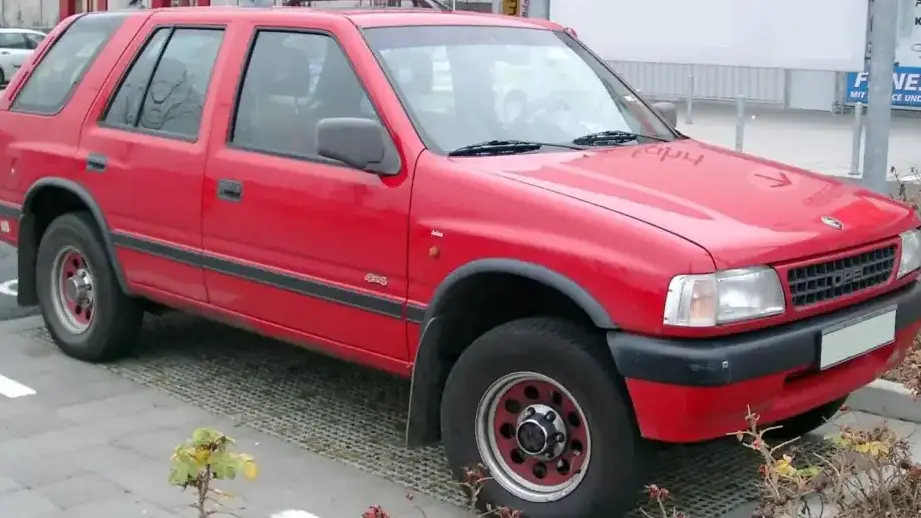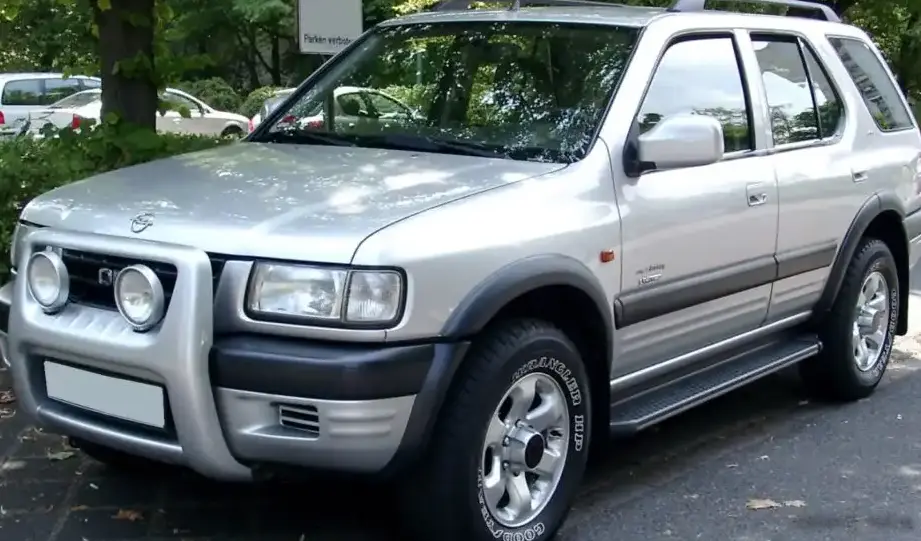
The Opel Frontera B 3.2i V6 4×4, produced from November 1998 to December 2003, represented the top-of-the-line offering in the Frontera B range. Positioned as the performance variant of Opel’s mid-size SUV, it aimed to provide a blend of off-road capability and on-road refinement. The Frontera B itself was a significant update to the original Frontera (A series), sharing its platform with the Isuzu Trooper and Holden Jackaroo, a result of GM’s global partnerships. This 3.2-liter V6 model was primarily marketed in Europe, offering a more powerful alternative to the four-cylinder engines available in the lineup.
Technical Specifications
| Brand | Opel |
| Model | Frontera |
| Generation | Frontera B |
| Type (Engine) | 3.2i V6 (205 Hp) 4×4 |
| Start of production | November, 1998 |
| End of production | December, 2003 |
| Powertrain Architecture | Internal Combustion engine |
| Body type | SUV |
| Seats | 5 |
| Doors | 5 |
| Fuel consumption (urban) | 17.8 l/100 km (13.2 US mpg, 15.9 UK mpg, 5.6 km/l) |
| Fuel consumption (extra urban) | 10.1 l/100 km (23.3 US mpg, 28 UK mpg, 9.9 km/l) |
| Fuel consumption (combined) | 12.6 l/100 km (18.7 US mpg, 22.4 UK mpg, 7.9 km/l) |
| CO2 emissions | 303 g/km |
| Fuel Type | Petrol (Gasoline) |
| Acceleration 0 – 100 km/h | 10.3 sec |
| Acceleration 0 – 62 mph | 10.3 sec |
| Acceleration 0 – 60 mph | 9.8 sec |
| Maximum speed | 184 km/h (114.33 mph) |
| Emission standard | Euro 2 |
| Weight-to-power ratio | 8.7 kg/Hp, 114.8 Hp/tonne |
| Weight-to-torque ratio | 6.2 kg/Nm, 162.5 Nm/tonne |
| Power | 205 Hp @ 5400 rpm |
| Power per litre | 64.8 Hp/l |
| Torque | 290 Nm @ 3000 rpm (213.89 lb.-ft. @ 3000 rpm) |
| Engine layout | Front, Longitudinal |
| Engine Model/Code | 6VD1-W, Y32NE |
| Engine displacement | 3165 cm3 (193.14 cu. in.) |
| Number of cylinders | 6 |
| Engine configuration | V-engine |
| Cylinder Bore | 93.4 mm (3.68 in.) |
| Piston Stroke | 77 mm (3.03 in.) |
| Compression ratio | 9.4:1 |
| Number of valves per cylinder | 4 |
| Fuel injection system | Multi-port manifold injection |
| Engine aspiration | Naturally aspirated engine |
| Valvetrain | DOHC |
| Engine oil capacity | 5.3 l (5.6 US qt | 4.66 UK qt) |
| Coolant | 8.8 l (9.3 US qt | 7.74 UK qt) |
| Kerb Weight | 1785 kg (3935.25 lbs.) |
| Max. weight | 2450 kg (5401.33 lbs.) |
| Max load | 665 kg (1466.07 lbs.) |
| Trunk (boot) space – minimum | 389 l (13.74 cu. ft.) |
| Trunk (boot) space – maximum | 1790 l (63.21 cu. ft.) |
| Fuel tank capacity | 65 l (17.17 US gal | 14.3 UK gal) |
| Length | 4658 mm (183.39 in.) |
| Width | 1787 mm (70.35 in.) |
| Height | 1740 mm (68.5 in.) |
| Wheelbase | 2702 mm (106.38 in.) |
| Front track | 1515 mm (59.65 in.) |
| Rear (Back) track | 1520 mm (59.84 in.) |
| Ride height (ground clearance) | 208 mm (8.19 in.) |
| Drive wheel | All wheel drive (4×4) |
| Number of gears and type of gearbox | 5 gears, manual transmission |
| Front suspension | Torsion |
| Rear suspension | Coil spring |
| Front brakes | Ventilated discs |
| Rear brakes | Ventilated discs |
| Assisting systems | ABS (Anti-lock braking system) |
| Steering type | Worm-reduction unit |
| Power steering | Hydraulic Steering |
| Tires size | 245/70 R16 |
| Wheel rims size | 7J x 16 |
Powertrain & Engine Architecture
The heart of the Frontera B 3.2i was the 6VD1-W (also known as Y32NE) 3.2-liter V6 engine. This engine, derived from Isuzu’s designs, featured a 90-degree V-configuration, contributing to a smoother power delivery. It utilized a multi-port fuel injection system, delivering fuel directly to each intake port, and a double overhead camshaft (DOHC) valvetrain for optimized airflow. The engine produced 205 horsepower at 5400 rpm and 290 Nm (213.89 lb-ft) of torque at 3000 rpm. The engine was longitudinally mounted in the chassis, driving all four wheels through a five-speed manual transmission. While an automatic transmission was offered on other Frontera B models, the 3.2i V6 was exclusively available with the manual gearbox in most markets.
Driving Characteristics
The 3.2i V6 offered a noticeable performance upgrade over the lower-spec Frontera B models. The engine’s torque output provided reasonable acceleration, with a 0-60 mph time of around 9.8 seconds, and a top speed of 114.33 mph. The manual transmission allowed for greater driver control, particularly when tackling off-road terrain. However, the Frontera B’s considerable weight (1785 kg / 3935.25 lbs) meant it wasn’t a particularly nimble vehicle. The gear ratios were tuned for a balance between on-road cruising and off-road crawling, with a relatively short first gear for tackling steep inclines and a longer fifth gear for highway efficiency. Compared to the 2.2-liter four-cylinder models, the V6 offered significantly more power and a more refined driving experience, but at the cost of increased fuel consumption.
Equipment & Trim Levels
The 3.2i V6 typically came with a higher level of standard equipment than other Frontera B trims. This included features like air conditioning, power windows, central locking, and an upgraded audio system. Interior upholstery was generally cloth, although leather options were available. Optional extras included a sunroof, alloy wheels, and a more sophisticated navigation system. The dashboard layout was functional and straightforward, prioritizing usability over aesthetics. The Frontera B’s interior, while durable, lacked the premium feel of some of its competitors.
Chassis & Braking
The Frontera B featured a robust chassis designed to handle both on-road and off-road conditions. Front suspension utilized a torsion bar setup, while the rear employed coil springs. This configuration provided a reasonable balance between ride comfort and off-road articulation. Braking duties were handled by ventilated discs on all four wheels, coupled with an Anti-lock Braking System (ABS) for improved stopping power and control. The steering system was a hydraulic power-assisted worm-reduction unit, providing adequate assistance but lacking the precision of more modern steering technologies.
Market Reception & Comparison
The Frontera B 3.2i V6 was generally well-received by automotive critics as a capable and versatile SUV. However, its fuel economy (12.6 l/100 km combined) was often criticized, particularly compared to more fuel-efficient competitors. The V6 engine’s reliability was generally good, but maintenance costs were higher than those associated with the four-cylinder models. Compared to rivals like the Mitsubishi Pajero and Toyota RAV4, the Frontera B offered a more rugged and utilitarian character, appealing to buyers who prioritized off-road capability over outright refinement.
Legacy
The Opel Frontera B 3.2i V6 4×4, while not a mainstream success, has developed a following among enthusiasts who appreciate its robust construction and capable performance. The 6VD1-W V6 engine is known for its durability, and well-maintained examples can still provide reliable service today. In the used car market, these models tend to command a premium over the lower-spec Frontera B variants, particularly those with low mileage and a comprehensive service history. The Frontera B represents a significant chapter in Opel’s SUV history, showcasing the brand’s ability to produce a capable and versatile off-road vehicle.