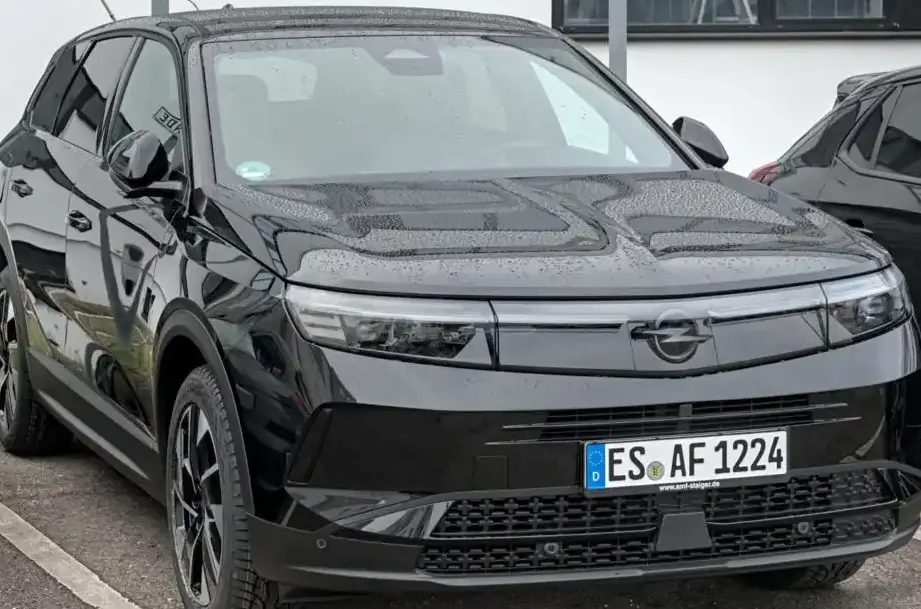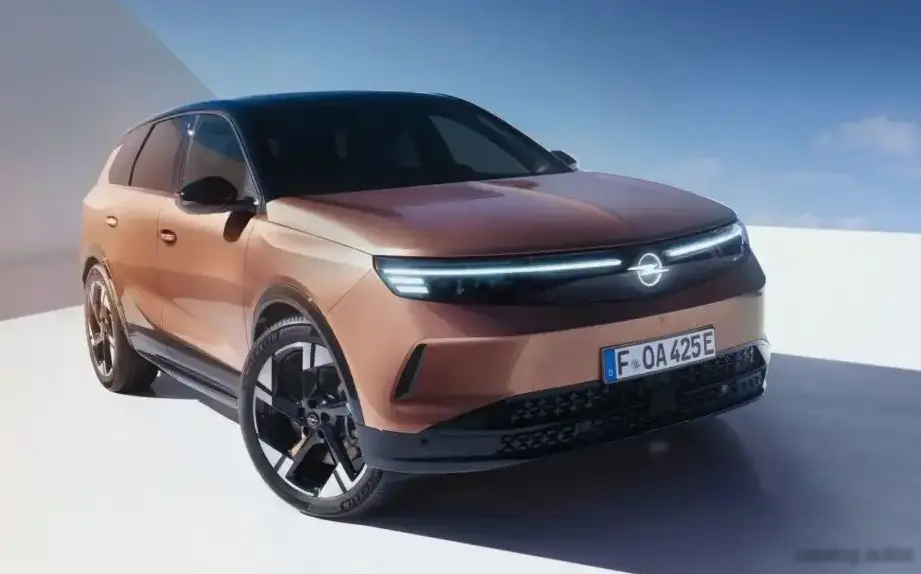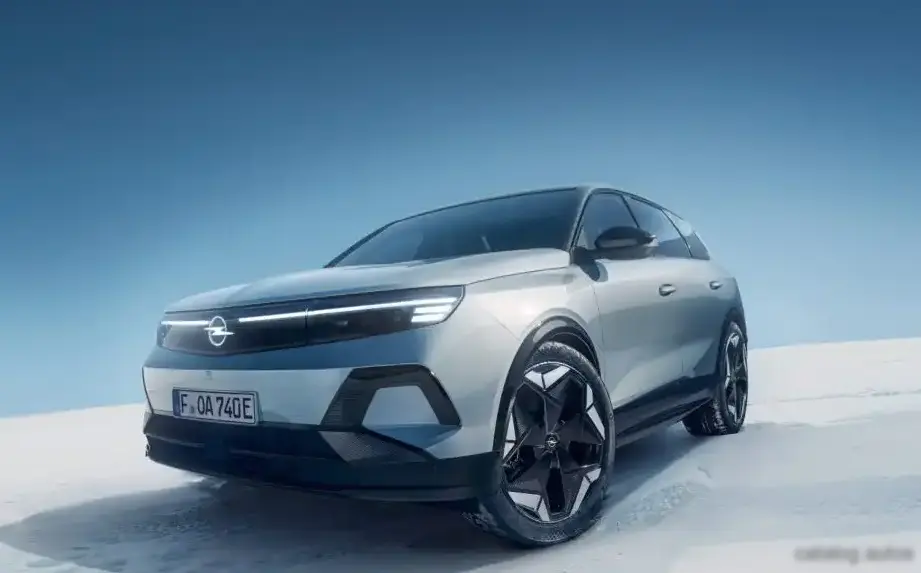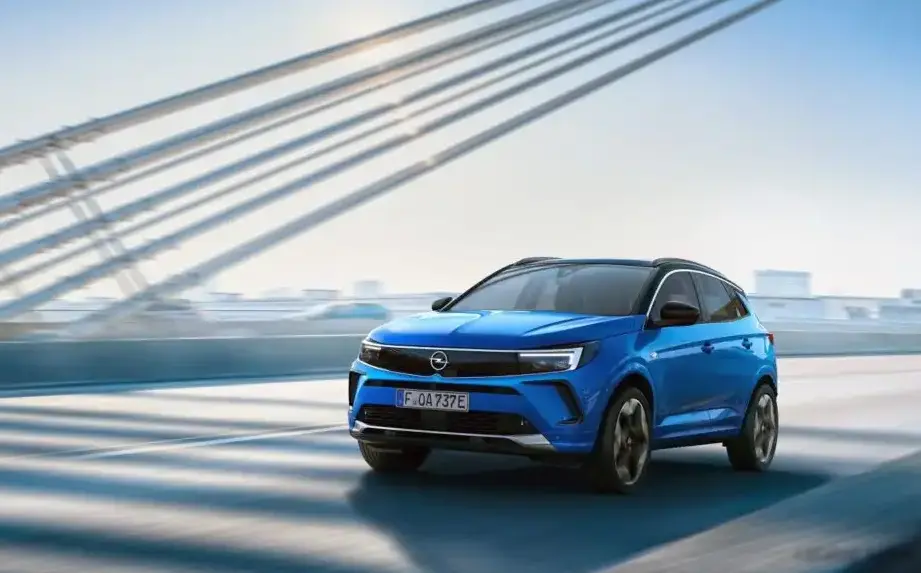
The Opel Grandland (facelift 2021) 1.2 Turbo (136 hp) Mild Hybrid e-DCT represents a key offering in Opel’s compact SUV lineup, introduced in March 2024 and continuing through September 2024. This variant, positioned as a mid-range option, combines a downsized turbocharged gasoline engine with a 48-volt mild hybrid system and a dual-clutch transmission (e-DCT) to balance performance, fuel efficiency, and affordability. It falls within the broader Grandland facelift generation, which itself is based on the EMP2 platform shared with other Stellantis vehicles like the Peugeot 3008 and Citroën C5 Aircross. The introduction of this powertrain aimed to meet increasingly stringent European emissions regulations while providing a practical and appealing SUV for families and individuals.
Technical Specifications
| Brand | Opel |
| Model | Grandland |
| Generation | Grandland (facelift 2021) |
| Type (Engine) | 1.2 Turbo (136 Hp) Mild Hybrid e-DCT |
| Start of production | March, 2024 |
| End of production | September, 2024 |
| Powertrain Architecture | MHEV (Mild Hybrid Electric Vehicle) |
| Body type | SUV |
| Seats | 5 |
| Doors | 5 |
| Fuel consumption at Low speed (WLTP) | 4.9 l/100 km (48 US mpg, 57.6 UK mpg, 20.4 km/l) |
| Fuel consumption at Medium speed (WLTP) | 5.4 l/100 km (43.6 US mpg, 52.3 UK mpg, 18.5 km/l) |
| Fuel consumption at high speed (WLTP) | 5 l/100 km (47 US mpg, 56.5 UK mpg, 20 km/l) |
| Fuel consumption at very high speed (WLTP) | 6.7 l/100 km (35.1 US mpg, 42.2 UK mpg, 14.9 km/l) |
| Combined fuel consumption (WLTP) | 5.7 l/100 km (41.3 US mpg, 49.6 UK mpg, 17.5 km/l) |
| CO2 emissions (WLTP) | 128 g/km |
| Fuel Type | Petrol (Gasoline) |
| Acceleration 0 – 100 km/h | 10 sec |
| Acceleration 0 – 62 mph | 10 sec |
| Acceleration 0 – 60 mph | 9.5 sec |
| Maximum speed | 200 km/h (124.27 mph) |
| Emission standard | Euro 6e |
| Weight-to-power ratio | 10.7 kg/Hp, 93.1 Hp/tonne |
| Weight-to-torque ratio | 6.4 kg/Nm, 157.4 Nm/tonne |
| Gross battery capacity | 0.89 kWh |
| Net (usable) battery capacity | 0.432 kWh |
| Battery voltage | 48 V |
| Battery technology | Lithium-ion (Li-Ion) |
| Battery location | Under the front seats |
| All-electric range | 1 km (0.62 mi) |
| Electric motor power | 28 Hp @ 2000 rpm (55 Nm / 40.57 lb.-ft.) |
| Electric motor location | Integrated into the transmission |
| Electric motor type | Synchronous |
| Power | 136 Hp @ 5500 rpm |
| Torque | 230 Nm @ 1750 rpm (169.64 lb.-ft. @ 1750 rpm) |
| Engine layout | Front, Transverse |
| Engine Model/Code | EB2LTDH2 |
| Engine displacement | 1199 cm3 (73.17 cu. in.) |
| Number of cylinders | 3 |
| Engine configuration | Inline |
| Cylinder Bore | 75 mm (2.95 in.) |
| Piston Stroke | 90.5 mm (3.56 in.) |
| Number of valves per cylinder | 4 |
| Fuel injection system | Direct injection |
| Engine aspiration | Turbocharger, Intercooler |
| Valvetrain | DOHC |
| Engine oil capacity | 3.5 l (3.7 US qt | 3.08 UK qt) |
| Kerb Weight | 1461 kg (3220.95 lbs.) |
| Max. weight | 2050 kg (4519.48 lbs.) |
| Max load | 589 kg (1298.52 lbs.) |
| Trunk (boot) space – minimum | 514 l (18.15 cu. ft.) |
| Trunk (boot) space – maximum | 1652 l (58.34 cu. ft.) |
| Fuel tank capacity | 53 l (14 US gal | 11.66 UK gal) |
| Max. roof load | 85 kg (187.39 lbs.) |
| Permitted trailer load with brakes (12%) | 1250 kg (2755.78 lbs.) |
| Permitted trailer load without brakes | 685 kg (1510.17 lbs.) |
| Permitted towbar download | 70 kg (154.32 lbs.) |
| Length | 4477 mm (176.26 in.) |
| Width | 1906 mm (75.04 in.) |
| Width including mirrors | 2098 mm (82.6 in.) |
| Height | 1609 mm (63.35 in.) |
| Wheelbase | 2675 mm (105.31 in.) |
| Front track | 1579-1595 mm (62.17 – 62.8 in.) |
| Rear (Back) track | 1587-1610 mm (62.48 – 63.39 in.) |
| Front overhang | 933 mm (36.73 in.) |
| Rear overhang | 869 mm (34.21 in.) |
| Ride height (ground clearance) | 188 mm (7.4 in.) |
| Minimum turning circle (turning diameter) | 10.67 m (35.01 ft.) |
| Drivetrain Architecture | Front wheel drive. MHEV. ICE and electric motor drive the front wheels. |
| Number of gears and type of gearbox | 6 gears, automatic transmission e-DCT |
| Front suspension | Independent, type McPherson with coil spring and anti-roll bar |
| Rear suspension | Coil spring, Torsion |
| Front brakes | Ventilated discs |
| Rear brakes | Disc |
| Assisting systems | ABS (Anti-lock braking system) |
| Steering type | Steering rack and pinion |
| Power steering | Electric Steering |
| Tires size | 215/65 R17; 225/55 R18; 205/55 R19 |
| Wheel rims size | 7J x 17; 7.5J x 18; 7J x 19 |
Powertrain & Engine Architecture
At the heart of this Grandland variant lies the EB2LTDH2, a 1.2-liter turbocharged three-cylinder gasoline engine. This engine is part of the PureTech family developed by the PSA Group (now part of Stellantis). The engine utilizes direct fuel injection and a single scroll turbocharger with an intercooler to deliver 136 horsepower at 5500 rpm and 230 Nm (169.64 lb-ft) of torque at 1750 rpm. The mild hybrid system incorporates a 48-volt electrical system and a small electric motor (28 hp and 55 Nm) integrated with the e-DCT transmission. This system allows for regenerative braking, providing a small boost during acceleration, and enabling a start-stop system that operates at lower speeds for improved fuel economy. The e-DCT (efficient Dual-Clutch Transmission) is a six-speed automatic gearbox designed for smooth and quick gear changes, contributing to both performance and efficiency.
Driving Characteristics
The 1.2 Turbo Mild Hybrid e-DCT Grandland offers a comfortable and refined driving experience. While not exceptionally quick – achieving 0-100 km/h in 10 seconds – it provides adequate performance for everyday driving situations. The mild hybrid system helps to smooth out the power delivery, minimizing turbo lag and providing a responsive feel. The e-DCT transmission shifts smoothly and efficiently, although some drivers may notice a slight hesitation at low speeds. Compared to higher-output Grandland variants, such as those with more powerful gasoline engines or diesel options, this version prioritizes fuel economy over outright performance. The gear ratios are tuned for efficiency, resulting in a slightly less engaging driving experience than the more performance-oriented models.
Equipment & Trim Levels
The 1.2 Turbo Mild Hybrid e-DCT Grandland typically comes equipped with a respectable level of standard features. These generally include air conditioning, a touchscreen infotainment system with Apple CarPlay and Android Auto compatibility, cruise control, and a suite of safety features such as automatic emergency braking, lane departure warning, and traffic sign recognition. Interior upholstery is typically cloth, with options for leather upgrades available. Higher trim levels may add features like heated seats, a panoramic sunroof, and a more advanced infotainment system with navigation. The dashboard configuration is modern and functional, with a focus on ease of use.
Chassis & Braking
The Grandland’s chassis features independent McPherson strut suspension at the front and a torsion beam setup at the rear. This configuration provides a good balance between ride comfort and handling. The steering is electrically assisted, offering a light and precise feel. Braking duties are handled by ventilated discs at the front and solid discs at the rear, providing adequate stopping power for the vehicle’s weight. ABS (Anti-lock Braking System) is standard, enhancing safety during emergency braking situations.
Market Reception & Comparison
The Opel Grandland 1.2 Turbo Mild Hybrid e-DCT was generally well-received by critics as a practical and efficient SUV. Its fuel economy figures of around 5.7 l/100 km (41.3 US mpg) were considered competitive within its segment. Compared to the diesel-powered Grandland variants, the 1.2 Turbo offered lower CO2 emissions and a smoother driving experience, although it lacked the diesel’s low-end torque. Against higher-horsepower gasoline models, it provided a more affordable entry point with acceptable performance for most drivers. Reliability reports have been generally positive, with the PureTech engine proving to be relatively robust, although some owners have reported issues with the timing chain in earlier versions of this engine family.
Legacy
The Opel Grandland 1.2 Turbo Mild Hybrid e-DCT represents a significant step towards electrification in Opel’s lineup. While the mild hybrid system offers only modest fuel economy gains, it demonstrates Opel’s commitment to reducing emissions and improving efficiency. In the used car market, these models are becoming increasingly popular due to their affordability, practicality, and relatively low running costs. The powertrain’s long-term reliability appears to be good, making it a sensible choice for buyers seeking a dependable and fuel-efficient compact SUV.