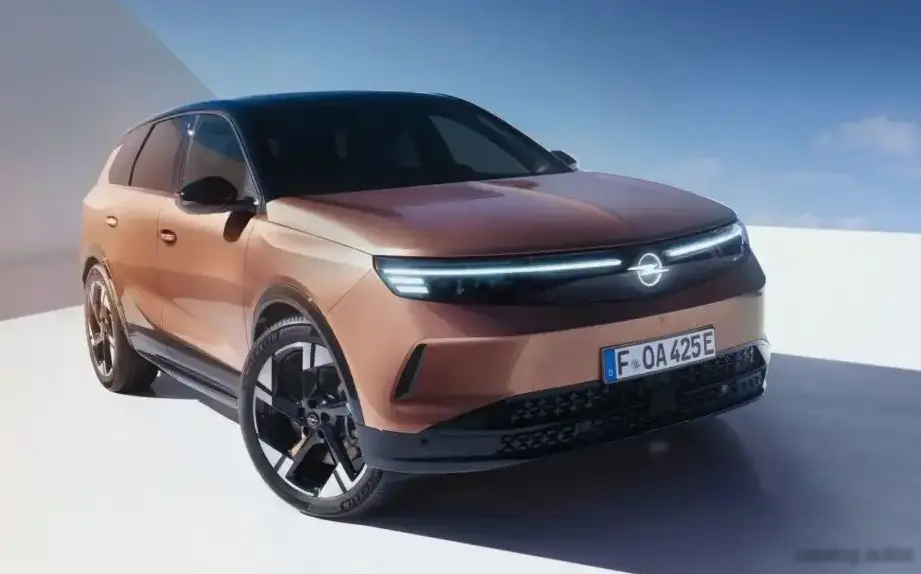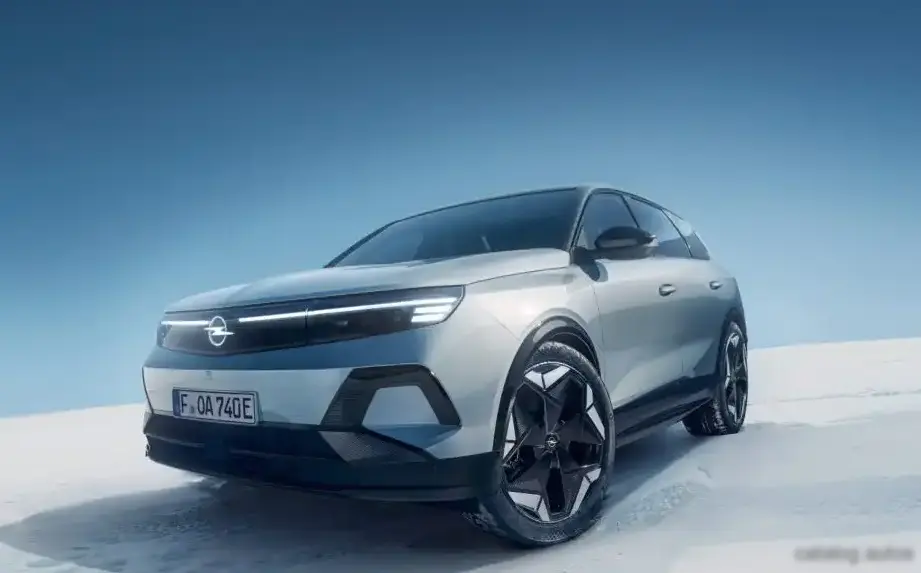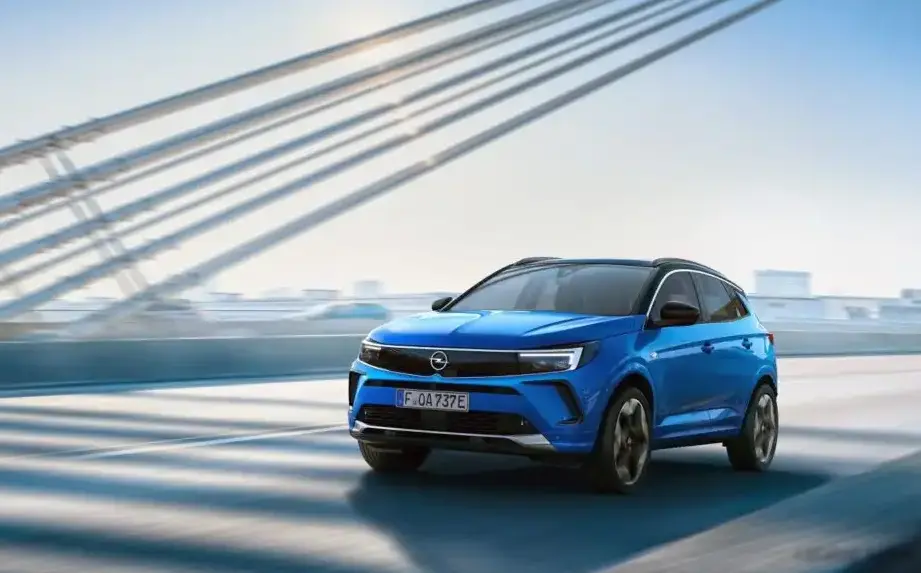
The Opel Grandland (facelift, introduced in July 2021) 1.2i Turbo, producing 130 horsepower, represents a key offering within the Grandland model range. This variant, positioned as a mainstream option, aimed to balance fuel efficiency with acceptable performance for everyday driving. The facelift brought updated styling and technology to the Grandland, which itself is built upon the EMP2 platform shared with other Stellantis vehicles like the Peugeot 3008 and Citroën C5 Aircross. Production continued through September 2024, making it a relatively short-lived iteration of the Grandland.
Technical Specifications
| Brand | Opel |
| Model | Grandland |
| Generation | Grandland (facelift 2021) |
| Type (Engine) | 1.2i Turbo (130 Hp) |
| Start of production | July, 2021 |
| End of production | September, 2024 |
| Powertrain Architecture | Internal Combustion engine |
| Body type | SUV |
| Seats | 5 |
| Doors | 5 |
| Combined fuel consumption (WLTP) | 5.9-7.1 l/100 km (39.9 – 33.1 US mpg, 47.9 – 39.8 UK mpg, 16.9 – 14.1 km/l) |
| CO2 emissions (WLTP) | 133-161 g/km |
| Fuel consumption (urban) | 5.8-6.2 l/100 km (40.6 – 37.9 US mpg, 48.7 – 45.6 UK mpg, 17.2 – 16.1 km/l) |
| Fuel consumption (extra urban) | 4.5-4.9 l/100 km (52.3 – 48 US mpg, 62.8 – 57.6 UK mpg, 22.2 – 20.4 km/l) |
| Fuel consumption (combined) | 5.0-5.4 l/100 km (47 – 43.6 US mpg, 56.5 – 52.3 UK mpg, 20 – 18.5 km/l) |
| CO2 emissions (NEDC) | 114-124 g/km |
| Fuel Type | Petrol (Gasoline) |
| Acceleration 0 – 100 km/h | 10.1 sec |
| Acceleration 0 – 62 mph | 10.1 sec |
| Acceleration 0 – 60 mph | 9.6 sec |
| Maximum speed | 188 km/h (116.82 mph) |
| Emission standard | Euro 6d |
| Weight-to-power ratio | 10.4 kg/Hp, 95.9 Hp/tonne |
| Weight-to-torque ratio | 5.9 kg/Nm, 169.6 Nm/tonne |
| Power | 130 Hp @ 5500 rpm |
| Power per litre | 108.4 Hp/l |
| Torque | 230 Nm @ 1750 rpm (169.64 lb.-ft. @ 1750 rpm) |
| Engine layout | Front, Transverse |
| Engine Model/Code | F12XHT |
| Engine displacement | 1199 cm3 (73.17 cu. in.) |
| Number of cylinders | 3 |
| Engine configuration | Inline |
| Number of valves per cylinder | 4 |
| Fuel injection system | Direct injection |
| Engine aspiration | Turbocharger, Intercooler |
| Engine oil capacity | 3.5 l (3.7 US qt | 3.08 UK qt) |
| Kerb Weight | 1356 kg (2989.47 lbs.) |
| Max. weight | 1900 kg (4188.78 lbs.) |
| Max load | 544 kg (1199.31 lbs.) |
| Trunk (boot) space – minimum | 514 l (18.15 cu. ft.) |
| Trunk (boot) space – maximum | 1652 l (58.34 cu. ft.) |
| Fuel tank capacity | 53 l (14 US gal | 11.66 UK gal) |
| Max. roof load | 85 kg (187.39 lbs.) |
| Permitted trailer load (braked) | 1400 kg (3086.47 lbs.) |
| Permitted trailer load (unbraked) | 685 kg (1510.17 lbs.) |
| Permitted towbar download | 70 kg (154.32 lbs.) |
| Length | 4477 mm (176.26 in.) |
| Width | 1906 mm (75.04 in.) |
| Width (with mirrors) | 2098 mm (82.6 in.) |
| Height | 1609 mm (63.35 in.) |
| Wheelbase | 2675 mm (105.31 in.) |
| Front track | 1579-1595 mm (62.17 – 62.8 in.) |
| Rear track | 1587-1610 mm (62.48 – 63.39 in.) |
| Front overhang | 933 mm (36.73 in.) |
| Rear overhang | 869 mm (34.21 in.) |
| Turning circle | 10.67 m (35.01 ft.) |
| Drivetrain | Front wheel drive |
| Number of gears | 6 |
| Gearbox type | Manual |
| Front brakes | Ventilated discs |
| Rear brakes | Disc |
| ABS | Yes |
| Steering type | Steering rack and pinion |
| Power steering | Electric |
| Tires size | 215/65 R17; 225/55 R18; 205/55 R19 |
| Wheel rims size | 7J x 17; 7.5J x 18; 7J x 19 |
INTRODUCTION
The Opel Grandland 1.2i Turbo (130 hp) facelift, launched in 2021, served as a core model within Opel’s SUV lineup. Positioned as an accessible entry point to the Grandland range, it targeted buyers seeking a practical and relatively economical family vehicle. The facelift brought a more modern front-end design, updated interior materials, and enhanced technology features, aligning the Grandland with Opel’s evolving brand identity. This variant utilized a three-cylinder turbocharged engine paired with a six-speed manual transmission, offering a balance between fuel efficiency and usability.
Powertrain & Engine Architecture
At the heart of the Grandland 1.2i Turbo is the F12XHT engine, a 1.2-liter three-cylinder gasoline engine featuring direct fuel injection and a turbocharger with an intercooler. This engine is part of Opel’s “Small Displacement Turbocharged” (SDT) family. The engine produces 130 horsepower at 5500 rpm and 230 Nm (169.64 lb-ft) of torque at 1750 rpm. The direct injection system ensures precise fuel delivery, optimizing combustion efficiency and reducing emissions. The turbocharger provides a boost in power, compensating for the relatively small displacement. The engine is paired with a six-speed manual transmission, delivering power to the front wheels. The engine also incorporates a Start & Stop system to further improve fuel economy and reduce emissions, and is equipped with a particulate filter to minimize particulate matter output.
Driving Characteristics
The 1.2i Turbo engine, while adequate for everyday driving, doesn’t offer particularly brisk acceleration. The 0-100 km/h (0-62 mph) time of 10.1 seconds reflects this. The engine feels most comfortable in the mid-range, providing sufficient power for overtaking maneuvers on highways. The six-speed manual transmission is well-matched to the engine’s characteristics, allowing drivers to keep the engine in its optimal power band. Compared to higher-powered Grandland variants (like those with larger engines), this version feels less responsive, particularly when fully loaded. However, the lighter engine weight contributes to improved handling and a more nimble feel in urban environments. The gear ratios are tuned for fuel efficiency, meaning the engine can feel strained when climbing steep hills or carrying a heavy load.
Equipment & Trim Levels
The Grandland 1.2i Turbo typically came with a respectable level of standard equipment. This included features like air conditioning, a touchscreen infotainment system with Apple CarPlay and Android Auto compatibility, Bluetooth connectivity, and a suite of safety features such as lane departure warning, automatic emergency braking, and traffic sign recognition. Interior upholstery was typically cloth, with options for upgraded materials available. Higher trim levels offered additional features like heated seats, a panoramic sunroof, and a more advanced infotainment system with navigation. Optional extras included parking sensors, a rearview camera, and adaptive cruise control.
Chassis & Braking
The Grandland 1.2i Turbo utilizes a conventional front-wheel-drive chassis with MacPherson strut suspension at the front and a torsion beam suspension at the rear. The braking system consists of ventilated discs at the front and solid discs at the rear. ABS (Anti-lock Braking System) is standard. The suspension setup is tuned for comfort, providing a relatively smooth ride quality. Stabilizer bars are fitted to both the front and rear axles to reduce body roll during cornering. The steering is electrically assisted, offering light and precise control.
Market Reception & Comparison
The Grandland 1.2i Turbo was generally well-received by critics as a practical and affordable SUV. However, some reviewers noted that the engine could feel underpowered, particularly when fully loaded or driving on hilly terrain. Compared to the more powerful Grandland variants, the 1.2i Turbo offered better fuel economy but less performance. The 1.2i Turbo was often seen as a competitor to other compact SUVs like the Nissan Qashqai and Hyundai Tucson, offering a similar level of practicality and affordability. Its fuel economy figures of 5.9-7.1 l/100 km (39.9-33.1 US mpg) were competitive within its segment.
Legacy
The Opel Grandland 1.2i Turbo (facelift) represents a solid, if not spectacular, offering in the compact SUV segment. The F12XHT engine has proven to be relatively reliable, although regular maintenance is crucial. On the used car market, these models offer good value for money, providing a practical and economical transportation solution. The three-cylinder engine’s long-term durability is generally good, but potential buyers should be aware of the importance of regular oil changes and adherence to the manufacturer’s recommended service intervals. The Grandland’s overall build quality and relatively modern features contribute to its continued appeal in the used car market.