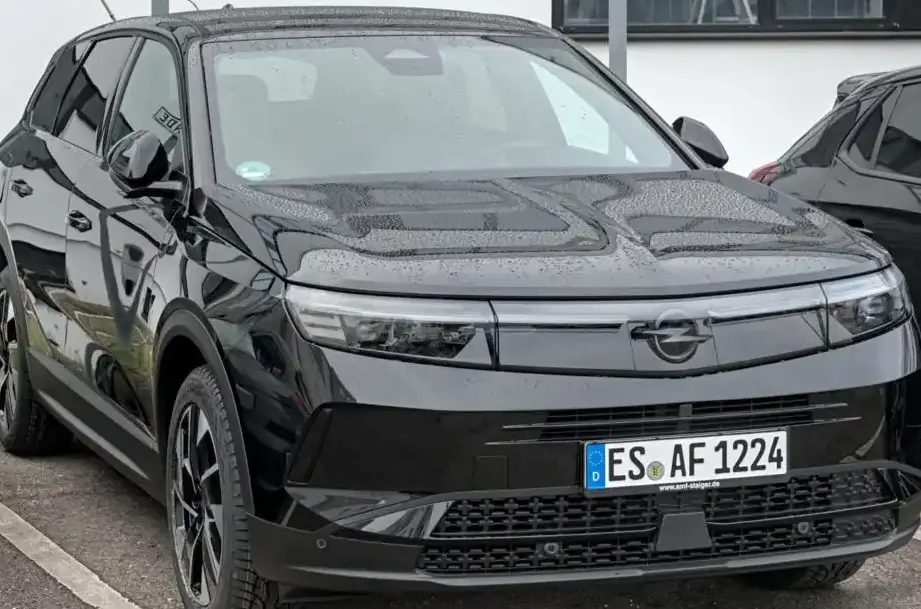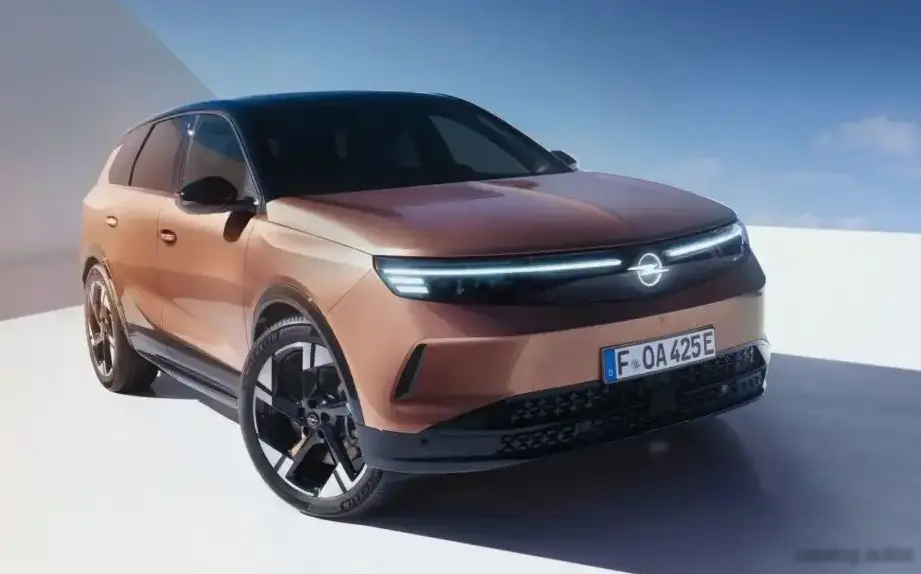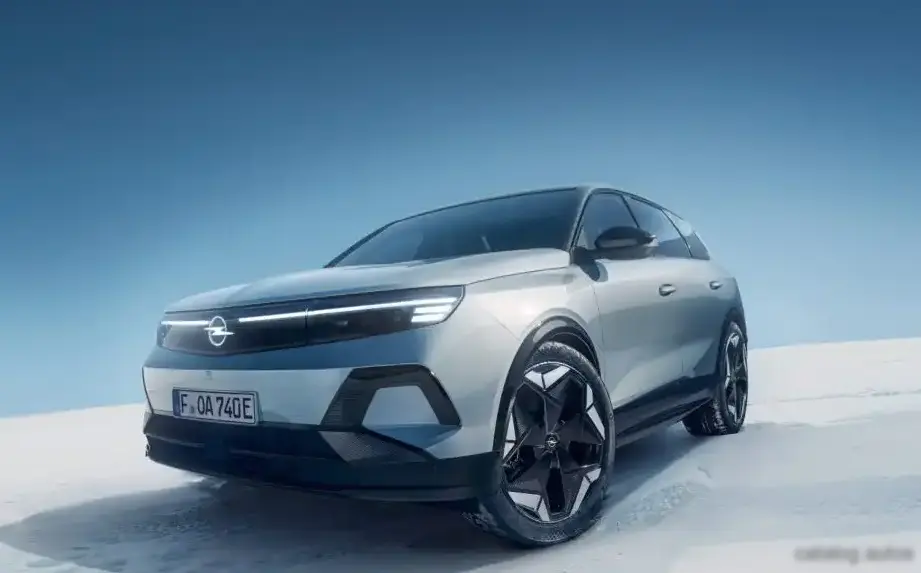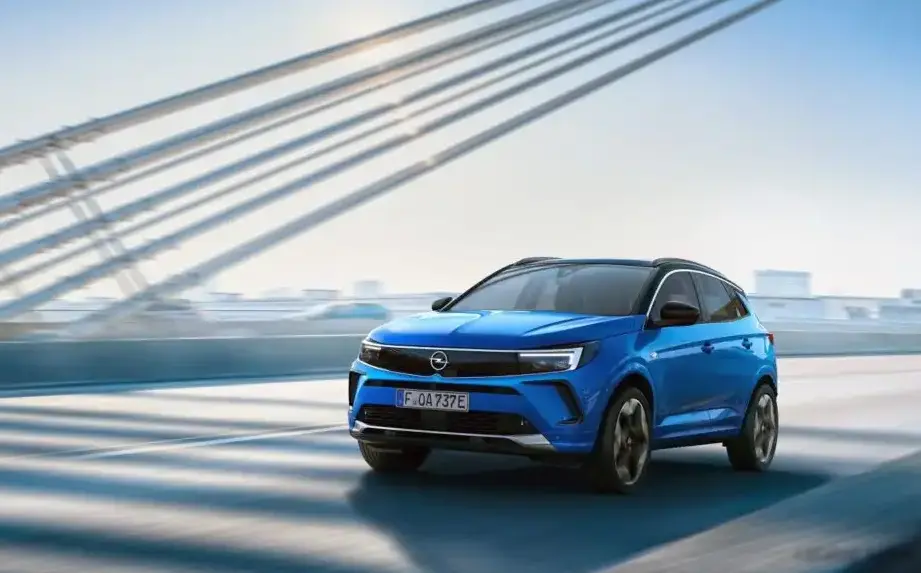
The Opel Grandland (facelift, introduced in July 2021) 1.2i Turbo (130 hp) Automatic represents a key offering within Opel’s compact SUV lineup. Positioned as a mid-range trim, it aimed to balance fuel efficiency with acceptable performance for everyday driving. Production continued through September 2024. This variant was primarily marketed in Europe, where the Grandland competed with vehicles like the Nissan Qashqai, Peugeot 3008, and Volkswagen Tiguan. The facelift brought updated styling, improved technology, and refinements to the powertrain options, including this 1.2-liter turbocharged engine paired with an eight-speed automatic transmission.
Technical Specifications
| Brand | Opel |
| Model | Grandland |
| Generation | Grandland (facelift 2021) |
| Type (Engine) | 1.2i Turbo (130 Hp) Automatic |
| Start of production | July, 2021 |
| End of production | September, 2024 |
| Powertrain Architecture | Internal Combustion engine |
| Body type | SUV |
| Seats | 5 |
| Doors | 5 |
| Combined fuel consumption (WLTP) | 6.1-7.3 l/100 km (38.6 – 32.2 US mpg, 46.3 – 38.7 UK mpg, 16.4 – 13.7 km/l) |
| CO2 emissions (WLTP) | 137-166 g/km |
| Fuel consumption (urban) | 5.8-6.3 l/100 km (40.6 – 37.3 US mpg, 48.7 – 44.8 UK mpg, 17.2 – 15.9 km/l) |
| Fuel consumption (extra urban) | 4.4-5 l/100 km (53.5 – 47 US mpg, 64.2 – 56.5 UK mpg, 22.7 – 20 km/l) |
| Fuel consumption (combined) | 4.9-5.5 l/100 km (48 – 42.8 US mpg, 57.6 – 51.4 UK mpg, 20.4 – 18.2 km/l) |
| CO2 emissions (NEDC) | 112-126 g/km |
| Fuel Type | Petrol (Gasoline) |
| Acceleration 0 – 100 km/h | 10.3 sec |
| Acceleration 0 – 62 mph | 10.3 sec |
| Acceleration 0 – 60 mph | 9.8 sec |
| Maximum speed | 188 km/h (116.82 mph) |
| Emission standard | Euro 6d |
| Weight-to-power ratio | 10.7 kg/Hp, 93.8 Hp/tonne |
| Weight-to-torque ratio | 6 kg/Nm, 165.9 Nm/tonne |
| Power | 130 Hp @ 5500 rpm |
| Power per litre | 108.4 Hp/l |
| Torque | 230 Nm @ 1750 rpm (169.64 lb.-ft. @ 1750 rpm) |
| Engine layout | Front, Transverse |
| Engine Model/Code | F12XHT |
| Engine displacement | 1199 cm3 (73.17 cu. in.) |
| Number of cylinders | 3 |
| Engine configuration | Inline |
| Number of valves per cylinder | 4 |
| Fuel injection system | Direct injection |
| Engine aspiration | Turbocharger, Intercooler |
| Engine oil capacity | 3.5 l (3.7 US qt | 3.08 UK qt) |
| Kerb Weight | 1386 kg (3055.61 lbs.) |
| Max. weight | 2000 kg (4409.25 lbs.) |
| Max load | 614 kg (1353.64 lbs.) |
| Trunk (boot) space – minimum | 514 l (18.15 cu. ft.) |
| Trunk (boot) space – maximum | 1652 l (58.34 cu. ft.) |
| Fuel tank capacity | 53 l (14 US gal | 11.66 UK gal) |
| Max. roof load | 85 kg (187.39 lbs.) |
| Permitted trailer load (braked) | 1300 kg (2866.01 lbs.) |
| Permitted trailer load (unbraked) | 695 kg (1532.21 lbs.) |
| Permitted towbar download | 70 kg (154.32 lbs.) |
| Length | 4477 mm (176.26 in.) |
| Width | 1906 mm (75.04 in.) |
| Width including mirrors | 2098 mm (82.6 in.) |
| Height | 1609 mm (63.35 in.) |
| Wheelbase | 2675 mm (105.31 in.) |
| Front track | 1579-1595 mm (62.17 – 62.8 in.) |
| Rear track | 1587-1610 mm (62.48 – 63.39 in.) |
| Front overhang | 933 mm (36.73 in.) |
| Rear overhang | 869 mm (34.21 in.) |
| Turning circle | 10.67 m (35.01 ft.) |
| Drivetrain | Front wheel drive |
| Gearbox | 8 gears, automatic transmission |
| Front brakes | Ventilated discs |
| Rear brakes | Disc |
| Tire size | 215/65 R17; 225/55 R18; 205/55 R19 |
| Wheel rims size | 7J x 17; 7.5J x 18; 7J x 19 |
Powertrain & Engine Architecture
The heart of this Grandland variant is the F12XHT, a 1.2-liter turbocharged three-cylinder gasoline engine. This engine belongs to Opel’s Small Engine Family, known for its compact size and efficiency. It utilizes direct fuel injection and a single turbocharger with an intercooler to boost power output. The engine produces 130 horsepower at 5500 rpm and 230 Nm (169.64 lb-ft) of torque at 1750 rpm. The engine is transversely mounted at the front of the vehicle. The eight-speed automatic transmission, sourced from Aisin, provides smooth gear changes and contributes to improved fuel economy. This transmission features a wide gear ratio spread, optimizing both acceleration and cruising efficiency. The inclusion of a Start & Stop system further enhances fuel savings during urban driving.
Driving Characteristics
The 1.2-liter turbo engine, while adequate for most driving situations, doesn’t offer the brisk acceleration of higher-powered Grandland variants. The 0-100 km/h (0-62 mph) time of 10.3 seconds reflects this. The automatic transmission is well-tuned, providing responsive shifts, but can sometimes feel hesitant during quick overtaking maneuvers. The engine’s peak torque is available from a relatively low 1750 rpm, providing decent responsiveness in everyday driving. Compared to the diesel options, this variant offers a quieter and smoother driving experience, but at the expense of fuel economy and low-end torque. The gear ratios are optimized for fuel efficiency, meaning the engine can feel strained when climbing hills or carrying a full load.
Equipment & Trim Levels
The 1.2i Turbo Automatic trim typically included standard features such as air conditioning, a touchscreen infotainment system with Apple CarPlay and Android Auto compatibility, Bluetooth connectivity, and a suite of safety features including automatic emergency braking, lane departure warning, and traffic sign recognition. Interior upholstery was generally cloth, with options for leather upgrades. Higher trim levels offered additional features like heated seats, a panoramic sunroof, and a more advanced infotainment system with navigation. Optional extras included parking sensors, a rearview camera, and adaptive cruise control.
Chassis & Braking
The Grandland utilizes a conventional front-wheel-drive layout with a MacPherson strut front suspension and a twist-beam rear suspension. The braking system consists of ventilated discs at the front and solid discs at the rear. ABS (Anti-lock Braking System) is standard. The suspension is tuned for comfort, providing a reasonably smooth ride, but it doesn’t offer the sporty handling of some competitors. Stabilizer bars are fitted to both the front and rear axles to reduce body roll during cornering.
Market Reception & Comparison
Critics generally praised the Grandland 1.2i Turbo Automatic for its comfortable ride, spacious interior, and fuel efficiency. However, some reviewers noted that the engine could feel underpowered, particularly when fully loaded or on steep inclines. Compared to the 1.5-liter diesel variant, the 1.2-liter petrol engine offered lower fuel economy but a quieter and more refined driving experience. The petrol engine also benefited from lower NOx emissions, making it more appealing in areas with strict emissions regulations. The automatic transmission was generally well-received, but some drivers preferred the greater control offered by the manual gearbox available on other Grandland trims.
Legacy
The Opel Grandland 1.2i Turbo Automatic has proven to be a relatively reliable powertrain. The three-cylinder engine, while complex, has demonstrated good durability. Common issues reported by owners include occasional turbocharger problems and minor software glitches in the infotainment system. On the used car market, this variant represents a good value proposition for buyers seeking a comfortable and fuel-efficient compact SUV. Its relatively low running costs and readily available parts contribute to its continued popularity. However, potential buyers should be aware of the engine’s limitations in terms of outright performance.