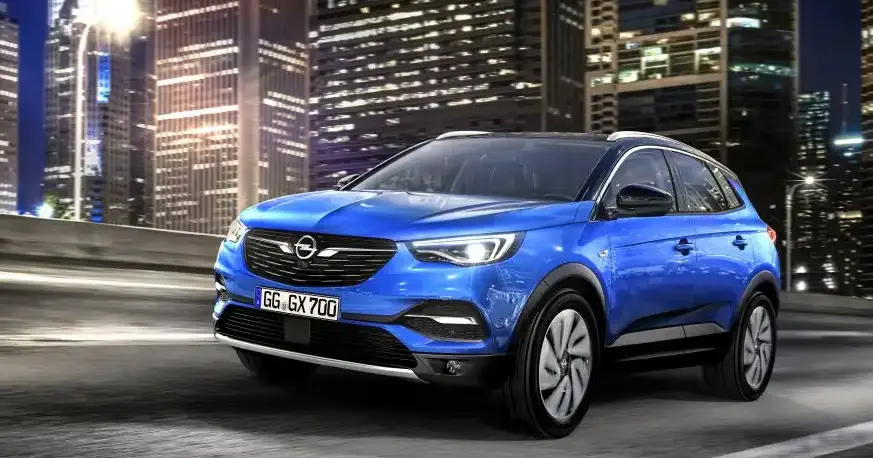
The Opel Grandland X 1.2 Turbo (130 hp) was a front-wheel-drive compact SUV produced between October 2017 and April 2018. Positioned as an entry-level to mid-range offering within the Grandland X lineup, it aimed to provide a fuel-efficient and accessible option in the increasingly popular crossover segment. The Grandland X itself represented Opel’s entry into the competitive C-segment SUV market, sharing its platform (EMP2) with the Peugeot 3008 and Citroën C5 Aircross. This variant, with its smaller displacement turbocharged engine, was primarily targeted at buyers prioritizing economy and practicality over outright performance.
Technical Specifications
| Brand | Opel |
| Model | Grandland |
| Generation | Grandland X |
| Type (Engine) | 1.2 Turbo (130 Hp) |
| Start of production | October, 2017 |
| End of production | April, 2018 |
| Powertrain Architecture | Internal Combustion engine |
| Body type | SUV |
| Seats | 5 |
| Doors | 5 |
| Fuel consumption (urban) | 6.4 l/100 km (36.8 US mpg, 44.1 UK mpg, 15.6 km/l) |
| Fuel consumption (extra urban) | 4.9 l/100 km (48 US mpg, 57.6 UK mpg, 20.4 km/l) |
| Fuel consumption (combined) | 5.4 l/100 km (43.6 US mpg, 52.3 UK mpg, 18.5 km/l) |
| CO2 emissions | 124 g/km |
| Fuel Type | Petrol (Gasoline) |
| Acceleration 0 – 100 km/h | 11.1 sec |
| Acceleration 0 – 62 mph | 11.1 sec |
| Acceleration 0 – 60 mph | 10.5 sec |
| Maximum speed | 188 km/h (116.82 mph) |
| Emission standard | Euro 6 |
| Weight-to-power ratio | 9.8 kg/Hp, 102 Hp/tonne |
| Weight-to-torque ratio | 5.5 kg/Nm, 180.4 Nm/tonne |
| Power | 130 Hp @ 5550 rpm |
| Power per litre | 108.4 Hp/l |
| Torque | 230 Nm @ 1750 rpm (169.64 lb.-ft. @ 1750 rpm) |
| Engine layout | Front, Transverse |
| Engine Model/Code | B12XHT |
| Engine displacement | 1199 cm3 (73.17 cu. in.) |
| Number of cylinders | 3 |
| Engine configuration | Inline |
| Cylinder Bore | 75 mm (2.95 in.) |
| Piston Stroke | 90.5 mm (3.56 in.) |
| Compression ratio | 10.5:1 |
| Number of valves per cylinder | 4 |
| Fuel injection system | Direct injection |
| Engine aspiration | Turbocharger, Intercooler |
| Engine oil capacity | 3.5 l (3.7 US qt | 3.08 UK qt) |
| Kerb Weight | 1275 kg (2810.89 lbs.) |
| Max. weight | 1930 kg (4254.92 lbs.) |
| Max load | 655 kg (1444.03 lbs.) |
| Trunk (boot) space – minimum | 514 l (18.15 cu. ft.) |
| Trunk (boot) space – maximum | 1652 l (58.34 cu. ft.) |
| Fuel tank capacity | 53 l (14 US gal | 11.66 UK gal) |
| Max. roof load | 85 kg (187.39 lbs.) |
| Permitted trailer load with brakes (12%) | 1350 kg (2976.24 lbs.) |
| Permitted trailer load without brakes | 670 kg (1477.1 lbs.) |
| Permitted towbar download | 70 kg (154.32 lbs.) |
| Length | 4477 mm (176.26 in.) |
| Width | 1856 mm (73.07 in.) |
| Width including mirrors | 2098 mm (82.6 in.) |
| Height | 1609 mm (63.35 in.) |
| Wheelbase | 2675 mm (105.31 in.) |
| Front track | 1595 mm (62.8 in.) |
| Rear (Back) track | 1610 mm (63.39 in.) |
| Minimum turning circle | 11.05 m (36.25 ft.) |
| Drivetrain Architecture | Front wheel drive |
| Number of gears and type of gearbox | 6 gears, manual transmission |
| Front brakes | Ventilated discs |
| Rear brakes | Disc |
Powertrain & Engine Architecture
The heart of the Grandland X 1.2 Turbo is the B12XHT engine, a 1.2-liter, three-cylinder turbocharged gasoline engine. This engine is part of Opel’s Small Displacement Gasoline (SDG) family, known for its efficiency and surprisingly robust power output for its size. The B12XHT utilizes direct fuel injection, a technology that precisely meters fuel directly into the combustion chamber, improving efficiency and reducing emissions. It also features a single-scroll turbocharger with an intercooler, which helps to cool the intake air, increasing its density and further boosting performance. The engine produces 130 horsepower at 5550 rpm and 230 Nm (169.64 lb-ft) of torque at 1750 rpm. The engine is transversely mounted at the front of the vehicle. The transmission is a six-speed manual gearbox, chosen for its fuel efficiency and lower cost compared to an automatic option.
Driving Characteristics
The 1.2 Turbo engine, paired with the six-speed manual transmission, provided adequate, though not exhilarating, performance. Acceleration from 0-60 mph took around 10.5 seconds, and top speed was 116.82 mph. The engine felt responsive at lower revs thanks to the turbocharger, providing sufficient torque for everyday driving situations. However, when pushed harder, particularly when fully loaded or on inclines, the engine could feel strained, requiring frequent downshifts to maintain momentum. The manual transmission offered a precise shift feel, but the gear ratios were tuned more for economy than outright performance. Compared to the more powerful 1.6-liter diesel or larger gasoline engines available in the Grandland X range, this variant prioritized fuel efficiency over dynamic driving experience.
Equipment & Trim Levels
The Grandland X 1.2 Turbo typically came with a reasonable level of standard equipment. This included air conditioning, a touchscreen infotainment system with Bluetooth connectivity, alloy wheels, and a suite of safety features such as ABS, ESP (Electronic Stability Program), and multiple airbags. Interior upholstery was typically cloth, with a functional and durable design. Optional extras included navigation system, parking sensors, a rearview camera, and upgraded audio systems. Trim levels varied slightly depending on the market, but generally, this engine was offered in base or mid-range trims, focusing on value for money.
Chassis & Braking
The Grandland X featured a typical front-wheel-drive chassis layout with MacPherson strut suspension at the front and a twist-beam axle at the rear. The suspension was tuned for comfort, providing a relatively smooth ride quality, although it wasn’t particularly sporty. Braking was handled by ventilated discs at the front and solid discs at the rear. ABS (Anti-lock Braking System) was standard, providing enhanced stopping power and stability. The steering was electrically assisted, offering light and easy steering feel, suitable for urban driving.
Market Reception & Comparison
The Opel Grandland X 1.2 Turbo was generally well-received by critics as a practical and economical SUV. Its fuel economy figures of around 43.6 US mpg combined were a major selling point. However, some reviewers noted that the engine could feel underpowered, particularly when carrying passengers or luggage. Compared to the diesel variants, the 1.2 Turbo offered lower running costs in terms of fuel, but potentially higher maintenance costs due to the complexity of the turbocharger system. Against competitors like the Nissan Qashqai and Kia Sportage, the Grandland X 1.2 Turbo offered a competitive package, particularly for buyers prioritizing value and fuel efficiency.
Legacy
The B12XHT engine has proven to be a relatively reliable unit, although, like all turbocharged engines, it requires regular maintenance and quality oil changes. The Grandland X 1.2 Turbo remains a relatively affordable option on the used car market. While it may not offer the performance of higher-spec models, its fuel efficiency and practicality make it a sensible choice for buyers seeking a compact SUV for everyday use. The platform and engine technology introduced in the Grandland X have continued to influence Opel’s product development, paving the way for future generations of SUVs and efficient gasoline engines.