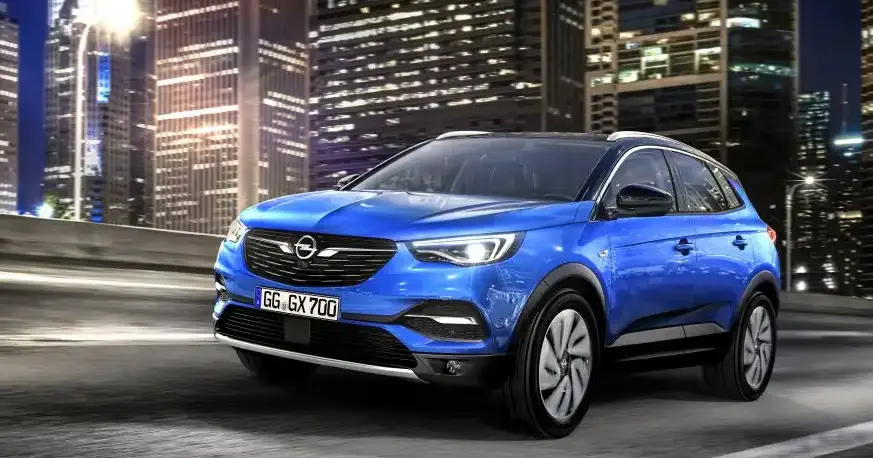
The Opel Grandland X 1.6 Turbo Automatic, produced from July 2018 to July 2021, represents a significant offering in Opel’s compact SUV lineup. Positioned as a mid-range trim, it aimed to balance performance, fuel efficiency, and practicality for European buyers. This variant utilized a 1.6-liter turbocharged gasoline engine paired with an eight-speed automatic transmission, offering a more accessible entry point into the Grandland X range compared to more powerful or diesel-powered options. It was a key model in Opel’s strategy to compete in the increasingly popular crossover segment.
Technical Specifications
| Brand | Opel |
| Model | Grandland |
| Generation | Grandland X |
| Type (Engine) | 1.6 Turbo (180 Hp) Automatic |
| Start of production | July, 2018 |
| End of production | July, 2021 |
| Powertrain Architecture | Internal Combustion engine |
| Body type | SUV |
| Seats | 5 |
| Doors | 5 |
| Fuel consumption (urban) | 7.1-7.2 l/100 km (33.1 – 32.7 US mpg) |
| Fuel consumption (extra urban) | 4.9-5.0 l/100 km (48 – 47 US mpg) |
| Fuel consumption (combined) | 5.7-5.8 l/100 km (41.3 – 40.6 US mpg) |
| CO2 emissions | 130-132 g/km |
| Fuel Type | Petrol (Gasoline) |
| Acceleration 0 – 100 km/h | 8.8 sec |
| Acceleration 0 – 62 mph | 8.8 sec |
| Acceleration 0 – 60 mph | 8.4 sec |
| Maximum speed | 200 km/h (124.27 mph) |
| Emission standard | Euro 6d-TEMP |
| Weight-to-power ratio | 7.9 kg/Hp |
| Weight-to-torque ratio | 5.7 kg/Nm |
| Power | 180 Hp @ 5500 rpm |
| Torque | 250 Nm @ 1750 rpm (184.39 lb.-ft. @ 1750 rpm) |
| Engine layout | Front, Transverse |
| Engine Model/Code | D16XHT, F16XHT |
| Engine displacement | 1598 cm3 (97.52 cu. in.) |
| Number of cylinders | 4 |
| Engine configuration | Inline |
| Compression ratio | 10.2:1 |
| Number of valves per cylinder | 4 |
| Fuel injection system | Direct injection |
| Engine aspiration | Turbocharger, Intercooler |
| Engine oil capacity | 4.3 l (4.54 US qt | 3.78 UK qt) |
| Kerb Weight | 1425 kg (3141.59 lbs.) |
| Max. weight | 2000 kg (4409.25 lbs.) |
| Max load | 575 kg (1267.66 lbs.) |
| Trunk (boot) space – minimum | 514 l (18.15 cu. ft.) |
| Trunk (boot) space – maximum | 1652 l (58.34 cu. ft.) |
| Fuel tank capacity | 53 l (14 US gal | 11.66 UK gal) |
| Max. roof load | 85 kg (187.39 lbs.) |
| Permitted trailer load with brakes (12%) | 1600 kg (3527.4 lbs.) |
| Permitted trailer load without brakes | 600 kg (1322.77 lbs.) |
| Permitted towbar download | 70 kg (154.32 lbs.) |
| Length | 4477 mm (176.26 in.) |
| Width | 1856 mm (73.07 in.) |
| Width including mirrors | 2098 mm (82.6 in.) |
| Height | 1609 mm (63.35 in.) |
| Wheelbase | 2675 mm (105.31 in.) |
| Front track | 1595 mm (62.8 in.) |
| Rear (Back) track | 1610 mm (63.39 in.) |
| Front overhang | 933 mm (36.73 in.) |
| Rear overhang | 869 mm (34.21 in.) |
| Ride height (ground clearance) | 188 mm (7.4 in.) |
| Minimum turning circle | 11.05 m (36.25 ft.) |
| Drivetrain Architecture | Front wheel drive |
| Number of gears and type of gearbox | 8 gears, automatic transmission |
| Front brakes | Disc |
| Rear brakes | Disc |
| Tires size | 225/55 R18; 205/55 R19 |
| Wheel rims size | 7.5J x 18; 7J x 19 |
INTRODUCTION
The Opel Grandland X 1.6 Turbo Automatic, launched in 2018, is a five-door compact SUV built on the EMP2 platform, shared with other PSA Group vehicles like the Peugeot 3008 and Citroën C5 Aircross. It represented Opel’s attempt to capitalize on the growing demand for SUVs in Europe. This particular variant, equipped with the 1.6-liter turbocharged engine and an eight-speed automatic transmission, was positioned as a practical and comfortable option for families and individuals seeking a versatile vehicle. It sat between the base-level engine options and the more powerful, often diesel-fueled, trims.
Powertrain & Engine Architecture
At the heart of the Grandland X 1.6 Turbo Automatic lies the D16XHT or F16XHT engine, a 1.6-liter inline-four cylinder gasoline engine. This engine features direct fuel injection and is coupled with a single turbocharger and intercooler to boost power and efficiency. The engine utilizes a variable valve timing system to optimize performance across the rev range. The eight-speed automatic transmission, sourced from Aisin, provides smooth and efficient gear changes. This transmission was chosen for its balance of responsiveness and fuel economy. The engine management system is calibrated to prioritize fuel efficiency while still delivering adequate performance for everyday driving. The engine produces 180 horsepower at 5500 rpm and 250 Nm (184 lb-ft) of torque at 1750 rpm.
Driving Characteristics
The 1.6 Turbo Automatic Grandland X offers a comfortable and composed driving experience. While not particularly sporty, the engine provides sufficient power for overtaking and highway cruising. The eight-speed automatic transmission contributes to relaxed driving, especially on longer journeys. Acceleration from 0 to 100 km/h (0-62 mph) takes approximately 8.8 seconds. Compared to the lower-powered engine options, the 1.6 Turbo offers a noticeable improvement in responsiveness. However, it doesn’t match the performance of the more powerful trims or the diesel variants. The automatic transmission’s gear ratios are tuned for fuel efficiency, which can sometimes result in the engine feeling slightly strained during hard acceleration. The front-wheel-drive configuration provides predictable handling, but it lacks the all-weather capability of all-wheel-drive models.
Equipment & Trim Levels
The Grandland X 1.6 Turbo Automatic typically came equipped with a respectable level of standard features. These included air conditioning, a touchscreen infotainment system with Apple CarPlay and Android Auto compatibility, Bluetooth connectivity, and a suite of safety features such as ABS, ESP, and multiple airbags. Higher trim levels offered additional features like leather upholstery, heated seats, a panoramic sunroof, and advanced driver-assistance systems such as adaptive cruise control and lane departure warning. Interior upholstery was typically cloth on the base trims, with leather options available on higher-spec models. The dashboard layout was functional and modern, with a focus on ease of use.
Chassis & Braking
The Grandland X features a MacPherson strut front suspension and a twist-beam rear suspension. This setup provides a good balance of ride comfort and handling. The steering is electrically assisted, offering light and precise control. Braking duties are handled by disc brakes on all four wheels, providing adequate stopping power. ABS (Anti-lock Braking System) and ESP (Electronic Stability Program) are standard features, enhancing safety and stability. The suspension tuning is geared towards comfort, prioritizing a smooth ride over sporty handling. Stabilizer bars are fitted to both the front and rear axles to reduce body roll during cornering.
Market Reception & Comparison
The Opel Grandland X 1.6 Turbo Automatic was generally well-received by automotive critics. It was praised for its comfortable ride, spacious interior, and fuel efficiency. However, some reviewers noted that the engine could feel underpowered when fully loaded or driving uphill. Compared to the diesel variants, the 1.6 Turbo offered lower running costs in terms of fuel, but potentially higher maintenance costs due to the complexity of the turbocharger. Fuel economy figures of around 5.7-5.8 l/100 km (41.3-40.6 US mpg) were competitive within its class. The Grandland X faced competition from rivals such as the Nissan Qashqai, Kia Sportage, and Hyundai Tucson.
Legacy
The Opel Grandland X 1.6 Turbo Automatic has proven to be a relatively reliable vehicle in the used car market. The 1.6-liter turbocharged engine, while not without its potential issues (such as turbocharger wear and carbon buildup), is generally considered durable when properly maintained. The eight-speed automatic transmission has also proven to be reliable. Today, these vehicles represent a good value proposition for buyers seeking a practical and affordable compact SUV. Regular maintenance, including oil changes and timing belt replacements, is crucial to ensure long-term reliability. The Grandland X continues to be a popular choice in the used car market, offering a blend of comfort, practicality, and affordability.