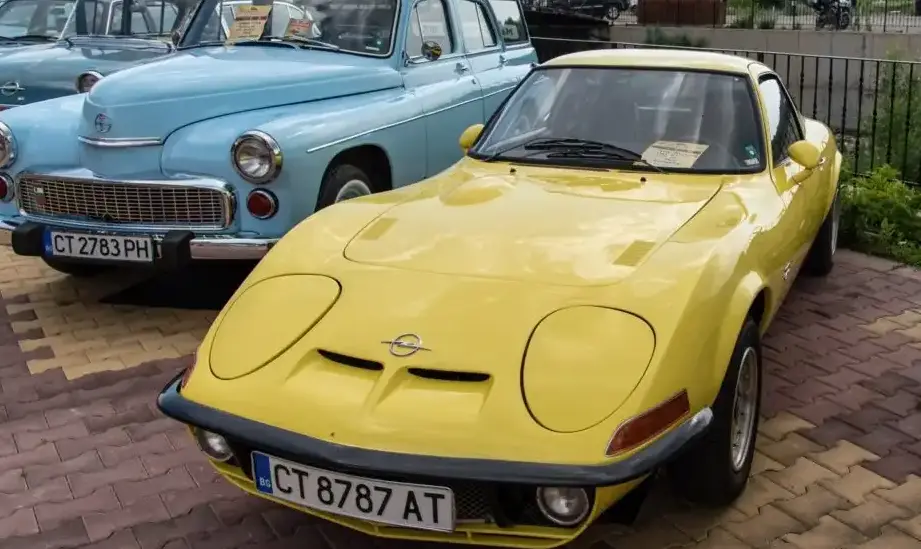
The Opel GT I 1.9, produced between August 1968 and July 1973, represents a pivotal moment in Opel’s history, embodying the burgeoning European sports car scene of the late 1960s. Positioned as a stylish and affordable two-seater coupe, the GT aimed to capture the spirit of British roadsters, but with a distinctly German approach to engineering and practicality. It was based on the Opel Kadett B chassis, though heavily modified to achieve its unique aesthetic and driving experience. The 1.9-liter variant, producing 102 horsepower, was a key offering within the GT lineup, balancing performance with accessibility for a broader customer base. It played a crucial role in establishing Opel as a manufacturer capable of producing genuinely desirable sports cars.
Technical Specifications
| Brand | Opel |
| Model | GT |
| Generation | GT I |
| Type (Engine) | 1.9 (102 Hp) |
| Start of production | August, 1968 |
| End of production | July, 1973 |
| Powertrain Architecture | Internal Combustion engine |
| Body type | Coupe |
| Seats | 2 |
| Doors | 2 |
| Fuel Type | Petrol (Gasoline) |
| Maximum speed | 185 km/h (114.95 mph) |
| Weight-to-power ratio | 9.2 kg/Hp, 108.5 Hp/tonne |
| Weight-to-torque ratio | 6.1 kg/Nm, 164.9 Nm/tonne |
| Power | 102 Hp @ 5400 rpm |
| Power per litre | 53.8 Hp/l |
| Torque | 155 Nm @ 2800-3400 rpm (114.32 lb.-ft. @ 2800-3400 rpm) |
| Engine layout | Front, Longitudinal |
| Engine Model/Code | 19S |
| Engine displacement | 1897 cm3 (115.76 cu. in.) |
| Number of cylinders | 4 |
| Engine configuration | Inline |
| Cylinder Bore | 93 mm (3.66 in.) |
| Piston Stroke | 69.8 mm (2.75 in.) |
| Compression ratio | 9:1 |
| Number of valves per cylinder | 2 |
| Fuel injection system | Carburettor |
| Engine aspiration | Naturally aspirated engine |
| Valvetrain | CIH |
| Engine oil capacity | 3 l (3.17 US qt | 2.64 UK qt) |
| Coolant | 6 l (6.34 US qt | 5.28 UK qt) |
| Kerb Weight | 940 kg (2072.35 lbs.) |
| Fuel tank capacity | 55 l (14.53 US gal | 12.1 UK gal) |
| Length | 4112 mm (161.89 in.) |
| Width | 1580 mm (62.2 in.) |
| Height | 1224 mm (48.19 in.) |
| Wheelbase | 2431 mm (95.71 in.) |
| Front track | 1255 mm (49.41 in.) |
| Rear (Back) track | 1285 mm (50.59 in.) |
| Front overhang | 927 mm (36.5 in.) |
| Rear overhang | 754 mm (29.69 in.) |
| Ride height (ground clearance) | 129 mm (5.08 in.) |
| Minimum turning circle (turning diameter) | 10.8 m (35.43 ft.) |
| Drivetrain Architecture | The Internal combustion engine (ICE) drives the rear wheels of the vehicle. |
| Drive wheel | Rear wheel drive |
| Number of gears and type of gearbox | 4 gears, manual transmission |
| Front suspension | Double wishbone |
| Rear suspension | Rigid axle suspension |
| Front brakes | Disc |
| Rear brakes | Drum |
| Wheel rims size | 5J x 13 |
Powertrain & Engine Architecture
The heart of the Opel GT I 1.9 was the 19S engine, a 1.9-liter inline-four cylinder unit. This engine was part of Opel’s CIH (Cylinder Head Inclined) family, known for its robust design and relatively simple maintenance. The ‘S’ designation indicated a Solex carburetor setup, providing fuel delivery. The engine featured a two-valve per cylinder configuration and a compression ratio of 9:1. The 102 horsepower output was achieved at 5400 rpm, with peak torque of 155 Nm (114.32 lb-ft) available between 2800 and 3400 rpm. The engine was mounted longitudinally in the front of the car, driving the rear wheels. The standard transmission for this variant was a four-speed manual gearbox, although a three-speed automatic transmission was offered as an option, albeit less common. The automatic transmission, a General Motors-sourced unit, was geared towards providing comfortable cruising rather than outright performance.
Driving Characteristics
The 1.9-liter GT I offered a balanced driving experience. While not a high-performance machine by modern standards, it provided adequate power for spirited driving on winding roads. The manual transmission allowed for precise control, and the rear-wheel-drive layout contributed to a lively and engaging feel. The automatic transmission, while offering convenience, noticeably dulled the car’s responsiveness. Acceleration from 0 to 60 mph was estimated to be around 9.5 seconds, and the top speed reached 115 mph. The relatively light weight of the car (around 2072 lbs) helped to offset the modest horsepower output. The suspension, featuring a double wishbone setup at the front and a rigid axle at the rear, provided a reasonably comfortable ride, although it could feel somewhat firm on uneven surfaces.
Equipment & Trim Levels
The Opel GT I 1.9 was relatively sparsely equipped by today’s standards, reflecting its positioning as an affordable sports car. Standard features included cloth upholstery, a basic instrument cluster, and a three-spoke steering wheel. Optional extras included a vinyl interior, a more comprehensive instrument panel, and a radio. The GT’s interior was characterized by its minimalist design and driver-focused layout. The dashboard was cleanly styled, and the controls were logically arranged. The seats were supportive, although they lacked the bolstering found in more modern sports cars. The GT’s signature feature was its hidden headlights, which were concealed behind retractable panels when not in use.
Chassis & Braking
The GT’s chassis was based on the Opel Kadett B, but significantly modified to accommodate the coupe body style and rear-wheel-drive layout. The suspension system was designed to provide a balance between handling and ride comfort. The front suspension utilized a double wishbone setup, while the rear suspension employed a rigid axle with leaf springs. Braking duties were handled by disc brakes at the front and drum brakes at the rear. The braking system was adequate for the car’s performance, but it lacked the stopping power of more modern vehicles. The 5J x 13 inch wheels were standard, and they were typically fitted with bias-ply tires.
Market Reception & Comparison
The Opel GT I 1.9 was generally well-received by automotive critics. It was praised for its stylish design, engaging driving experience, and affordable price. However, some critics noted that the car’s performance was not as impressive as that of some of its rivals, such as the MG B and the Porsche 912. Compared to the higher-output GT variants (such as the later 2.0-liter models), the 1.9-liter version offered a more accessible entry point into the GT lineup. It was also more fuel-efficient than the more powerful models. The automatic transmission version was often criticized for its sluggish performance and reduced driver engagement.
Legacy
The Opel GT I 1.9 remains a popular classic car today, appreciated for its distinctive styling and relatively simple mechanicals. The 19S engine is known for its reliability, although regular maintenance is essential to keep it running smoothly. Parts availability is generally good, although some components can be difficult to find. The GT’s enduring appeal lies in its ability to capture the spirit of the 1960s sports car era. It represents a time when cars were designed to be driven and enjoyed, rather than simply transported from point A to point B. The 1.9-liter variant, while not the fastest GT model, offers a unique blend of style, affordability, and reliability, making it a desirable choice for classic car enthusiasts.