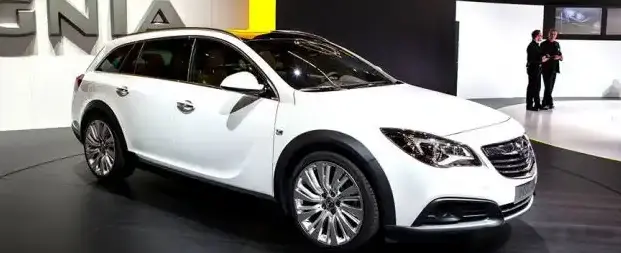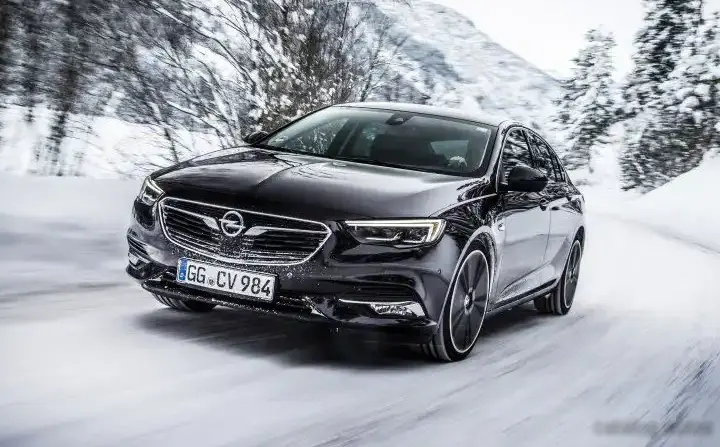
The Opel Insignia Grand Sport (B) 1.6d Automatic, produced from April 2018 to February 2020, represented a key offering within Opel’s D-segment lineup. Positioned as a mid-range trim, it aimed to balance fuel efficiency with acceptable performance for everyday driving. This variant utilized a 1.6-liter turbocharged diesel engine paired with a six-speed automatic transmission, catering to buyers prioritizing comfort and ease of use over outright sportiness. The Insignia Grand Sport, a hatchback body style, was Opel’s flagship model intended to compete with vehicles like the Ford Mondeo, Volkswagen Passat, and Peugeot 508, primarily in the European market.
Technical Specifications
| Brand | Opel |
| Model | Insignia |
| Generation | Insignia Grand Sport (B) |
| Type (Engine) | 1.6d (136 Hp) Automatic |
| Start of production | April, 2018 |
| End of production | February, 2020 |
| Powertrain Architecture | Internal Combustion engine |
| Body type | Hatchback |
| Seats | 5 |
| Doors | 5 |
| Fuel consumption (urban) | 6.5-7.0 l/100 km (36.2 – 33.6 US mpg, 43.5 – 40.4 UK mpg, 15.4 – 14.3 km/l) |
| Fuel consumption (extra urban) | 4.5-4.6 l/100 km (52.3 – 51.1 US mpg, 62.8 – 61.4 UK mpg, 22.2 – 21.7 km/l) |
| Fuel consumption (combined) | 5.2-5.4 l/100 km (45.2 – 43.6 US mpg, 54.3 – 52.3 UK mpg, 19.2 – 18.5 km/l) |
| CO2 emissions | 137-143 g/km |
| Fuel Type | Diesel |
| Acceleration 0 – 100 km/h | 10.9 sec |
| Acceleration 0 – 62 mph | 10.9 sec |
| Acceleration 0 – 60 mph | 10.4 sec |
| Maximum speed | 205 km/h (127.38 mph) |
| Emission standard | Euro 6d-Temp |
| Weight-to-power ratio | 10.6 kg/Hp, 94 Hp/tonne |
| Weight-to-torque ratio | 4.5 kg/Nm, 221.1 Nm/tonne |
| Power | 136 Hp @ 3500-4000 rpm |
| Power per litre | 85.1 Hp/l |
| Torque | 320 Nm @ 2000-2250 rpm (236.02 lb.-ft. @ 2000-2250 rpm) |
| Engine layout | Front, Transverse |
| Engine Model/Code | D16DTH |
| Engine displacement | 1598 cm3 (97.52 cu. in.) |
| Number of cylinders | 4 |
| Engine configuration | Inline |
| Cylinder Bore | 79.7 mm (3.14 in.) |
| Piston Stroke | 80.1 mm (3.15 in.) |
| Compression ratio | 16:1 |
| Number of valves per cylinder | 4 |
| Fuel injection system | Direct injection |
| Engine aspiration | Turbocharger, Intercooler |
| Engine oil capacity | 5 l (5.28 US qt | 4.4 UK qt) |
| Coolant | 6 l (6.34 US qt | 5.28 UK qt) |
| Kerb Weight | 1447 kg (3190.09 lbs.) |
| Max. weight | 2095 kg (4618.68 lbs.) |
| Max load | 648 kg (1428.6 lbs.) |
| Trunk (boot) space – minimum | 490 l (17.3 cu. ft.) |
| Trunk (boot) space – maximum | 1450 l (51.21 cu. ft.) |
| Fuel tank capacity | 62 l (16.38 US gal | 13.64 UK gal) |
| AdBlue tank | 15 l (3.96 US gal | 3.3 UK gal) |
| Max. roof load | 100 kg (220.46 lbs.) |
| Permitted trailer load with brakes (12%) | 1300 kg (2866.01 lbs.) |
| Permitted trailer load without brakes | 750 kg (1653.47 lbs.) |
| Permitted towbar download | 60 kg (132.28 lbs.) |
| Length | 4897 mm (192.8 in.) |
| Width | 1863 mm (73.35 in.) |
| Width with mirrors folded | 1941 mm (76.42 in.) |
| Width including mirrors | 2093 mm (82.4 in.) |
| Height | 1455 mm (57.28 in.) |
| Wheelbase | 2829 mm (111.38 in.) |
| Front track | 1607 mm (63.27 in.) |
| Rear (Back) track | 1610 mm (63.39 in.) |
| Front overhang | 990 mm (38.98 in.) |
| Rear overhang | 1078 mm (42.44 in.) |
| Minimum turning circle (turning diameter) | 11.74 m (38.52 ft.) |
| Drivetrain Architecture | The Internal combustion engine (ICE) drives the front wheels of the vehicle. |
| Drive wheel | Front wheel drive |
| Number of gears and type of gearbox | 6 gears, automatic transmission |
| Front brakes | Disc |
| Rear brakes | Disc |
| Assisting systems | ABS (Anti-lock braking system) |
| Steering type | Steering rack and pinion |
| Power steering | Electric Steering |
| Tires size | 215/60 R16; 215/55 R17; 225/55 R17; 245/45 R18 |
| Wheel rims size | 6.5J x 16; 7J x 17; 7.5J x 17; 8.5J x 18 |
INTRODUCTION
The Opel Insignia Grand Sport (B) 1.6d Automatic, launched in 2018, was a significant update to Opel’s flagship model. Built on the GM’s Epsilon II platform (internally known as the 1HX0/A3 platform), the Grand Sport variant emphasized a more coupe-like silhouette compared to the previous generation. The 1.6-liter diesel automatic configuration was designed to appeal to a broad customer base seeking a comfortable and economical family vehicle. It occupied a middle ground in the Insignia lineup, offering a step up from the base engine options while remaining more accessible than the higher-powered petrol or diesel variants.
Powertrain & Engine Architecture
At the heart of the Insignia 1.6d Automatic lies the D16DTH engine, a 1.6-liter inline-four cylinder diesel. This engine is a member of Opel’s ‘Whisper Diesel’ family, known for its relatively quiet operation and focus on fuel efficiency. It features direct injection, utilizing a common rail system operating at very high pressures to atomize the fuel for cleaner and more complete combustion. The engine is turbocharged with a variable geometry turbocharger (VGT) and intercooled, allowing for a broad torque curve. The engine produces 136 horsepower at 3500-4000 rpm and 320 Nm (236 lb-ft) of torque between 2000-2250 rpm. The engine also incorporates a diesel particulate filter (DPF) to meet stringent Euro 6d-Temp emissions standards. The engine is paired with a six-speed automatic transmission, providing smooth gear changes and contributing to the vehicle’s overall refinement. This transmission isn’t known for particularly quick shifts, prioritizing comfort and fuel economy over sporty responsiveness.
Driving Characteristics
The 1.6d Automatic Insignia Grand Sport delivers a comfortable and composed driving experience. While not particularly quick, with a 0-60 mph time of around 10.4 seconds, the engine provides sufficient power for everyday driving and highway cruising. The automatic transmission is well-matched to the engine’s torque characteristics, offering smooth acceleration in most situations. Compared to the more powerful 2.0-liter diesel variants, the 1.6d feels noticeably less responsive, especially during overtaking maneuvers. The gear ratios are tuned for fuel efficiency, meaning the engine can feel strained when pushed hard. The front-wheel-drive configuration provides predictable handling, but lacks the all-weather capability of the optional all-wheel-drive system available on higher-spec Insignias.
Equipment & Trim Levels
The 1.6d Automatic trim typically included standard features such as air conditioning, a touchscreen infotainment system with Bluetooth connectivity, alloy wheels, and a suite of safety features including ABS, ESP, and multiple airbags. Higher trim levels offered upgrades like leather upholstery, heated seats, a panoramic sunroof, and advanced driver-assistance systems such as adaptive cruise control and lane departure warning. Interior materials were generally of good quality, providing a comfortable and well-appointed cabin. The standard dashboard configuration featured analog gauges with a central digital display providing information on fuel economy, trip data, and vehicle settings.
Chassis & Braking
The Insignia Grand Sport utilizes a MacPherson strut front suspension and a multi-link rear suspension, providing a good balance between ride comfort and handling. The suspension is tuned for comfort, absorbing bumps and imperfections in the road surface effectively. Braking duties are handled by disc brakes on all four wheels, providing adequate stopping power. ABS (Anti-lock Braking System) is standard, enhancing safety during emergency braking situations. Stabilizer bars are fitted to both the front and rear axles to reduce body roll during cornering. The weight distribution is slightly front-biased due to the engine layout and front-wheel-drive configuration.
Market Reception & Comparison
The Opel Insignia Grand Sport 1.6d Automatic was generally well-received by automotive critics. It was praised for its comfortable ride, spacious interior, and fuel efficiency. However, some reviewers noted that the engine lacked the punch of its rivals and that the automatic transmission could feel sluggish at times. Compared to the 2.0-liter diesel variants, the 1.6d offered significantly better fuel economy but at the expense of performance. Against competitors like the Ford Mondeo and Volkswagen Passat, the Insignia offered a compelling value proposition, particularly for buyers prioritizing comfort and practicality over outright driving excitement.
Legacy
The Opel Insignia Grand Sport 1.6d Automatic has proven to be a relatively reliable vehicle in the used car market. The 1.6-liter diesel engine, while not known for being exceptionally powerful, is generally durable and capable of high mileage with proper maintenance. Common issues include DPF blockages (particularly with frequent short journeys) and potential problems with the turbocharger. The automatic transmission is generally reliable, but regular fluid changes are essential to ensure smooth operation. Today, these Insignias represent a good value for buyers seeking a spacious, comfortable, and economical family car, though potential buyers should be aware of the potential maintenance costs associated with diesel particulate filters and turbochargers.