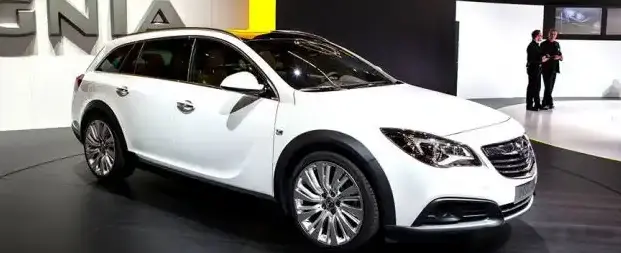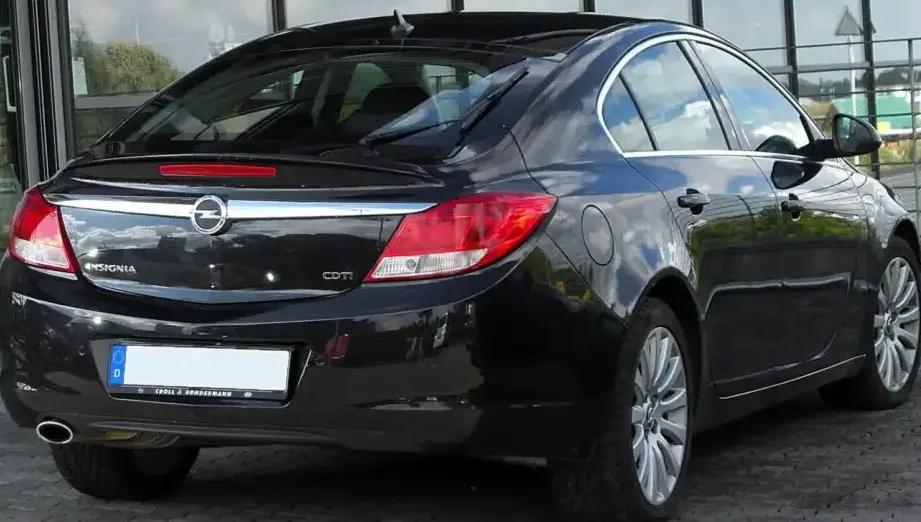
The Opel Insignia Hatchback (A), specifically the 2.0 CDTI (110 hp) Ecotec start/stop variant, was produced from July 2011 to June 2013. This model represented a key offering within the first generation (A) of the Insignia, a mid-size family car designed to compete with established players like the Ford Mondeo, Volkswagen Passat, and Peugeot 508 in the European market. Positioned as an efficient and practical option, the 2.0 CDTI 110 hp model served as a core trim level, appealing to buyers prioritizing fuel economy and reasonable running costs over outright performance. It was a significant step for Opel in offering a more modern and competitive vehicle in the D-segment.
Technical Specifications
| Brand | Opel |
| Model | Insignia |
| Generation | Insignia Hatchback (A) |
| Type (Engine) | 2.0 CDTI (110 Hp) Ecotec start/stop |
| Start of production | July, 2011 |
| End of production | June, 2013 |
| Powertrain Architecture | Internal Combustion engine |
| Body type | Hatchback |
| Seats | 5 |
| Doors | 5 |
| Fuel consumption (urban) | 5.3 l/100 km (44.4 US mpg, 53.3 UK mpg, 18.9 km/l) |
| Fuel consumption (extra urban) | 3.9 l/100 km (60.3 US mpg, 72.4 UK mpg, 25.6 km/l) |
| Fuel consumption (combined) | 4.4 l/100 km (53.5 US mpg, 64.2 UK mpg, 22.7 km/l) |
| CO2 emissions | 116 g/km |
| Fuel Type | Diesel |
| Acceleration 0 – 100 km/h | 12.1 sec |
| Acceleration 0 – 62 mph | 12.1 sec |
| Acceleration 0 – 60 mph | 11.5 sec |
| Maximum speed | 190 km/h (118.06 mph) |
| Emission standard | Euro 5 |
| Weight-to-power ratio | 13 kg/Hp, 77 Hp/tonne |
| Weight-to-torque ratio | 5.5 kg/Nm, 182.1 Nm/tonne |
| Power | 110 Hp @ 4000 rpm |
| Power per litre | 56.2 Hp/l |
| Torque | 260 Nm @ 1750-2500 rpm (191.77 lb.-ft. @ 1750-2500 rpm) |
| Engine layout | Front, Transverse |
| Engine Model/Code | A20DTL |
| Engine displacement | 1956 cm3 (119.36 cu. in.) |
| Number of cylinders | 4 |
| Engine configuration | Inline |
| Cylinder Bore | 83 mm (3.27 in.) |
| Piston Stroke | 90.4 mm (3.56 in.) |
| Number of valves per cylinder | 4 |
| Fuel injection system | Diesel Commonrail |
| Engine aspiration | Turbocharger, Intercooler |
| Engine oil capacity | 4.5 l (4.76 US qt | 3.96 UK qt) |
| Coolant | 9 l (9.51 US qt | 7.92 UK qt) |
| Kerb Weight | 1428 kg (3148.2 lbs.) |
| Max. weight | 2035 kg (4486.41 lbs.) |
| Max load | 607 kg (1338.21 lbs.) |
| Trunk (boot) space – minimum | 530 l (18.72 cu. ft.) |
| Trunk (boot) space – maximum | 1470 l (51.91 cu. ft.) |
| Fuel tank capacity | 70 l (18.49 US gal | 15.4 UK gal) |
| Max. roof load | 100 kg (220.46 lbs.) |
| Permitted trailer load with brakes (12%) | 1600 kg (3527.4 lbs.) |
| Permitted trailer load without brakes | 750 kg (1653.47 lbs.) |
| Length | 4830 mm (190.16 in.) |
| Width | 1856 mm (73.07 in.) |
| Width including mirrors | 2084 mm (82.05 in.) |
| Height | 1498 mm (58.98 in.) |
| Wheelbase | 2737 mm (107.76 in.) |
| Front track | 1585 mm (62.4 in.) |
| Rear (Back) track | 1587 mm (62.48 in.) |
| Minimum turning circle | 11.9 m (39.04 ft.) |
| Drivetrain Architecture | Front wheel drive |
| Number of gears and type of gearbox | 6 gears, manual transmission |
Powertrain & Engine Architecture
The heart of this Insignia variant is the A20DTL 2.0-liter four-cylinder diesel engine. This engine is part of Opel’s Ecotec family, known for its focus on efficiency and reduced emissions. The A20DTL utilizes a common rail direct injection system, delivering fuel directly into the cylinders at extremely high pressure for optimized combustion. A turbocharger with an intercooler is employed to boost power output, providing 110 horsepower at 4000 rpm and a respectable 260 Nm (191.77 lb-ft) of torque between 1750 and 2500 rpm. The engine features four valves per cylinder and a timing chain for durability. The “start/stop” system, a key feature for reducing fuel consumption in urban environments, automatically shuts off the engine when the vehicle is stationary and the driver selects neutral or park, restarting it instantly when the brake pedal is pressed. The engine is transversely mounted, driving the front wheels through a six-speed manual transmission.
Driving Characteristics
The 110 hp 2.0 CDTI with a manual transmission delivers adequate, but not exhilarating, performance. Acceleration from 0 to 100 km/h (0-62 mph) takes around 12.1 seconds, making it suitable for everyday commuting and long-distance cruising. The engine’s torque peak, available at relatively low revs, provides sufficient pulling power for overtaking maneuvers, although drivers may need to downshift for quicker responses. Compared to the more powerful 160 hp or 195 hp versions of the 2.0 CDTI, this variant feels noticeably less responsive. However, it offers a more relaxed driving experience and significantly better fuel economy. The six-speed manual gearbox is well-matched to the engine’s characteristics, providing smooth and precise shifts. The gear ratios are optimized for fuel efficiency, with a taller final drive contributing to lower engine speeds at highway speeds.
Equipment & Trim Levels
The 2.0 CDTI 110 hp Insignia typically came equipped with a reasonable level of standard features. These included air conditioning, electric front windows, a CD/radio system with auxiliary input, and basic safety equipment such as ABS, ESP (Electronic Stability Program), and multiple airbags. Interior upholstery was generally cloth, with a functional and durable design. Optional extras available for this trim level included alloy wheels, a more advanced infotainment system with navigation, parking sensors, and heated front seats. The Insignia offered different trim levels (e.g., Expression, Edition, Sport, Cosmo) and the 2.0 CDTI 110 hp engine was often found in the lower to mid-range trims, providing a balance between affordability and features.
Chassis & Braking
The Insignia Hatchback (A) utilizes a MacPherson strut suspension setup at the front and a multi-link suspension at the rear, providing a comfortable ride and good handling characteristics. The 2.0 CDTI 110 hp variant, being one of the lighter engine options, generally benefits from a slightly more agile feel compared to the heavier, more powerful models. Braking systems typically consisted of disc brakes on the front wheels and drum brakes on the rear wheels, although some higher-spec models featured disc brakes all around. The braking system is assisted by ABS and EBD (Electronic Brakeforce Distribution) for improved stopping performance and stability. A stabilizer bar is fitted to both the front and rear axles to reduce body roll during cornering.
Market Reception & Comparison
The Opel Insignia 2.0 CDTI 110 hp was generally well-received by automotive critics as a practical and fuel-efficient family car. It was praised for its comfortable ride, spacious interior, and competitive fuel economy figures. However, some reviewers noted that the engine lacked the punch of its more powerful counterparts. Compared to the 160 hp CDTI, the 110 hp version offered significantly better fuel economy (around 10-15% improvement in real-world driving) but at the cost of performance. The 1.8L petrol versions, while offering smoother power delivery, couldn’t match the diesel’s fuel efficiency. In terms of reliability, the A20DTL engine proved to be generally robust, although regular maintenance, particularly oil changes and filter replacements, was crucial for long-term durability.
Legacy
The Opel Insignia 2.0 CDTI 110 hp remains a relatively common sight on the used car market. The A20DTL engine has proven to be reasonably reliable, although potential buyers should be aware of the typical diesel engine maintenance requirements, such as checking the diesel particulate filter (DPF) and ensuring proper servicing. The Insignia’s spacious interior and comfortable ride continue to make it an attractive option for families seeking a practical and affordable vehicle. While not a performance icon, the 2.0 CDTI 110 hp variant represents a sensible and economical choice within the Insignia lineup, offering a good balance of fuel efficiency, practicality, and comfort.