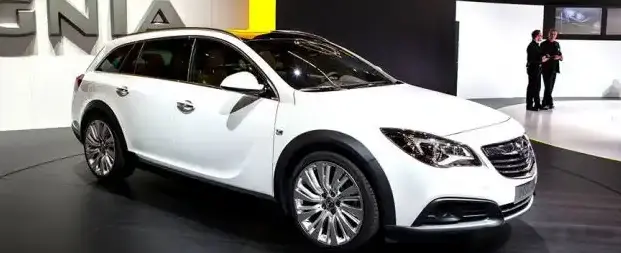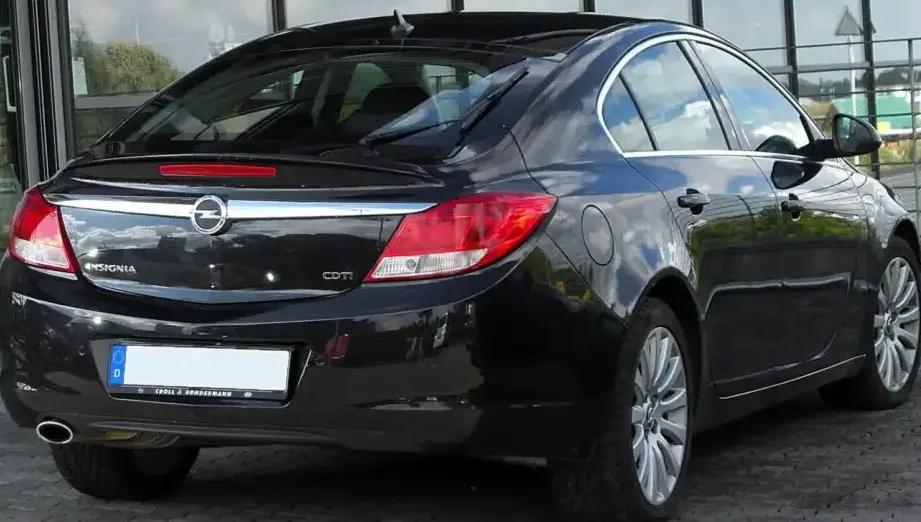
The Opel Insignia Hatchback (A), specifically the 2.0 CDTI 160 horsepower variant with an automatic transmission, was produced from November 2008 to June 2013. This model represented a significant step forward for Opel, aiming to compete directly with established players in the mid-size segment like the Ford Mondeo, Volkswagen Passat, and Peugeot 407. Positioned as a mid-range offering within the Insignia lineup, it provided a balance between performance, fuel efficiency, and comfort, appealing to drivers seeking a practical yet refined family vehicle. The Insignia A was built on the GM Epsilon II platform, shared with other vehicles like the Chevrolet Malibu and Saab 9-3.
Technical Specifications
| Brand | Opel |
| Model | Insignia |
| Generation | Insignia Hatchback (A) |
| Type (Engine) | 2.0 CDTI (160 Hp) DPF Automatic |
| Start of production | November, 2008 |
| End of production | June, 2013 |
| Powertrain Architecture | Internal Combustion engine |
| Body type | Hatchback |
| Seats | 5 |
| Doors | 5 |
| Fuel consumption (urban) | 7.7 l/100 km (30.5 US mpg) |
| Fuel consumption (extra urban) | 5.1 l/100 km (46.1 US mpg) |
| Fuel consumption (combined) | 6.6 l/100 km (35.6 US mpg) |
| CO2 emissions | 204 g/km |
| Fuel Type | Diesel |
| Acceleration 0 – 100 km/h | 9.6 sec |
| Acceleration 0 – 62 mph | 9.6 sec |
| Acceleration 0 – 60 mph | 9.1 sec |
| Maximum speed | 215 km/h (133.59 mph) |
| Emission standard | Euro 5 |
| Weight-to-power ratio | 10.1 kg/Hp |
| Weight-to-torque ratio | 4.6 kg/Nm |
| Power | 160 Hp @ 4000 rpm |
| Torque | 350 Nm @ 1750 rpm (258.15 lb.-ft. @ 1750 rpm) |
| Engine layout | Front, Transverse |
| Engine Model/Code | A20DTH |
| Engine displacement | 1956 cm3 (119.36 cu. in.) |
| Number of cylinders | 4 |
| Engine configuration | Inline |
| Cylinder Bore | 83 mm (3.27 in.) |
| Piston Stroke | 90.4 mm (3.56 in.) |
| Compression ratio | 18:1 |
| Number of valves per cylinder | 4 |
| Fuel injection system | Diesel Commonrail |
| Engine aspiration | Turbocharger, Intercooler |
| Valvetrain | OHC |
| Engine oil capacity | 4.5 l (4.76 US qt | 3.96 UK qt) |
| Coolant | 9 l (9.51 US qt | 7.92 UK qt) |
| Kerb Weight | 1613 kg (3556.06 lbs.) |
| Max. weight | 2130 kg (4695.85 lbs.) |
| Max load | 517 kg (1139.79 lbs.) |
| Trunk (boot) space – minimum | 520 l (18.36 cu. ft.) |
| Trunk (boot) space – maximum | 1465 l (51.74 cu. ft.) |
| Fuel tank capacity | 70 l (18.49 US gal | 15.4 UK gal) |
| Length | 4830 mm (190.16 in.) |
| Width | 1856 mm (73.07 in.) |
| Height | 1498 mm (58.98 in.) |
| Wheelbase | 2737 mm (107.76 in.) |
| Front track | 1585 mm (62.4 in.) |
| Rear (Back) track | 1587 mm (62.48 in.) |
| Ride height (ground clearance) | 160 mm (6.3 in.) |
| Minimum turning circle | 10.8 m (35.43 ft.) |
| Drive wheel | Front wheel drive |
| Number of gears | 6 gears, automatic transmission |
| Front brakes | Ventilated discs |
| Rear brakes | Disc |
| Tires size | 215/60 R16; 225/55 R17; 245/45 R18 |
| Wheel rims size | 16; 17; 18 |
Powertrain & Engine Architecture
The heart of this Insignia variant is the A20DTH 2.0-liter four-cylinder diesel engine. This engine is a member of the GM/Opel family of common-rail direct injection diesels. The A20DTH utilizes a turbocharger with an intercooler to boost power and efficiency. The common-rail direct injection system, supplied by Bosch, delivers fuel directly into the cylinders at extremely high pressure, optimizing combustion. The engine features a single overhead camshaft (OHC) design with four valves per cylinder. The automatic transmission is a six-speed unit, designed to provide smooth shifts and efficient power delivery. This transmission was chosen to offer a more relaxed driving experience compared to the standard six-speed manual, particularly in urban environments.
Driving Characteristics
The 160 horsepower and 350 Nm (258 lb-ft) of torque provided by the 2.0 CDTI engine, coupled with the six-speed automatic transmission, resulted in a respectable, if not exhilarating, driving experience. Acceleration from 0-60 mph took approximately 9.1 seconds, and top speed was around 133.59 mph. The automatic transmission, while smooth, wasn’t particularly quick to downshift, which could be noticeable during overtaking maneuvers. The gear ratios were tuned for fuel efficiency rather than outright performance. Compared to the more powerful 2.0 Turbo petrol variants, the CDTI automatic felt less responsive, but it offered significantly better fuel economy. Against the 1.9 CDTI models, the 2.0 CDTI provided a noticeable power increase, making it a more capable long-distance cruiser.
Equipment & Trim Levels
The 2.0 CDTI 160 Automatic typically came equipped with a reasonable level of standard features. These included air conditioning, electric windows, power steering, a CD/radio system, and alloy wheels. Higher trim levels, such as SE and Elite, added features like leather upholstery, heated front seats, a sunroof, and a more advanced infotainment system. Optional extras included satellite navigation, parking sensors, and a premium sound system. Interior upholstery was generally cloth on base models, with leather available as an upgrade. The dashboard layout was functional and well-designed, with a focus on ergonomics.
Chassis & Braking
The Insignia Hatchback (A) featured a MacPherson strut front suspension and a multi-link rear suspension, providing a comfortable ride and good handling characteristics. The front brakes were ventilated discs, while the rear brakes were solid discs. Anti-lock Braking System (ABS) was standard. Stabilizer bars were fitted to both the front and rear axles to reduce body roll during cornering. The suspension tuning was geared towards comfort, but the Insignia still offered a reasonably engaging driving experience. The weight distribution was fairly balanced, contributing to predictable handling.
Market Reception & Comparison
The Opel Insignia, and specifically the 2.0 CDTI 160 Automatic, was generally well-received by automotive critics. It was praised for its spacious interior, comfortable ride, and attractive styling. The diesel engine was noted for its fuel efficiency and decent performance. However, some critics found the automatic transmission to be a little sluggish and the steering to lack feel. Compared to rivals like the Ford Mondeo and Volkswagen Passat, the Insignia offered a strong value proposition, often undercutting them on price while providing a comparable level of equipment. Fuel economy was competitive, averaging around 35.6 US mpg in combined driving. Reliability was generally good, although some owners reported issues with the diesel particulate filter (DPF).
Legacy
The Opel Insignia A, including the 2.0 CDTI 160 Automatic variant, proved to be a popular and successful model for Opel. The A20DTH engine, while not without its quirks (particularly regarding DPF maintenance), is generally considered a robust and reliable unit. On the used car market today, these Insignias represent a relatively affordable and practical option for buyers seeking a spacious and comfortable family hatchback. Maintenance costs are reasonable, and parts availability is generally good. However, potential buyers should be aware of the potential for DPF issues and ensure that the vehicle has been properly maintained.