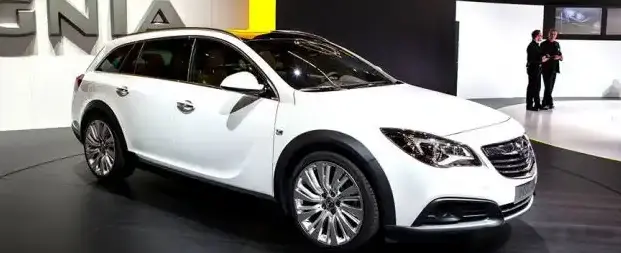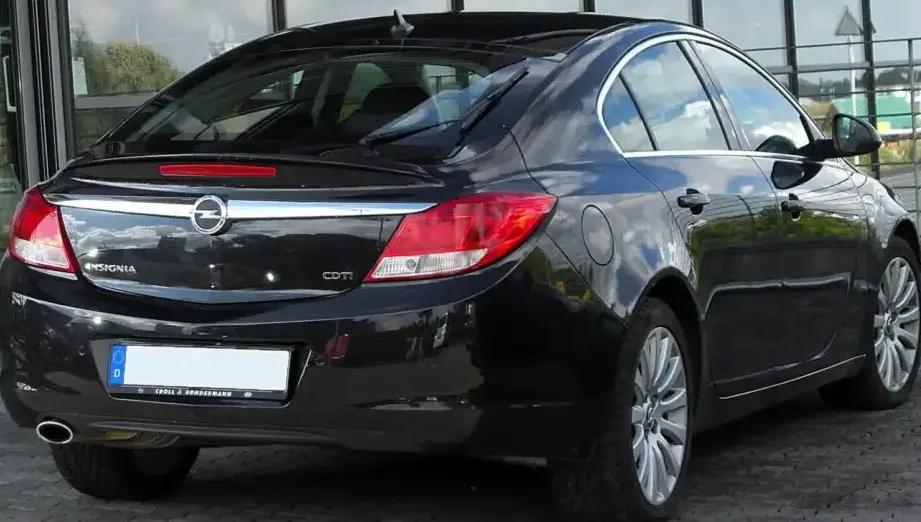
The Opel Insignia Hatchback (A) 2.0 Turbo, producing 250 horsepower, was a performance-oriented variant of the first-generation Insignia (2008-2017). Introduced in July 2011 and continuing through June 2013, this model aimed to provide a more engaging driving experience within the Insignia lineup. Positioned as a near-top-tier trim, it offered a balance between sporty performance and everyday practicality, appealing to drivers seeking a refined yet capable hatchback. The Insignia, in general, was Opel’s flagship model, intended to compete with vehicles like the Ford Mondeo and Volkswagen Passat, offering a more stylish and dynamic alternative in the European D-segment.
Technical Specifications
| Brand | Opel |
| Model | Insignia |
| Generation | Insignia Hatchback (A) |
| Type (Engine) | 2.0 Turbo (250 Hp) |
| Start of production | July, 2011 |
| End of production | June, 2013 |
| Powertrain Architecture | Internal Combustion engine |
| Body type | Hatchback |
| Seats | 5 |
| Doors | 5 |
| Fuel consumption (urban) | 10.1 l/100 km (23.3 US mpg) |
| Fuel consumption (extra urban) | 5.5 l/100 km (42.8 US mpg) |
| Fuel consumption (combined) | 7.2 l/100 km (32.7 US mpg) |
| CO2 emissions | 169 g/km |
| Fuel Type | Petrol (Gasoline) |
| Acceleration 0 – 100 km/h | 7.6 sec |
| Acceleration 0 – 62 mph | 7.6 sec |
| Acceleration 0 – 60 mph | 7.2 sec |
| Maximum speed | 242 km/h (150.37 mph) |
| Emission standard | Euro 5 |
| Weight-to-power ratio | 6.9 kg/Hp |
| Weight-to-torque ratio | 4.3 kg/Nm |
| Power | 250 Hp @ 5300 rpm |
| Torque | 400 Nm @ 2400-3600 rpm (295.02 lb.-ft.) |
| Engine layout | Front, Transverse |
| Engine Model/Code | A20NFT |
| Engine displacement | 1998 cm3 (121.93 cu. in.) |
| Number of cylinders | 4 |
| Engine configuration | Inline |
| Cylinder Bore | 86 mm (3.39 in.) |
| Piston Stroke | 86 mm (3.39 in.) |
| Compression ratio | 9.3:1 |
| Number of valves per cylinder | 4 |
| Fuel injection system | Direct injection |
| Engine aspiration | Twin-scroll turbo, Intercooler |
| Engine oil capacity | 5.7 l (6.02 US qt | 5.02 UK qt) |
| Coolant | 7.8 l (8.24 US qt | 6.86 UK qt) |
| Kerb Weight | 1733 kg (3820.61 lbs.) |
| Max. weight | 2250 kg (4960.4 lbs.) |
| Max load | 517 kg (1139.79 lbs.) |
| Trunk (boot) space – minimum | 520 l (18.36 cu. ft.) |
| Trunk (boot) space – maximum | 1465 l (51.74 cu. ft.) |
| Fuel tank capacity | 70 l (18.49 US gal | 15.4 UK gal) |
| Length | 4830 mm (190.16 in.) |
| Width | 1858 mm (73.15 in.) |
| Height | 1498 mm (58.98 in.) |
| Wheelbase | 2737 mm (107.76 in.) |
| Front track | 1585 mm (62.4 in.) |
| Rear (Back) track | 1587 mm (62.48 in.) |
| Ride height (ground clearance) | 160 mm (6.3 in.) |
| Minimum turning circle | 10.8 m (35.43 ft.) |
| Drivetrain Architecture | Front wheel drive |
| Number of gears | 6 gears, manual transmission |
| Front brakes | Ventilated discs |
| Rear brakes | Disc |
| Assisting systems | ABS (Anti-lock braking system) |
| Tires size | 225/55 R17 |
| Wheel rims size | 17 |
INTRODUCTION
The Opel Insignia A, launched in 2008, represented a significant step forward for the brand, moving Opel into a more competitive position in the mid-size segment. The 2.0 Turbo variant, specifically the 250 horsepower version introduced in 2011, was designed to appeal to drivers who desired a more spirited driving experience. This model year saw updates to the Insignia range, including revised styling and enhanced technology. The hatchback body style, popular in Europe, offered a practical and stylish alternative to traditional sedans and wagons. The A20NFT engine became a key component of Opel’s performance strategy for the Insignia.
Powertrain & Engine Architecture
At the heart of the Insignia 2.0 Turbo (250 Hp) lies the A20NFT engine, a 1.998-liter inline-four cylinder gasoline engine. This engine utilizes direct fuel injection, a technology that improves fuel efficiency and power output by injecting fuel directly into the combustion chamber. The A20NFT also features a twin-scroll turbocharger with an intercooler, which minimizes turbo lag and maximizes boost pressure. This configuration allows the engine to deliver a substantial 400 Nm (295 lb-ft) of torque between 2400 and 3600 rpm, providing strong acceleration in a wide range of driving conditions. The engine’s valvetrain employs four valves per cylinder, contributing to its efficient breathing and high-revving capability. The standard transmission for this variant was a six-speed manual gearbox, designed to complement the engine’s power delivery and provide a more engaging driving experience. While an automatic transmission was available on other Insignia trims, the 250 hp version was primarily offered with the manual.
Driving Characteristics
The Insignia 2.0 Turbo (250 Hp) offered a noticeably more dynamic driving experience compared to lower-powered Insignia variants. The 250 horsepower output, combined with the six-speed manual transmission, allowed for brisk acceleration, achieving 0-60 mph in approximately 7.2 seconds. The twin-scroll turbocharger minimized turbo lag, providing a responsive throttle feel. The gear ratios were well-matched to the engine’s powerband, allowing for strong acceleration in each gear. Compared to the 1.8L models, the 2.0 Turbo offered significantly more power and torque, resulting in a more confident and enjoyable driving experience, especially during overtaking maneuvers or on winding roads. While not a dedicated sports car, the Insignia 2.0 Turbo provided a good balance between performance and comfort.
Equipment & Trim Levels
The 2.0 Turbo variant typically came well-equipped, reflecting its position as a higher-end trim level. Standard features often included alloy wheels (typically 17 or 18 inch), automatic climate control, a touchscreen infotainment system, and a multi-function steering wheel. Interior upholstery was usually a combination of cloth and leather, with options for full leather seats. Optional extras included a panoramic sunroof, navigation system, adaptive cruise control, and upgraded audio systems. The Insignia also offered a range of safety features, including ABS, ESP (Electronic Stability Program), and multiple airbags.
Chassis & Braking
The Insignia’s chassis was designed to provide a comfortable yet controlled ride. The front suspension utilized MacPherson struts, while the rear suspension employed a multi-link setup. This configuration helped to minimize body roll and provide good handling characteristics. The 2.0 Turbo variant typically featured slightly stiffer suspension components compared to lower-powered models, further enhancing its handling capabilities. Braking duties were handled by ventilated discs at the front and solid discs at the rear, providing adequate stopping power for the vehicle’s weight and performance. ABS (Anti-lock Braking System) was standard, enhancing safety during emergency braking situations.
Market Reception & Comparison
The Opel Insignia 2.0 Turbo (250 Hp) was generally well-received by automotive critics. It was praised for its stylish design, spacious interior, and strong performance. However, some critics noted that the ride could be a bit firm, especially on rough roads. Compared to other trims in the Insignia lineup, the 2.0 Turbo offered a significant performance upgrade, but at a higher price point. Fuel economy was reasonable for a vehicle of its size and performance, averaging around 32.7 US mpg in combined driving. Reliability was generally good, although some owners reported minor issues with the infotainment system.
Legacy
The Opel Insignia A 2.0 Turbo (250 Hp) remains a popular choice in the used car market, particularly among drivers who appreciate its blend of performance, practicality, and style. The A20NFT engine has proven to be relatively reliable, although regular maintenance is essential to ensure its longevity. Parts availability is generally good, and the Insignia’s relatively simple mechanical design makes it relatively easy to maintain. The Insignia helped to establish Opel as a more credible competitor in the mid-size segment, and the 2.0 Turbo variant remains a desirable option for those seeking a sporty and refined hatchback.