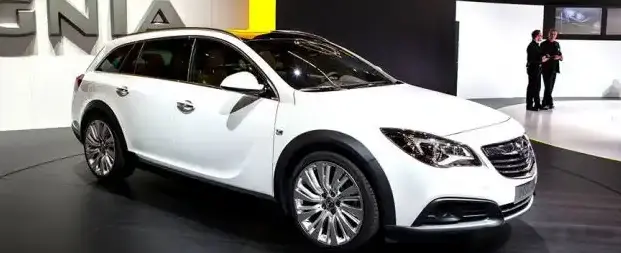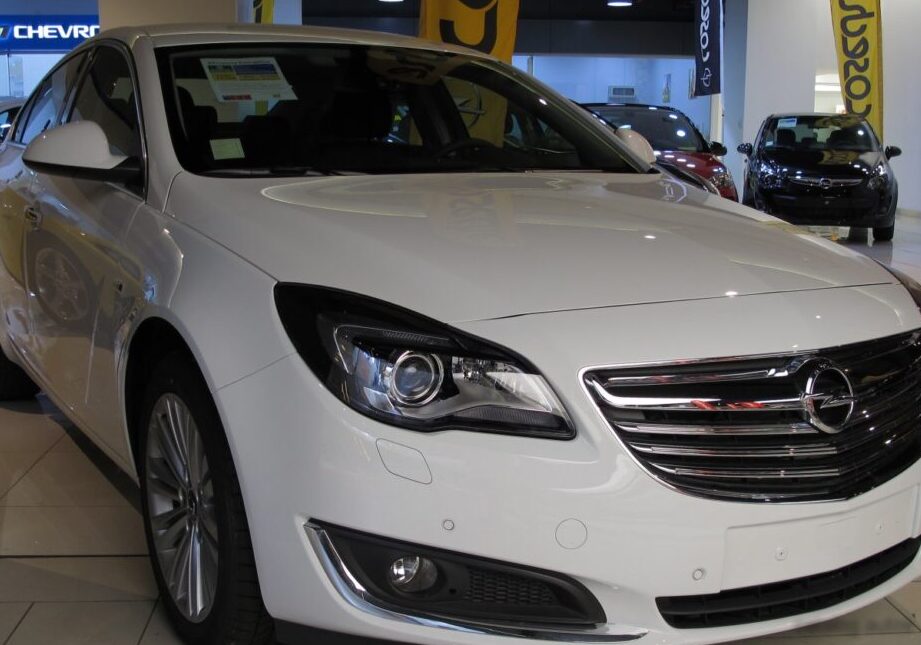
The Opel Insignia Hatchback, specifically the 2.0 CDTI variant producing 170 horsepower, represented a significant offering in the European D-segment (mid-size) market. Production of this particular configuration ran from July 2015 to January 2017, falling within the lifespan of the facelifted first-generation Insignia (A) model. Introduced as a more efficient and refined option, it aimed to balance performance with fuel economy, appealing to drivers seeking a comfortable and practical family vehicle. This model was a key part of Opel’s strategy to compete with established rivals like the Ford Mondeo, Volkswagen Passat, and Peugeot 508.
Technical Specifications
| Brand | Opel |
| Model | Insignia |
| Generation | Insignia Hatchback (A, facelift 2013) |
| Type (Engine) | 2.0 CDTI (170 Hp) |
| Start of production | July, 2015 |
| End of production | January, 2017 |
| Powertrain Architecture | Internal Combustion engine |
| Body type | Hatchback |
| Seats | 5 |
| Doors | 5 |
| Fuel consumption (urban) | 5.6-5.5 l/100 km (42 – 42.8 US mpg) |
| Fuel consumption (extra urban) | 3.8-3.6 l/100 km (61.9 – 65.3 US mpg) |
| Fuel consumption (combined) | 4.5-4.3 l/100 km (52.3 – 54.7 US mpg) |
| CO2 emissions | 118-114 g/km |
| Fuel Type | Diesel |
| Acceleration 0 – 100 km/h | 9.4 sec |
| Acceleration 0 – 62 mph | 9.4 sec |
| Acceleration 0 – 60 mph | 8.9 sec |
| Maximum speed | 225 km/h (139.81 mph) |
| Emission standard | Euro 6 |
| Weight-to-power ratio | 9.3 kg/Hp, 107 Hp/tonne |
| Weight-to-torque ratio | 4 kg/Nm, 251.7 Nm/tonne |
| Power | 170 Hp @ 3750 rpm |
| Torque | 400 Nm @ 1750-2500 rpm (295.02 lb.-ft. @ 1750-2500 rpm) |
| Engine layout | Front, Transverse |
| Engine Model/Code | B20DTH |
| Engine displacement | 1956 cm3 (119.36 cu. in.) |
| Number of cylinders | 4 |
| Engine configuration | Inline |
| Cylinder Bore | 83 mm (3.27 in.) |
| Piston Stroke | 90.4 mm (3.56 in.) |
| Compression ratio | 16:1 |
| Fuel injection system | Diesel Commonrail |
| Engine aspiration | Turbocharger, Intercooler |
| Engine oil capacity | 5.3 l (5.6 US qt | 4.66 UK qt) |
| Coolant | 7 l (7.4 US qt | 6.16 UK qt) |
| Kerb Weight | 1589 kg (3503.15 lbs.) |
| Max. weight | 2180 kg (4806.08 lbs.) |
| Max load | 591 kg (1302.93 lbs.) |
| Trunk (boot) space – minimum | 530 l (18.72 cu. ft.) |
| Trunk (boot) space – maximum | 1470 l (51.91 cu. ft.) |
| Fuel tank capacity | 70 l (18.49 US gal | 15.4 UK gal) |
| Max. roof load | 100 kg (220.46 lbs.) |
| Permitted trailer load with brakes (12%) | 1800 kg (3968.32 lbs.) |
| Permitted trailer load without brakes | 750 kg (1653.47 lbs.) |
| Length | 4842 mm (190.63 in.) |
| Width | 1856 mm (73.07 in.) |
| Width including mirrors | 2084 mm (82.05 in.) |
| Height | 1498 mm (58.98 in.) |
| Wheelbase | 2737 mm (107.76 in.) |
| Front track | 1587 mm (62.48 in.) |
| Rear (Back) track | 1590 mm (62.6 in.) |
| Minimum turning circle | 11.40 m (37.4 ft.) |
| Drivetrain Architecture | ICE, Front wheel drive |
| Drive wheel | Front wheel drive |
| Number of gears and type of gearbox | 6 gears, manual transmission |
| Front brakes | Ventilated discs |
| Rear brakes | Disc |
INTRODUCTION
The Opel Insignia A, launched in 2008, was a pivotal model for the German automaker, representing a move upmarket and a challenge to the established norms of the mid-size segment. The facelift in 2013 brought revised styling, improved technology, and refined engine options. The 2.0 CDTI 170 hp variant, introduced in 2015, occupied a middle ground within the Insignia lineup. It offered a balance between the more economical lower-powered diesel options and the higher-performance petrol variants. Positioned as a practical and efficient choice, it aimed to attract buyers prioritizing fuel economy and comfortable long-distance cruising.
Powertrain & Engine Architecture
At the heart of the Insignia 2.0 CDTI 170 was the B20DTH engine, a 1.956-liter inline-four cylinder diesel. This engine was part of Opel’s family of common-rail diesel engines, known for their efficiency and refinement. The B20DTH featured a turbocharger with an intercooler, boosting power output to 170 horsepower at 3750 rpm and a substantial 400 Nm (295 lb-ft) of torque between 1750 and 2500 rpm. The engine utilized a sophisticated common-rail direct injection system, delivering fuel directly into the combustion chamber at extremely high pressure for optimal combustion. A particulate filter was standard, helping to reduce emissions and meet Euro 6 standards. The engine was transversely mounted in the front of the vehicle. The 6-speed manual transmission was the standard offering, providing smooth gear changes and contributing to the car’s overall efficiency.
Driving Characteristics
The 170 hp 2.0 CDTI Insignia offered a composed and comfortable driving experience. While not overtly sporty, the engine provided ample torque for everyday driving and confident overtaking. The 0-60 mph acceleration time of around 8.9 seconds was respectable for a mid-size diesel. The manual transmission allowed for precise control, and the gear ratios were well-matched to the engine’s torque curve. Compared to the lower-powered 1.6 CDTI variants, the 2.0 CDTI offered noticeably more punch, particularly when fully loaded or tackling inclines. However, it lacked the outright performance of the 2.0 Turbo petrol models. The suspension was tuned for comfort, absorbing bumps and imperfections in the road effectively, making it a suitable choice for long journeys.
Equipment & Trim Levels
The Insignia 2.0 CDTI 170 typically came with a generous level of standard equipment. This included air conditioning, electric windows, a touchscreen infotainment system with Bluetooth connectivity, and alloy wheels. Higher trim levels, such as SE Nav and Elite, added features like leather upholstery, heated front seats, a premium sound system, and advanced safety technologies like adaptive cruise control and lane departure warning. Interior upholstery was typically cloth on the base models, with leather options available on higher trims. The dashboard layout was modern and functional, with a focus on ergonomics and ease of use.
Chassis & Braking
The Insignia A featured a MacPherson strut front suspension and a multi-link rear suspension, providing a good balance between ride comfort and handling. The 2.0 CDTI models typically had slightly stiffer suspension components compared to the lower-powered variants to cope with the increased weight and power. Braking was handled by ventilated discs at the front and solid discs at the rear, providing adequate stopping power. Anti-lock Braking System (ABS) was standard, along with Electronic Stability Control (ESC). Steering was via a power-assisted rack and pinion system, offering precise and responsive control.
Market Reception & Comparison
The Opel Insignia 2.0 CDTI 170 was generally well-received by automotive critics. It was praised for its comfortable ride, spacious interior, and fuel efficiency. The engine was considered refined and capable, offering a good balance between performance and economy. Compared to rivals like the Ford Mondeo and Volkswagen Passat, the Insignia offered a competitive package, often at a slightly lower price point. However, some critics noted that the interior materials weren’t quite as premium as those found in some of its competitors. Fuel economy figures of around 52-55 mpg (combined) were typical, making it an attractive option for high-mileage drivers.
Legacy
The Opel Insignia A, including the 2.0 CDTI 170 variant, proved to be a successful model for Opel, helping to establish the brand as a serious contender in the mid-size segment. The B20DTH engine, while not without its occasional issues (such as potential EGR valve problems), generally proved to be reliable with proper maintenance. On the used car market, the Insignia 2.0 CDTI 170 represents a good value proposition, offering a comfortable, practical, and fuel-efficient vehicle at an affordable price. Its spacious interior and well-equipped nature continue to appeal to buyers seeking a family-friendly car.