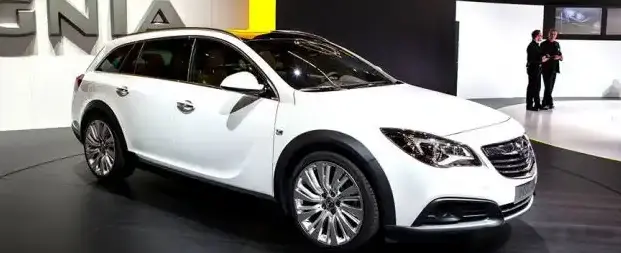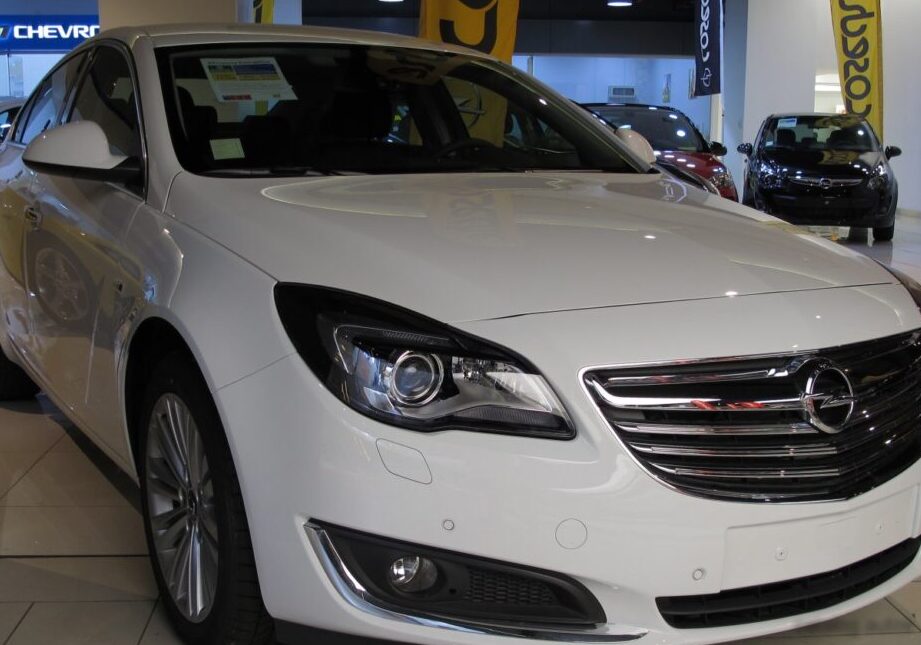
The Opel Insignia, launched in 2008, represented a significant departure for the German automaker, moving upmarket into the mid-size segment traditionally dominated by the Ford Mondeo and Volkswagen Passat. The facelifted version introduced in 2013 brought revised styling, updated technology, and refined engine options. Among these, the 2.0 CDTI 195 horsepower all-wheel-drive automatic variant occupied a premium position within the Insignia lineup, offering a blend of performance, comfort, and practicality. Production of this specific configuration ran from 2013 until June 2015, primarily targeting buyers seeking a capable and well-equipped family vehicle.
Technical Specifications
| Brand | Opel |
| Model | Insignia |
| Generation | Insignia Hatchback (A, facelift 2013) |
| Type (Engine) | 2.0 CDTI (195 Hp) AWD Ecotec Automatic |
| Start of production | 2013 |
| End of production | June, 2015 |
| Powertrain Architecture | Internal Combustion engine |
| Body type | Hatchback |
| Seats | 5 |
| Doors | 5 |
| Fuel consumption (urban) | 8.2 l/100 km (28.7 US mpg, 34.4 UK mpg, 12.2 km/l) |
| Fuel consumption (extra urban) | 4.9 l/100 km (48 US mpg, 57.6 UK mpg, 20.4 km/l) |
| Fuel consumption (combined) | 6.1 l/100 km (38.6 US mpg, 46.3 UK mpg, 16.4 km/l) |
| CO2 emissions | 162 g/km |
| Fuel Type | Diesel |
| Acceleration 0 – 100 km/h | 9 sec |
| Acceleration 0 – 62 mph | 9 sec |
| Acceleration 0 – 60 mph | 8.6 sec |
| Maximum speed | 225 km/h (139.81 mph) |
| Emission standard | Euro 5 |
| Power | 195 Hp @ 4000 rpm |
| Power per litre | 99.7 Hp/l |
| Torque | 400 Nm @ 1750-2500 rpm (295.02 lb.-ft. @ 1750-2500 rpm) |
| Engine layout | Front, Transverse |
| Engine Model/Code | A20DTR |
| Engine displacement | 1956 cm3 (119.36 cu. in.) |
| Number of cylinders | 4 |
| Engine configuration | Inline |
| Cylinder Bore | 83 mm (3.27 in.) |
| Piston Stroke | 90.4 mm (3.56 in.) |
| Number of valves per cylinder | 4 |
| Fuel injection system | Diesel Commonrail |
| Engine aspiration | Turbocharger, Intercooler |
| Engine oil capacity | 4.5 l (4.76 US qt | 3.96 UK qt) |
| Coolant | 9 l (9.51 US qt | 7.92 UK qt) |
| Trunk (boot) space – minimum | 530 l (18.72 cu. ft.) |
| Trunk (boot) space – maximum | 1470 l (51.91 cu. ft.) |
| Fuel tank capacity | 70 l (18.49 US gal | 15.4 UK gal) |
| Length | 4842 mm (190.63 in.) |
| Width | 1856 mm (73.07 in.) |
| Width including mirrors | 2084 mm (82.05 in.) |
| Height | 1498 mm (58.98 in.) |
| Wheelbase | 2737 mm (107.76 in.) |
| Front track | 1587 mm (62.48 in.) |
| Rear (Back) track | 1590 mm (62.6 in.) |
| Minimum turning circle | 11.4 m (37.4 ft.) |
| Drive wheel | All wheel drive (4×4) |
| Number of gears | 6 |
| Gearbox type | automatic transmission |
| Assisting systems | ABS (Anti-lock braking system) |
| Steering type | Steering rack and pinion |
Introduction
The 2013 facelift of the Opel Insignia brought a refreshed look and enhanced features to the model range. The 2.0 CDTI with 195 horsepower, coupled with an automatic transmission and all-wheel drive, represented the higher end of the Insignia spectrum. This variant was positioned as a comfortable and capable grand tourer, appealing to drivers who prioritized refinement and all-weather traction. It competed directly with premium offerings from other European manufacturers, offering a compelling value proposition.
Powertrain & Engine Architecture
At the heart of this Insignia variant lies the A20DTR engine, a 2.0-liter inline-four cylinder diesel. This engine is a member of Opel’s Ecotec family, known for its efficiency and relatively quiet operation. The A20DTR utilizes a common rail direct injection system, delivering fuel at extremely high pressures for optimized combustion. A variable geometry turbocharger, coupled with an intercooler, provides a broad torque curve and responsive performance. The engine produces 400 Nm (295 lb-ft) of torque between 1750 and 2500 rpm, contributing to strong mid-range acceleration. The six-speed automatic transmission, sourced from Aisin, was chosen for its smoothness and reliability. It features adaptive shift patterns, adjusting to driving style and conditions.
Driving Characteristics
The combination of the 195 hp diesel engine and the six-speed automatic transmission delivers a relaxed and refined driving experience. While not overtly sporty, the Insignia 2.0 CDTI AWD offers ample power for overtaking and highway cruising. The automatic transmission provides seamless gear changes, and the all-wheel-drive system inspires confidence in adverse weather conditions. Compared to the lower-powered 1.6 CDTI variants, the 2.0 CDTI offers noticeably stronger acceleration. Against the more powerful 2.0 BiTurbo diesel, the 195 hp version provides a more balanced experience, sacrificing some outright performance for improved fuel economy and reduced complexity. The gear ratios are tuned for comfortable cruising, with a focus on maximizing fuel efficiency rather than aggressive acceleration.
Equipment & Trim Levels
The 2.0 CDTI AWD automatic typically came equipped with a generous level of standard features. These included dual-zone climate control, leather upholstery, heated front seats, a touchscreen infotainment system with navigation, and parking sensors. Higher trim levels added features such as adaptive cruise control, a premium sound system, and xenon headlights. Optional extras included a panoramic sunroof, upgraded alloy wheels, and a rear-view camera. The interior design was modern and functional, with a focus on ergonomics and user-friendliness.
Chassis & Braking
The Insignia’s chassis was designed to provide a comfortable ride without sacrificing handling. The front suspension utilizes MacPherson struts, while the rear features a multi-link setup. The all-wheel-drive system employs a multi-plate clutch to distribute torque between the front and rear axles as needed. Braking duties are handled by ventilated discs on all four wheels, providing ample stopping power. ABS (Anti-lock Braking System) is standard, along with electronic stability control. The suspension tuning was generally softer than some of its rivals, prioritizing ride comfort over outright sportiness. Stabilizer bars were fitted front and rear to reduce body roll during cornering.
Market Reception & Comparison
The Opel Insignia 2.0 CDTI AWD automatic was generally well-received by automotive critics. It was praised for its comfortable ride, spacious interior, and strong performance. Fuel economy was also a strong point, with combined figures around 6.1 l/100 km (38.6 US mpg). Compared to the lower-powered diesel variants, the 2.0 CDTI offered a significant improvement in performance, making it a more appealing option for drivers who frequently travel long distances or carry passengers. However, some critics noted that the Insignia’s styling was somewhat conservative compared to some of its more flamboyant rivals. Reliability reports were generally positive, although some owners reported minor issues with the electronic systems.
Legacy
The Opel Insignia, and specifically the 2.0 CDTI AWD automatic variant, has proven to be a relatively reliable vehicle in the used car market. The A20DTR engine is known for its durability, provided it has been properly maintained. The automatic transmission has also proven to be robust. While not as sought-after as some of the more iconic European performance cars, the Insignia 2.0 CDTI AWD offers a compelling combination of practicality, comfort, and performance at an affordable price point. It remains a popular choice for buyers seeking a well-equipped and capable family vehicle.