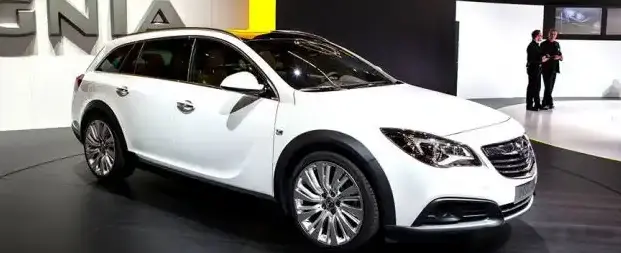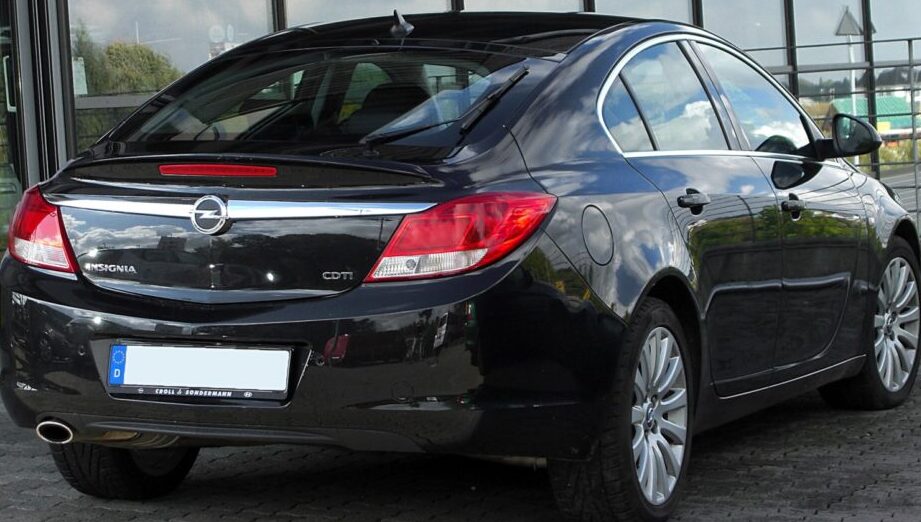
The Opel Insignia OPC 2.8 V6 Turbo 4×4, produced from July 2009 to June 2013, represented the high-performance variant of the first-generation (A) Insignia hatchback. Positioned as Opel’s flagship performance model, it aimed to compete with established players in the European market like the Ford Mondeo ST and Volkswagen Passat R36. The Insignia OPC was a significant departure for Opel, showcasing a commitment to building a genuinely sporty and capable vehicle. It was never officially sold in the United States, remaining a European market offering.
Technical Specifications
| Brand | Opel |
| Model | Insignia |
| Generation | Insignia Hatchback (A) |
| Type (Engine) | OPC 2.8 V6 Turbo (325 Hp) 4×4 |
| Start of production | July, 2009 |
| End of production | June, 2013 |
| Powertrain Architecture | Internal Combustion engine |
| Body type | Hatchback |
| Seats | 5 |
| Doors | 5 |
| Fuel consumption (urban) | 15.8 l/100 km (14.9 US mpg, 17.9 UK mpg, 6.3 km/l) |
| Fuel consumption (extra urban) | 7.6 l/100 km (30.9 US mpg, 37.2 UK mpg, 13.2 km/l) |
| Fuel consumption (combined) | 10.6 l/100 km (22.2 US mpg, 26.6 UK mpg, 9.4 km/l) |
| CO2 emissions | 249 g/km |
| Fuel Type | Petrol (Gasoline) |
| Acceleration 0 – 100 km/h | 6.9 sec |
| Acceleration 0 – 62 mph | 6.9 sec |
| Acceleration 0 – 60 mph | 6.6 sec |
| Maximum speed | 250 km/h (155.34 mph) |
| Emission standard | Euro 5 |
| Weight-to-power ratio | 5.6 kg/Hp, 179.6 Hp/tonne |
| Weight-to-torque ratio | 4.2 kg/Nm, 240.3 Nm/tonne |
| Power | 325 Hp @ 5250 rpm |
| Power per litre | 116.4 Hp/l |
| Torque | 435 Nm @ 5250 rpm (320.84 lb.-ft. @ 5250 rpm) |
| Engine layout | Front, Transverse |
| Engine Model/Code | A28NER |
| Engine displacement | 2792 cm3 (170.38 cu. in.) |
| Number of cylinders | 6 |
| Engine configuration | V-engine |
| Cylinder Bore | 89 mm (3.5 in.) |
| Piston Stroke | 74.8 mm (2.94 in.) |
| Compression ratio | 9.5:1 |
| Number of valves per cylinder | 4 |
| Fuel injection system | Multi-port manifold injection |
| Engine aspiration | Turbocharger, Intercooler |
| Engine oil capacity | 6.3 l (6.66 US qt | 5.54 UK qt) |
| Coolant | 6.7 l (7.08 US qt | 5.9 UK qt) |
| Kerb Weight | 1810 kg (3990.37 lbs.) |
| Max. weight | 2315 kg (5103.7 lbs.) |
| Max load | 505 kg (1113.33 lbs.) |
| Trunk (boot) space – minimum | 520 l (18.36 cu. ft.) |
| Trunk (boot) space – maximum | 1465 l (51.74 cu. ft.) |
| Fuel tank capacity | 70 l (18.49 US gal | 15.4 UK gal) |
| Length | 4830 mm (190.16 in.) |
| Width | 1858 mm (73.15 in.) |
| Height | 1498 mm (58.98 in.) |
| Wheelbase | 2737 mm (107.76 in.) |
| Front track | 1585 mm (62.4 in.) |
| Rear (Back) track | 1587 mm (62.48 in.) |
| Minimum turning circle | 10.8 m (35.43 ft.) |
| Drive wheel | All wheel drive (4×4) |
| Number of gears | 6 gears, manual transmission |
| Front brakes | Ventilated discs |
| Rear brakes | Ventilated discs |
| Assisting systems | ABS (Anti-lock braking system) |
| Tires size | 245/40 R19 |
| Wheel rims size | 8.5 x 19 |
INTRODUCTION
The Opel Insignia OPC, launched in 2009, was a pivotal model for the brand, signaling a move towards more performance-oriented vehicles. Built on the GM Epsilon II platform (internal code 1HX0/A3), the Insignia aimed to offer a blend of practicality, comfort, and engaging driving dynamics. The OPC variant, with its potent 2.8-liter V6 engine and all-wheel-drive system, was the range-topping model, designed to appeal to drivers seeking a sporty alternative to more conventional family cars. It was available exclusively as a hatchback in most markets, though a notchback (Grand Sport) version was also offered.
Powertrain & Engine Architecture
At the heart of the Insignia OPC lies the A28NER engine, a 2.8-liter, 60-degree V6 engine. This engine is a naturally aspirated design boosted by a twin-scroll turbocharger. It features multi-port fuel injection and a double overhead camshaft (DOHC) valvetrain with four valves per cylinder. The engine produces 325 horsepower at 5250 rpm and 435 Nm (320.84 lb-ft) of torque at the same engine speed. The engine’s architecture is relatively simple, contributing to its robustness. The OPC was exclusively offered with a six-speed manual transmission, delivering power to all four wheels via a sophisticated all-wheel-drive system developed by Haldex. This system dynamically distributes torque between the front and rear axles, optimizing traction and handling.
Driving Characteristics
The Insignia OPC delivers a surprisingly engaging driving experience. The 2.8-liter V6 provides strong, linear power delivery throughout the rev range, making it feel responsive in various driving situations. The six-speed manual transmission is well-matched to the engine, offering precise shifts and a satisfying mechanical feel. The Haldex all-wheel-drive system provides excellent grip, particularly in adverse weather conditions. Compared to lower-powered Insignia variants, the OPC offers significantly improved acceleration and overall performance. While not as nimble as some rear-wheel-drive competitors, the OPC’s all-wheel-drive system provides a sense of security and stability. The suspension is firmer than standard Insignias, contributing to reduced body roll and improved handling, but it can be somewhat harsh on rough road surfaces.
Equipment & Trim Levels
The Insignia OPC came generously equipped as standard. Key features included sports seats upholstered in Morrocana (a leatherette material), a leather-wrapped steering wheel, and aluminum pedal covers. The interior also featured unique OPC badging and trim details. Standard equipment also included automatic climate control, a CD/radio system with auxiliary input, and front fog lights. Optional extras included a panoramic sunroof, navigation system, and upgraded audio system. The OPC’s interior was focused on providing a sporty and functional environment, rather than outright luxury.
Chassis & Braking
The Insignia OPC featured a specially tuned chassis to handle the increased power and performance. The suspension was lowered and stiffened compared to standard Insignia models, and thicker stabilizer bars were fitted to reduce body roll. The braking system consisted of ventilated discs on all four wheels, providing ample stopping power. The OPC also featured Opel’s standard ABS (Anti-lock Braking System) and Electronic Stability Program (ESP). The suspension setup aimed to strike a balance between sporty handling and acceptable ride comfort, though the firmer springs and dampers could make the ride feel less compliant on uneven surfaces.
Market Reception & Comparison
The Insignia OPC was generally well-received by automotive critics, who praised its performance, handling, and practicality. However, some reviewers noted that the ride could be harsh and that the interior, while well-equipped, lacked the premium feel of some competitors. Compared to other performance hatchbacks of the time, such as the Ford Focus RS and Volkswagen Golf R, the Insignia OPC offered a more spacious interior and a more comfortable ride, but it wasn’t quite as sharp to drive. Fuel economy was also a concern, with the OPC consuming significantly more fuel than lower-powered Insignia variants. The OPC’s price positioned it competitively within the performance hatchback segment.
Legacy
The Opel Insignia OPC remains a relatively sought-after vehicle in the used car market. The A28NER engine is generally considered to be reliable, provided it has been properly maintained. However, potential buyers should be aware of the potential for turbocharger issues and the importance of regular oil changes. The Haldex all-wheel-drive system also requires periodic servicing. The Insignia OPC represents a bold attempt by Opel to create a genuinely sporty and capable vehicle, and it remains a distinctive and appealing option for those seeking a performance hatchback with a spacious interior and all-weather capability.