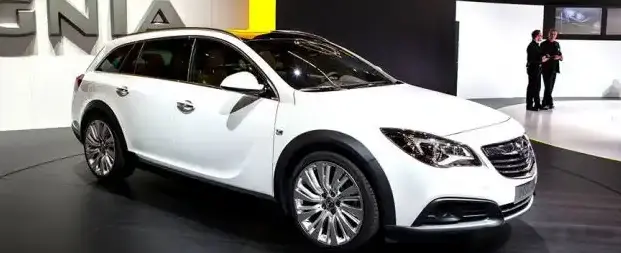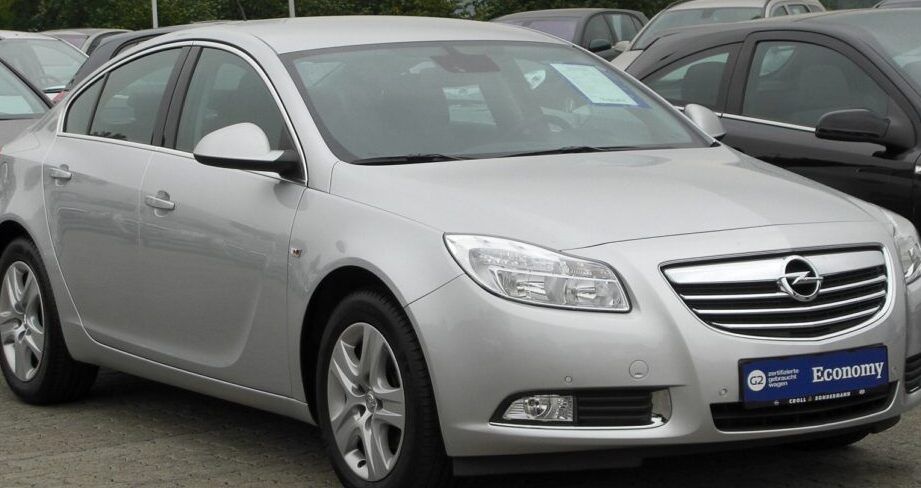
The Opel Insignia Sedan (A) 1.4 Turbo ecoFLEX, producing 140 horsepower, was a key variant in the first generation (2008-2017) of Opel’s mid-size offering. Introduced in July 2011 and remaining in production until June 2013, this model aimed to balance fuel efficiency with acceptable performance in the European market. It occupied a mid-range position within the Insignia Sedan lineup, slotting below the more powerful 2.0-liter turbocharged engines and above the base 1.6-liter naturally aspirated option. The Insignia, as a whole, was Opel’s attempt to move upmarket and compete with established players like the Ford Mondeo, Volkswagen Passat, and Vauxhall Vectra (which it replaced).
Technical Specifications
| Brand | Opel |
| Model | Insignia |
| Generation | Insignia Sedan (A) |
| Type (Engine) | 1.4 Turbo ecoFLEX (140 Hp) |
| Start of production | July, 2011 |
| End of production | June, 2013 |
| Powertrain Architecture | Internal Combustion engine |
| Body type | Sedan |
| Seats | 5 |
| Doors | 4 |
| Fuel consumption (urban) | 7.5 l/100 km (31.4 US mpg) |
| Fuel consumption (extra urban) | 4.7 l/100 km (50 US mpg) |
| Fuel consumption (combined) | 5.7 l/100 km (41.3 US mpg) |
| CO2 emissions | 134 g/km |
| Fuel Type | Petrol (Gasoline) |
| Acceleration 0 – 100 km/h | 10.9 sec |
| Acceleration 0 – 62 mph | 10.9 sec |
| Acceleration 0 – 60 mph | 10.4 sec |
| Maximum speed | 205 km/h (127.38 mph) |
| Emission standard | Euro 5 |
| Weight-to-power ratio | 10.7 kg/Hp |
| Weight-to-torque ratio | 7.5 kg/Nm |
| Power | 140 Hp @ 4900-6000 rpm |
| Torque | 200 Nm @ 1850-4900 rpm (147.51 lb.-ft.) |
| Engine layout | Front, Transverse |
| Engine Model/Code | A14NET |
| Engine displacement | 1364 cm3 (83.24 cu. in.) |
| Number of cylinders | 4 |
| Engine configuration | Inline |
| Cylinder Bore | 72.5 mm (2.85 in.) |
| Piston Stroke | 82.6 mm (3.25 in.) |
| Compression ratio | 9.5:1 |
| Number of valves per cylinder | 4 |
| Fuel injection system | Multi-port manifold injection |
| Engine aspiration | Turbocharger, Intercooler |
| Valvetrain | DOHC |
| Engine oil capacity | 4 l (4.23 US qt | 3.52 UK qt) |
| Coolant | 9 l (9.51 US qt | 7.92 UK qt) |
| Kerb Weight | 1503 kg (3313.55 lbs.) |
| Max. weight | 2020 kg (4453.34 lbs.) |
| Max load | 517 kg (1139.79 lbs.) |
| Trunk (boot) space – minimum | 500 l (17.66 cu. ft.) |
| Trunk (boot) space – maximum | 1010 l (35.67 cu. ft.) |
| Fuel tank capacity | 70 l (18.49 US gal | 15.4 UK gal) |
| Length | 4830 mm (190.16 in.) |
| Width | 1858 mm (73.15 in.) |
| Height | 1498 mm (58.98 in.) |
| Wheelbase | 2737 mm (107.76 in.) |
| Front track | 1585 mm (62.4 in.) |
| Rear (Back) track | 1587 mm (62.48 in.) |
| Ride height (ground clearance) | 160 mm (6.3 in.) |
| Drag coefficient (Cd) | 0.27 |
| Minimum turning circle | 10.8 m (35.43 ft.) |
| Drivetrain Architecture | Front wheel drive |
| Drive wheel | Front wheel drive |
| Number of gears | 6 gears, manual transmission |
| Front brakes | Ventilated discs |
| Rear brakes | Disc |
| Assisting systems | ABS (Anti-lock braking system) |
| Tires size | 245/45 R18 |
| Wheel rims size | 18 |
Powertrain & Engine Architecture
The heart of the Insignia 1.4 Turbo ecoFLEX is the A14NET engine, a 1.4-liter inline-four cylinder gasoline engine. This engine utilizes a single-scroll turbocharger with an intercooler to boost power and efficiency. The A14NET features multi-point fuel injection and a double overhead camshaft (DOHC) valvetrain with four valves per cylinder. This configuration allows for efficient cylinder filling and exhaust scavenging, contributing to the engine’s relatively high specific output. The engine’s 9.5:1 compression ratio is a compromise between performance and the ability to run on standard 95 octane gasoline. The 6-speed manual transmission was the standard offering, chosen for its efficiency and lower cost compared to the optional automatic. The transmission’s gear ratios were tuned to maximize fuel economy while still providing adequate acceleration.
Driving Characteristics
The 140 hp 1.4 Turbo ecoFLEX Insignia Sedan offered a comfortable, if not particularly sporty, driving experience. Acceleration from 0-60 mph took around 10.4 seconds, which was adequate for everyday driving but noticeably slower than the 2.0-liter Turbo models. The engine delivered its peak torque of 200 Nm (147.51 lb-ft) between 1850 and 4900 rpm, providing a usable powerband for overtaking and highway cruising. The manual transmission’s gear ratios were spaced to keep the engine within its optimal torque range. Compared to the higher-output versions, the 1.4 Turbo felt less responsive, requiring more downshifting for quicker acceleration. However, the lighter engine weight contributed to slightly improved handling balance compared to the heavier V6 models.
Equipment & Trim Levels
The 1.4 Turbo ecoFLEX trim typically included standard features such as air conditioning, power windows, power mirrors, a CD/MP3 stereo system, and alloy wheels. Safety features included ABS, electronic stability control, and multiple airbags. Optional extras included a sunroof, leather upholstery, heated seats, a navigation system, and parking sensors. The interior typically featured cloth upholstery and a straightforward dashboard layout. The “ecoFLEX” designation indicated the inclusion of fuel-saving technologies such as start-stop functionality and optimized aerodynamics.
Chassis & Braking
The Insignia Sedan (A) utilized a MacPherson strut front suspension and a multi-link rear suspension. The suspension was tuned for comfort, providing a relatively smooth ride over uneven surfaces. The 1.4 Turbo models typically featured smaller diameter brakes compared to the higher-performance variants, with ventilated discs at the front and solid discs at the rear. ABS (Anti-lock Braking System) was standard, providing enhanced braking control in emergency situations. The steering was hydraulically assisted, offering a reasonable level of feedback.
Market Reception & Comparison
The Opel Insignia 1.4 Turbo ecoFLEX was generally well-received by critics as a practical and fuel-efficient option. It offered a good balance between performance and economy, making it an attractive choice for drivers who prioritized fuel costs. However, some reviewers noted that the engine lacked the punch of the larger turbocharged engines. Compared to the 2.0-liter Turbo models, the 1.4 Turbo offered significantly better fuel economy but slower acceleration. The 1.6-liter naturally aspirated engine was even more economical but lacked the performance of the 1.4 Turbo. Reliability reports for the A14NET engine were generally positive, with few major issues reported.
Legacy
The Opel Insignia 1.4 Turbo ecoFLEX remains a relatively common sight on European roads today. The A14NET engine has proven to be a durable and reliable unit, with many examples exceeding 150,000 miles without major mechanical issues. The Insignia, as a whole, helped to elevate Opel’s brand image and establish it as a competitor in the mid-size segment. In the used car market, the 1.4 Turbo ecoFLEX offers a good value proposition for buyers seeking a comfortable, fuel-efficient, and reasonably well-equipped sedan. While not a performance icon, it represents a sensible and practical choice for everyday transportation.