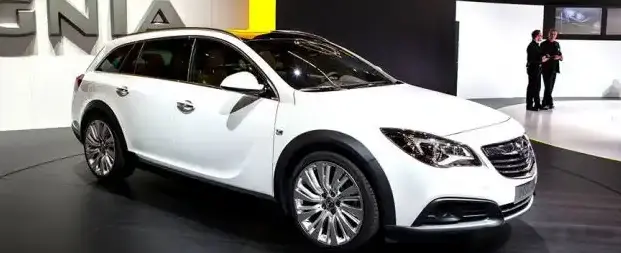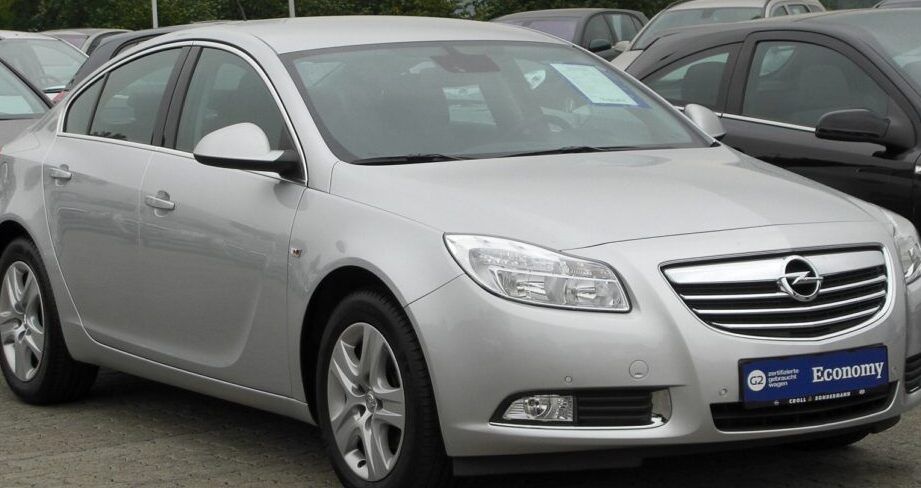
The Opel Insignia Sedan (A) 1.6i, producing 115 horsepower, was a key variant in the initial lineup of the Insignia, launched in November 2008 and remaining in production until June 2012. Positioned as an entry-level offering within the first generation (A) Insignia sedan range, it aimed to provide a balance of affordability, reasonable performance, and fuel efficiency for the European market. The Insignia itself represented Opel’s attempt to move upmarket and compete with established players like the Ford Mondeo, Volkswagen Passat, and Vauxhall Vectra (which it effectively replaced). This 1.6-liter model served as the gateway to the Insignia experience, appealing to buyers prioritizing value and practicality over outright performance.
Technical Specifications
| Brand | Opel |
| Model | Insignia |
| Generation | Insignia Sedan (A) |
| Type (Engine) | 1.6i (115 Hp) |
| Start of production | November, 2008 |
| End of production | June, 2012 |
| Powertrain Architecture | Internal Combustion engine |
| Body type | Sedan |
| Seats | 5 |
| Doors | 4 |
| Fuel consumption (urban) | 10.6 l/100 km (22.2 US mpg, 26.6 UK mpg, 9.4 km/l) |
| Fuel consumption (extra urban) | 5.9 l/100 km (39.9 US mpg, 47.9 UK mpg, 16.9 km/l) |
| Fuel consumption (combined) | 7.6 l/100 km (30.9 US mpg, 37.2 UK mpg, 13.2 km/l) |
| Fuel Type | Petrol (Gasoline) |
| Acceleration 0 – 100 km/h | 13.5 sec |
| Acceleration 0 – 62 mph | 13.5 sec |
| Acceleration 0 – 60 mph | 12.8 sec |
| Maximum speed | 192 km/h (119.3 mph) |
| Emission standard | Euro 4 |
| Weight-to-power ratio | 13.1 kg/Hp, 76.5 Hp/tonne |
| Weight-to-torque ratio | 9.7 kg/Nm, 103.1 Nm/tonne |
| Power | 115 Hp @ 6000 rpm |
| Power per litre | 72 Hp/l |
| Torque | 155 Nm @ 4000 rpm (114.32 lb.-ft. @ 4000 rpm) |
| Engine layout | Front, Transverse |
| Engine Model/Code | A16XER |
| Engine displacement | 1598 cm3 (97.52 cu. in.) |
| Number of cylinders | 4 |
| Engine configuration | Inline |
| Cylinder Bore | 79 mm (3.11 in.) |
| Piston Stroke | 81.5 mm (3.21 in.) |
| Compression ratio | 10.8:1 |
| Number of valves per cylinder | 4 |
| Fuel injection system | Multi-port manifold injection |
| Engine aspiration | Naturally aspirated engine |
| Valvetrain | DOHC |
| Engine oil capacity | 4.5 l (4.76 US qt | 3.96 UK qt) |
| Coolant | 5.6 l (5.92 US qt | 4.93 UK qt) |
| Kerb Weight | 1503 kg (3313.55 lbs.) |
| Max. weight | 2020 kg (4453.34 lbs.) |
| Max load | 517 kg (1139.79 lbs.) |
| Trunk (boot) space – minimum | 500 l (17.66 cu. ft.) |
| Trunk (boot) space – maximum | 1010 l (35.67 cu. ft.) |
| Fuel tank capacity | 70 l (18.49 US gal | 15.4 UK gal) |
| Length | 4830 mm (190.16 in.) |
| Width | 1858 mm (73.15 in.) |
| Height | 1498 mm (58.98 in.) |
| Wheelbase | 2737 mm (107.76 in.) |
| Front track | 1585 mm (62.4 in.) |
| Rear (Back) track | 1587 mm (62.48 in.) |
| Ride height (ground clearance) | 160 mm (6.3 in.) |
| Minimum turning circle | 10.8 m (35.43 ft.) |
| Drivetrain Architecture | The Internal combustion engine (ICE) drives the front wheels of the vehicle. |
| Drive wheel | Front wheel drive |
| Number of gears and type of gearbox | 6 gears, manual transmission |
| Front brakes | Ventilated discs |
| Rear brakes | Disc |
| Assisting systems | ABS (Anti-lock braking system) |
| Tires size | 215/60 R16 |
| Wheel rims size | 16 |
Powertrain & Engine Architecture
The heart of the Insignia 1.6i was the A16XER engine, a 1.6-liter inline-four cylinder petrol engine. This engine was part of Opel’s ‘Family 1’ engine family, known for its relatively simple design and focus on fuel efficiency. It featured a dual overhead camshaft (DOHC) valvetrain with four valves per cylinder, contributing to improved breathing and power delivery. Fuel was delivered via a multi-point fuel injection system, a common setup for engines of this era. The A16XER was a naturally aspirated engine, meaning it did not utilize a turbocharger or supercharger. The engine produced 115 horsepower at 6000 rpm and 155 Nm (114 lb-ft) of torque at 4000 rpm. This power was transmitted to the front wheels through a six-speed manual transmission, the standard configuration for this variant. While an automatic transmission was offered on other Insignia models, it wasn’t paired with the 1.6i engine.
Driving Characteristics
The 1.6i Insignia Sedan offered a comfortable, if not particularly exhilarating, driving experience. Acceleration from 0-60 mph took around 12.8 seconds, and top speed was limited to 119.3 mph. Compared to the more powerful 1.8-liter turbocharged or 2.0-liter turbocharged versions of the Insignia, the 1.6i felt noticeably slower, especially when fully loaded or attempting overtaking maneuvers. The six-speed manual transmission was well-matched to the engine, allowing drivers to keep the engine in its optimal power band. However, the relatively low torque output meant frequent gear changes were often necessary, particularly on inclines. The suspension was tuned for comfort, providing a smooth ride over most road surfaces, but it wasn’t particularly sporty or engaging.
Equipment & Trim Levels
The 1.6i Insignia typically came with a reasonable level of standard equipment, reflecting its position as an entry-level model. This included air conditioning, electric front windows, a CD/radio system, and ABS brakes. Safety features such as front and side airbags were also standard. Higher trim levels, such as the ‘Edition’ or ‘Sport’, offered additional features like alloy wheels, upgraded audio systems, cruise control, and parking sensors. Interior upholstery was typically cloth, with a functional but not luxurious design. Optional extras included a sunroof, leather seats, and a navigation system.
Chassis & Braking
The Insignia Sedan (A) utilized a front-wheel-drive platform with independent suspension at the front (MacPherson strut) and a semi-independent torsion beam suspension at the rear. The 1.6i model, being the lightest variant, benefited from slightly more agile handling compared to its heavier counterparts. Braking was handled by ventilated discs at the front and solid discs at the rear, providing adequate stopping power for everyday driving. ABS (Anti-lock Braking System) was standard, enhancing safety in emergency braking situations.
Market Reception & Comparison
The Opel Insignia 1.6i was generally well-received as a practical and affordable family sedan. Critics praised its spacious interior, comfortable ride, and reasonable fuel economy. However, the engine’s lack of outright power was a common criticism, particularly when compared to competitors offering turbocharged engines. Compared to the 1.8-liter versions, the 1.6i offered better fuel economy but significantly less performance. The 1.8-liter models were often seen as a more balanced choice for drivers who wanted a blend of efficiency and performance. Reliability was generally good, although some owners reported minor issues with the engine’s ignition system.
Legacy
The Opel Insignia 1.6i, while not the most powerful or exciting variant, played an important role in establishing the Insignia as a competitive player in the mid-size sedan segment. The A16XER engine proved to be relatively durable and reliable, and parts availability remains good. In the used car market, these models represent a cost-effective entry point into Insignia ownership, appealing to buyers seeking a comfortable and practical family car with reasonable running costs. While not a collector’s item, well-maintained examples continue to provide reliable transportation for many owners.