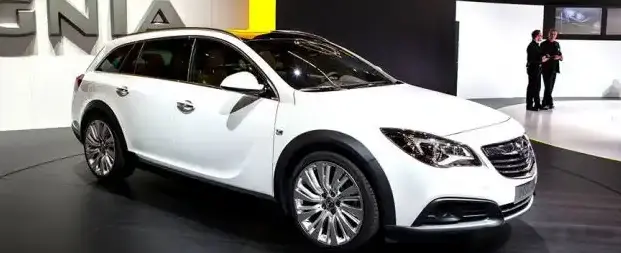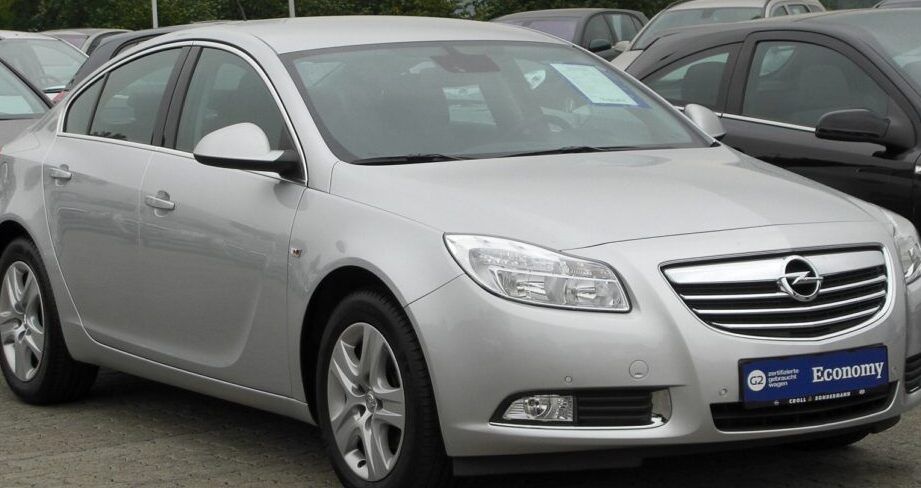
The Opel Insignia Sedan (A) 2.0 BiTurbo CDTI 4×4 Automatic, produced from 2011 to June 2013, represented a flagship offering within the first generation (A) of the Insignia sedan. Positioned as a premium trim, it combined a powerful diesel engine with all-wheel drive and the convenience of an automatic transmission. This variant aimed to deliver a blend of performance, comfort, and all-weather capability within the mid-size sedan segment, primarily targeting the European market. It was built on the GM Epsilon II platform, shared with other vehicles like the Saab 9-3 and Chevrolet Malibu.
Technical Specifications
| Brand | Opel |
| Model | Insignia |
| Generation | Insignia Sedan (A) |
| Type (Engine) | 2.0 BiTurbo CDTI (195 Hp) 4×4 Automatic |
| Start of production | 2011 |
| End of production | June, 2013 |
| Powertrain Architecture | Internal Combustion engine |
| Body type | Sedan |
| Seats | 5 |
| Doors | 4 |
| Fuel consumption (urban) | 8.4 l/100 km (28 US mpg, 33.6 UK mpg, 11.9 km/l) |
| Fuel consumption (extra urban) | 5.2 l/100 km (45.2 US mpg, 54.3 UK mpg, 19.2 km/l) |
| Fuel consumption (combined) | 6.4 l/100 km (36.8 US mpg, 44.1 UK mpg, 15.6 km/l) |
| CO2 emissions | 169 g/km |
| Fuel Type | Diesel |
| Acceleration 0 – 100 km/h | 9 sec |
| Acceleration 0 – 62 mph | 9 sec |
| Acceleration 0 – 60 mph | 8.6 sec |
| Maximum speed | 225 km/h (139.81 mph) |
| Emission standard | Euro 5 |
| Weight-to-power ratio | 7.7 kg/Hp, 129.7 Hp/tonne |
| Weight-to-torque ratio | 3.8 kg/Nm, 266.1 Nm/tonne |
| Power | 195 Hp @ 4000 rpm |
| Power per litre | 99.7 Hp/l |
| Torque | 400 Nm @ 2000 rpm (295.02 lb.-ft. @ 2000 rpm) |
| Engine layout | Front, Transverse |
| Engine Model/Code | A20DTR |
| Engine displacement | 1956 cm3 (119.36 cu. in.) |
| Number of cylinders | 4 |
| Engine configuration | Inline |
| Cylinder Bore | 83 mm (3.27 in.) |
| Piston Stroke | 90.4 mm (3.56 in.) |
| Number of valves per cylinder | 4 |
| Fuel injection system | Diesel Commonrail |
| Engine aspiration | BiTurbo, Intercooler |
| Valvetrain | OHC |
| Engine oil capacity | 4.5 l (4.76 US qt | 3.96 UK qt) |
| Coolant | 9 l (9.51 US qt | 7.92 UK qt) |
| Kerb Weight | 1503 kg (3313.55 lbs.) |
| Max. weight | 2020 kg (4453.34 lbs.) |
| Max load | 517 kg (1139.79 lbs.) |
| Trunk (boot) space – minimum | 500 l (17.66 cu. ft.) |
| Trunk (boot) space – maximum | 1010 l (35.67 cu. ft.) |
| Fuel tank capacity | 70 l (18.49 US gal | 15.4 UK gal) |
| Length | 4830 mm (190.16 in.) |
| Width | 1856 mm (73.07 in.) |
| Height | 1498 mm (58.98 in.) |
| Wheelbase | 2737 mm (107.76 in.) |
| Front track | 1585 mm (62.4 in.) |
| Rear (Back) track | 1587 mm (62.48 in.) |
| Ride height (ground clearance) | 160 mm (6.3 in.) |
| Minimum turning circle | 10.8 m (35.43 ft.) |
| Drive wheel | All wheel drive (4×4) |
| Number of gears | 6 |
| Gearbox type | automatic transmission |
| Front brakes | Ventilated discs |
| Rear brakes | Disc |
| Assisting systems | ABS (Anti-lock braking system) |
| Tires size | 215/60 R16; 225/55 R17; 245/45 R18 |
| Wheel rims size | 16; 17; 18 |
Powertrain & Engine Architecture
The heart of this Insignia variant is the A20DTR engine, a 2.0-liter inline-four cylinder diesel. This engine is notable for its bi-turbo configuration, employing two turbochargers – a smaller, more responsive turbo for low-end torque and a larger turbo for high-end power. This setup effectively mitigates turbo lag, providing a broad and usable powerband. The engine utilizes a common rail direct injection system, delivering fuel directly into the combustion chamber at extremely high pressure for optimized combustion and reduced emissions. The valvetrain is an Overhead Cam (OHC) design. The engine’s 195 horsepower peak is reached at 4000 rpm, while its substantial 400 Nm (295 lb-ft) of torque is available from just 2000 rpm. The engine is transversely mounted in the front of the vehicle. The automatic transmission is a six-speed unit, designed to handle the engine’s torque output and provide smooth gear changes. It’s programmed for a balance between fuel efficiency and responsiveness.
Driving Characteristics
The 2.0 BiTurbo CDTI 4×4 Automatic Insignia offers a refined driving experience. The all-wheel-drive system provides excellent traction in various conditions, enhancing stability and confidence, particularly in inclement weather. The automatic transmission, while not offering the engagement of a manual, provides smooth and predictable shifts. Acceleration from 0-60 mph takes approximately 8.6 seconds, which is respectable for a mid-size sedan with an automatic transmission and all-wheel drive. The engine’s strong low-end torque makes it well-suited for everyday driving and overtaking maneuvers. Compared to the base 1.6L petrol versions, this variant offers significantly more power and torque, resulting in a more effortless driving experience. However, it doesn’t possess the outright performance of the higher-spec 2.8L V6 models. The gear ratios are tuned for a balance between fuel economy and performance, with a focus on maximizing torque in the mid-range.
Equipment & Trim Levels
The 2.0 BiTurbo CDTI 4×4 Automatic typically came with a generous level of standard equipment. This included features like climate control, power windows and mirrors, a multi-function steering wheel, and an audio system with CD player and auxiliary input. Higher trim levels offered options such as leather upholstery, heated front seats, a sunroof, and a navigation system. Safety features were also comprehensive, including ABS, traction control, stability control, and multiple airbags. The interior typically featured a dark color scheme with metallic trim accents. The dashboard layout was functional and ergonomically designed, prioritizing ease of use.
Chassis & Braking
The Insignia Sedan (A) utilizes a MacPherson strut suspension setup at the front and a multi-link suspension at the rear, providing a good balance between ride comfort and handling. The 4×4 system employs a multi-plate clutch to distribute torque between the front and rear axles as needed. Braking duties are handled by ventilated discs at the front and solid discs at the rear. ABS (Anti-lock Braking System) is standard, enhancing braking performance and stability. Stabilizer bars are fitted to both the front and rear axles to reduce body roll during cornering. The suspension tuning is geared towards providing a comfortable ride without sacrificing handling precision.
Market Reception & Comparison
The Opel Insignia, in general, was well-received by automotive critics for its stylish design, spacious interior, and comfortable ride. The 2.0 BiTurbo CDTI 4×4 Automatic variant was praised for its strong performance and all-weather capability. However, some critics noted that the automatic transmission could feel slightly hesitant at times. Compared to other trims, such as the 1.8L petrol or the 2.0L diesel with front-wheel drive, this variant offered a significant performance upgrade but came at a higher price point. Fuel economy was competitive for its class, averaging around 36.8 US mpg on the combined cycle. Reliability was generally good, although some owners reported minor issues with the electronic systems.
Legacy
The Opel Insignia Sedan (A) 2.0 BiTurbo CDTI 4×4 Automatic remains a popular choice in the used car market. The A20DTR engine, when properly maintained, is known for its durability and longevity. However, potential buyers should be aware of the potential for issues with the turbochargers and the diesel particulate filter (DPF). Regular servicing and the use of high-quality oil are essential to ensure the long-term reliability of this powertrain. The Insignia’s combination of performance, comfort, and practicality continues to appeal to buyers looking for a well-rounded mid-size sedan.