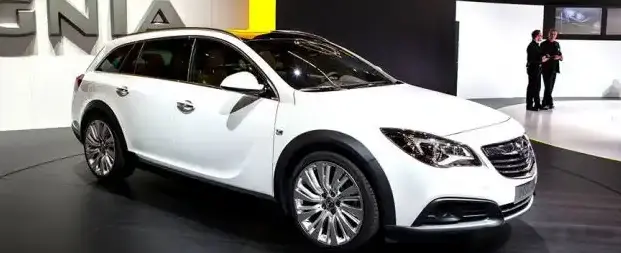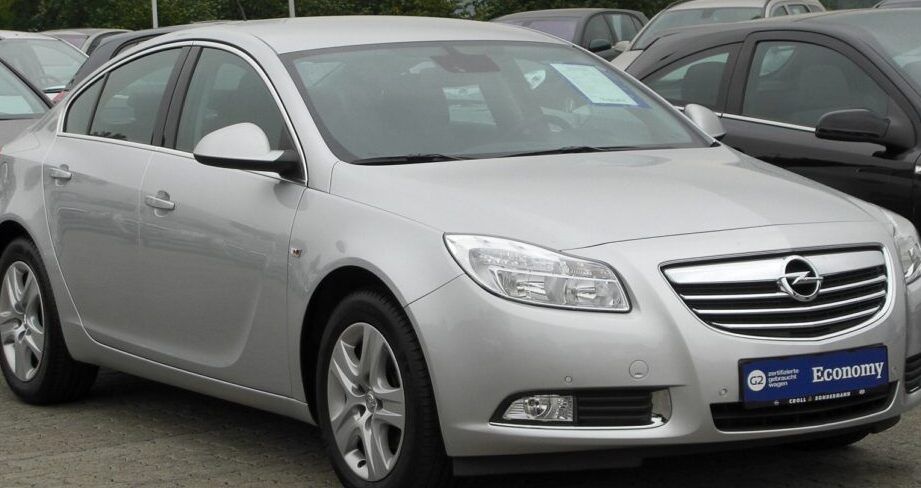
The Opel Insignia Sedan (A) 2.0 CDTI 160 hp Automatic, produced from November 2008 to 2013, represented a significant offering in the mid-size sedan segment for the European market. Positioned as a comfortable and efficient option within the broader Insignia range, this variant aimed to appeal to drivers seeking a balance between performance and fuel economy. It was built on the GM Epsilon II platform, also known internally as the 1HX0/A3 platform, which underpinned several other vehicles of the era. The Insignia, as a whole, was Opel’s flagship model, intended to replace the Vectra and Signum, and offered a more modern and stylish alternative to established competitors.
Technical Specifications
| Brand | Opel |
| Model | Insignia |
| Generation | Insignia Sedan (A) |
| Type (Engine) | 2.0 CDTI (160 Hp) DPF Automatic |
| Start of production | November, 2008 |
| End of production | 2013 |
| Powertrain Architecture | Internal Combustion engine |
| Body type | Sedan |
| Seats | 5 |
| Doors | 4 |
| Fuel consumption (urban) | 7.7 l/100 km (30.5 US mpg) |
| Fuel consumption (extra urban) | 5.1 l/100 km (46.1 US mpg) |
| Fuel consumption (combined) | 6.6 l/100 km (35.6 US mpg) |
| CO2 emissions | 114 g/km |
| Fuel Type | Diesel |
| Acceleration 0 – 100 km/h | 9.5 sec |
| Acceleration 0 – 62 mph | 9.5 sec |
| Acceleration 0 – 60 mph | 9 sec |
| Maximum speed | 218 km/h (135.46 mph) |
| Emission standard | Euro 5 |
| Weight-to-power ratio | 10.3 kg/Hp |
| Weight-to-torque ratio | 4.7 kg/Nm |
| Power | 160 Hp @ 4000 rpm |
| Torque | 350 Nm @ 1750-2500 rpm (258.15 lb.-ft.) |
| Engine layout | Front, Transverse |
| Engine Model/Code | A20DTH |
| Engine displacement | 1956 cm3 (119.36 cu. in.) |
| Number of cylinders | 4 |
| Engine configuration | Inline |
| Cylinder Bore | 83 mm (3.27 in.) |
| Piston Stroke | 90.4 mm (3.56 in.) |
| Compression ratio | 18:1 |
| Number of valves per cylinder | 4 |
| Fuel injection system | Diesel Commonrail |
| Engine aspiration | Turbocharger, Intercooler |
| Valvetrain | OHC |
| Engine oil capacity | 4.5 l (4.76 US qt | 3.96 UK qt) |
| Coolant | 9 l (9.51 US qt | 7.92 UK qt) |
| Kerb Weight | 1655 kg (3648.65 lbs.) |
| Max. weight | 2170 kg (4784.03 lbs.) |
| Max load | 515 kg (1135.38 lbs.) |
| Trunk (boot) space – minimum | 500 l (17.66 cu. ft.) |
| Trunk (boot) space – maximum | 1010 l (35.67 cu. ft.) |
| Fuel tank capacity | 70 l (18.49 US gal | 15.4 UK gal) |
| Length | 4830 mm (190.16 in.) |
| Width | 1856 mm (73.07 in.) |
| Height | 1498 mm (58.98 in.) |
| Wheelbase | 2737 mm (107.76 in.) |
| Front track | 1585 mm (62.4 in.) |
| Rear (Back) track | 1587 mm (62.48 in.) |
| Ride height (ground clearance) | 160 mm (6.3 in.) |
| Minimum turning circle | 10.8 m (35.43 ft.) |
| Drivetrain Architecture | Front wheel drive |
| Number of gears | 6 |
| Gearbox type | Automatic transmission |
| Front brakes | Ventilated discs |
| Rear brakes | Disc |
| Tires size | 215/60 R16; 225/55 R17; 245/45 R18 |
| Wheel rims size | 16; 17; 18 |
Powertrain & Engine Architecture
At the heart of the Insignia 2.0 CDTI Automatic lay the A20DTH engine, a 1.956-liter inline-four cylinder diesel. This engine was a member of Opel/Vauxhall’s family of common-rail direct injection diesel engines, known for their relatively quiet operation and good fuel efficiency. The A20DTH featured a turbocharger with an intercooler, boosting power output to 160 horsepower at 4000 rpm and 350 Nm (258 lb-ft) of torque between 1750 and 2500 rpm. The engine utilized a sophisticated common-rail fuel injection system, delivering highly pressurized fuel directly into the cylinders for optimized combustion. The overhead camshaft (OHC) valvetrain controlled four valves per cylinder. Paired with this engine was a six-speed automatic transmission, providing smooth gear changes and contributing to the car’s overall refinement. The inclusion of a diesel particulate filter (DPF) was standard, helping to reduce harmful emissions and meet Euro 5 standards.
Driving Characteristics
The 160 hp 2.0 CDTI Automatic offered a comfortable and relaxed driving experience. While not particularly sporty, it provided adequate power for everyday driving and highway cruising. Acceleration from 0 to 62 mph (0-100 km/h) took around 9.5 seconds, and the car had a top speed of 135 mph (218 km/h). The automatic transmission, while smooth, wasn’t as responsive as some dual-clutch transmissions available in competing models. The gear ratios were tuned for fuel efficiency rather than outright performance. Compared to the more powerful 2.8L V6 Turbo or the sportier 2.0 Turbo petrol variants, the 2.0 CDTI Automatic prioritized economy and ease of use. Against other diesel options in the Insignia lineup, like the 1.3 CDTI, it offered a significant power upgrade, but at the cost of slightly higher fuel consumption.
Equipment & Trim Levels
The Insignia 2.0 CDTI Automatic was typically offered in mid-range trim levels, such as Exclusiv or Sport. Standard equipment generally included air conditioning, a CD/MP3 stereo system, electric windows and mirrors, and alloy wheels. Higher trim levels added features like leather upholstery, a sunroof, parking sensors, and a more advanced infotainment system. Optional extras included navigation, heated seats, and a premium sound system. Interior upholstery was typically cloth on the base trims, with leather available as an upgrade. The dashboard layout was modern and functional, with a focus on ergonomics.
Chassis & Braking
The Insignia Sedan (A) featured a MacPherson strut front suspension and a multi-link rear suspension, providing a good balance between ride comfort and handling. The 2.0 CDTI Automatic variant, due to its weight, generally came equipped with ventilated front disc brakes and solid disc rear brakes. Anti-lock Braking System (ABS) was standard. Stabilizer bars were fitted to both the front and rear axles to reduce body roll during cornering. The suspension tuning was geared towards comfort, making it a pleasant cruiser, but it wasn’t as sharp or engaging as some of its more performance-oriented rivals.
Market Reception & Comparison
The Opel Insignia 2.0 CDTI Automatic was generally well-received by automotive critics. It was praised for its comfortable ride, spacious interior, and fuel efficiency. However, some reviewers noted that the automatic transmission could feel sluggish at times, and the handling wasn’t as dynamic as some competitors. Compared to other cars in its class, such as the Ford Mondeo and Volkswagen Passat, the Insignia offered a strong value proposition, with a generous level of standard equipment and a competitive price. Fuel economy was a key selling point, with the 2.0 CDTI Automatic achieving around 35.6 US mpg on the combined cycle.
Legacy
The A20DTH engine, while generally reliable, is known to require regular maintenance, particularly regarding the DPF system. Proper servicing, including regular oil changes and DPF regeneration, is crucial to prevent issues. The six-speed automatic transmission is also relatively robust, but can be prone to wear and tear with high mileage. Today, the Insignia 2.0 CDTI Automatic represents a relatively affordable and practical used car option. Its fuel efficiency and comfortable ride continue to appeal to buyers looking for a spacious and economical sedan. However, potential buyers should be aware of the potential maintenance costs associated with the DPF and transmission, and ensure that the vehicle has been properly serviced throughout its life.