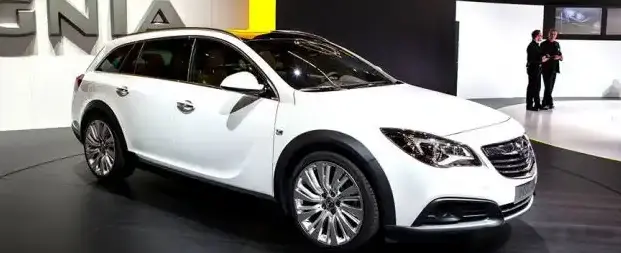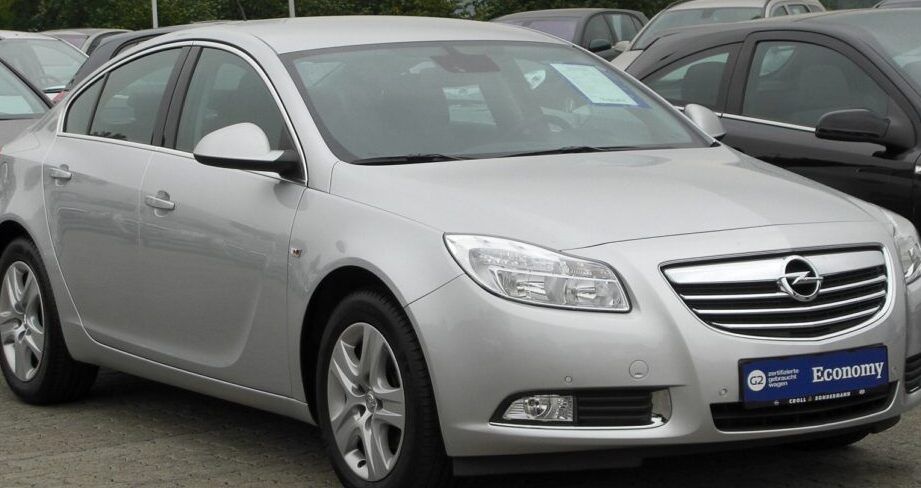
The Opel Insignia Sedan (A) 2.0 CDTI 4×4 DPF, produced from 2008 to October 2009, represented a significant offering in the mid-size sedan segment for the European market. Positioned as a premium trim within the initial Insignia A generation (2008-2017), this variant combined a potent turbodiesel engine with all-wheel drive capability and a six-speed manual transmission. It aimed to appeal to drivers seeking a blend of performance, efficiency, and all-weather traction in a stylish package. The Insignia A, replacing the Vectra, was Opel’s flagship model and a key component in the brand’s attempt to move upmarket.
Technical Specifications
| Brand | Opel |
| Model | Insignia |
| Generation | Insignia Sedan (A) |
| Type (Engine) | 2.0 CDTI (190 Hp) 4×4 DPF |
| Start of production | 2008 |
| End of production | October, 2009 |
| Powertrain Architecture | Internal Combustion engine |
| Body type | Sedan |
| Seats | 5 |
| Doors | 4 |
| Fuel consumption (combined) | 6.7 l/100 km (35.1 US mpg, 42.2 UK mpg, 14.9 km/l) |
| Fuel Type | Diesel |
| Acceleration 0 – 100 km/h | 8.8 sec |
| Acceleration 0 – 62 mph | 8.8 sec |
| Acceleration 0 – 60 mph | 8.4 sec |
| Maximum speed | 224 km/h (139.19 mph) |
| Emission standard | Euro 4 |
| Power | 190 Hp @ 4500 rpm |
| Power per litre | 97.1 Hp/l |
| Torque | 400 Nm @ 2000 rpm (295.02 lb.-ft. @ 2000 rpm) |
| Engine layout | Front, Transverse |
| Engine Model/Code | A20DTR |
| Engine displacement | 1956 cm3 (119.36 cu. in.) |
| Number of cylinders | 4 |
| Engine configuration | Inline |
| Cylinder Bore | 83 mm (3.27 in.) |
| Piston Stroke | 90.4 mm (3.56 in.) |
| Number of valves per cylinder | 4 |
| Fuel injection system | Diesel Commonrail |
| Engine aspiration | BiTurbo, Intercooler |
| Valvetrain | OHC |
| Engine oil capacity | 4.5 l (4.76 US qt | 3.96 UK qt) |
| Coolant | 9 l (9.51 US qt | 7.92 UK qt) |
| Trunk (boot) space – minimum | 500 l (17.66 cu. ft.) |
| Trunk (boot) space – maximum | 1010 l (35.67 cu. ft.) |
| Fuel tank capacity | 70 l (18.49 US gal | 15.4 UK gal) |
| Length | 4830 mm (190.16 in.) |
| Width | 1856 mm (73.07 in.) |
| Height | 1498 mm (58.98 in.) |
| Wheelbase | 2737 mm (107.76 in.) |
| Front track | 1585 mm (62.4 in.) |
| Rear (Back) track | 1587 mm (62.48 in.) |
| Ride height (ground clearance) | 160 mm (6.3 in.) |
| Minimum turning circle | 10.8 m (35.43 ft.) |
| Drive wheel | All wheel drive (4×4) |
| Number of gears and type of gearbox | 6 gears, manual transmission |
| Front brakes | Ventilated discs |
| Rear brakes | Disc |
| Assisting systems | ABS (Anti-lock braking system) |
| Tires size | 215/60 R16; 225/55 R17; 245/45 R18 |
| Wheel rims size | 16; 17; 18 |
Powertrain & Engine Architecture
The heart of the Insignia 2.0 CDTI 4×4 was the A20DTR engine, a 1.956-liter inline-four cylinder diesel. This engine was notable for its bi-turbo configuration, employing two turbochargers – a smaller, variable geometry turbo for quick response at low engine speeds and a larger turbo for increased power at higher RPMs. The intercooler helped to cool the compressed intake air, further enhancing performance. Fuel was delivered via a common rail direct injection system, allowing for precise fuel metering and optimized combustion. The engine featured an overhead camshaft (OHC) valvetrain. The six-speed manual transmission provided drivers with full control over the engine’s power delivery, and was chosen for its balance of efficiency and driver engagement.
Driving Characteristics
The 190 horsepower and 295 lb-ft of torque produced by the A20DTR engine provided the Insignia 2.0 CDTI 4×4 with respectable performance. Acceleration from 0-60 mph was achieved in approximately 8.4 seconds, and the car could reach a top speed of 139 mph. The all-wheel drive system, utilizing a multi-plate clutch, distributed power between the front and rear axles as needed, providing enhanced traction and stability, particularly in adverse weather conditions. Compared to the base 1.6L petrol engine, the 2.0 CDTI offered significantly more torque and a broader powerband, making it more suitable for long-distance cruising and carrying passengers or cargo. While not as sporty as the V6 models, the 2.0 CDTI 4×4 provided a comfortable and capable driving experience.
Equipment & Trim Levels
The Insignia 2.0 CDTI 4×4 typically came equipped with a generous level of standard features. These included air conditioning, power windows and mirrors, a CD/radio system, and alloy wheels. Higher trim levels offered options such as leather upholstery, a sunroof, navigation system, and parking sensors. Safety features like ABS, traction control, and multiple airbags were standard across the range. The interior design was modern and functional, with a focus on ergonomics and driver comfort. The 4×4 variant was often bundled with specific trim packages that emphasized its all-weather capability.
Chassis & Braking
The Insignia A utilized a MacPherson strut front suspension and a multi-link rear suspension, providing a good balance between ride comfort and handling. The 4×4 models often featured slightly stiffer suspension components to cope with the added weight and power. Braking duties were handled by ventilated discs at the front and solid discs at the rear, with ABS providing enhanced stopping power and stability. The all-wheel drive system contributed to improved braking performance, particularly on slippery surfaces.
Market Reception & Comparison
The Opel Insignia 2.0 CDTI 4×4 was generally well-received by automotive critics. It was praised for its stylish design, spacious interior, and strong performance. The all-wheel drive system was seen as a significant advantage, particularly in regions with harsh winters. Compared to other mid-size sedans, the Insignia offered a compelling combination of features and value. The 2.0 CDTI engine provided good fuel economy – around 35 mpg combined – while delivering ample power for everyday driving. However, some critics noted that the Insignia’s steering could feel a bit numb, and the ride could be slightly firm on rough roads. Compared to the petrol variants, the diesel offered superior fuel economy and torque, but at the cost of some refinement.
Legacy
The A20DTR engine, while generally reliable, is known to require regular maintenance, particularly regarding the diesel particulate filter (DPF) and turbochargers. Proper servicing, including regular oil changes and DPF regeneration, is crucial to ensure long-term reliability. Today, used examples of the Insignia 2.0 CDTI 4×4 represent a relatively affordable option for those seeking a spacious, comfortable, and capable sedan. The combination of all-wheel drive and a torquey diesel engine makes it a practical choice for drivers who need to tackle challenging road conditions. The Insignia A, and particularly the 2.0 CDTI 4×4 variant, helped establish Opel as a contender in the competitive mid-size segment.