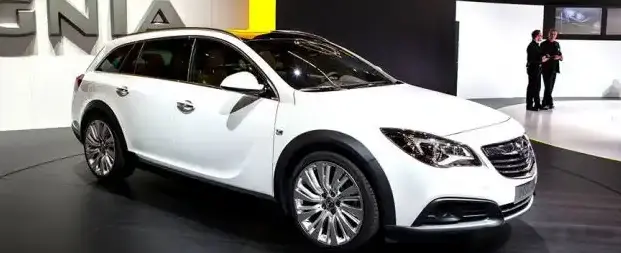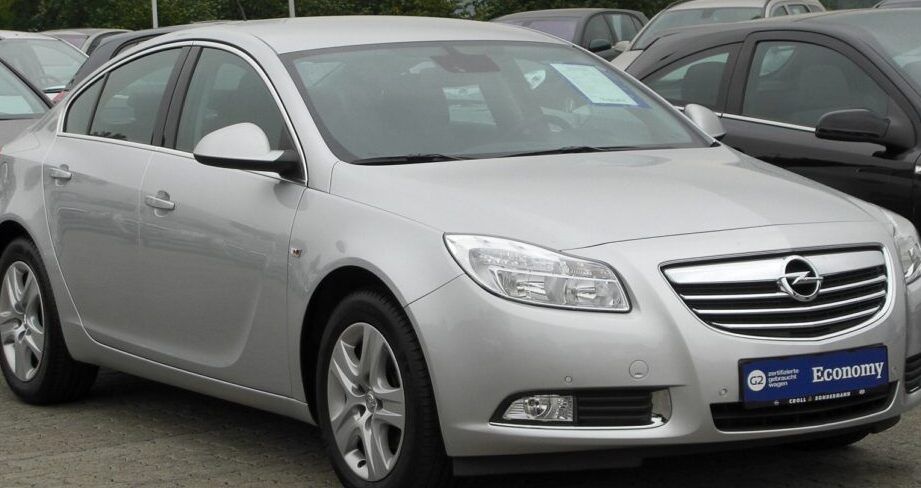
The Opel Insignia Sedan (A) 2.0 CDTI 4×4 DPF Automatic, produced from 2008 to October 2009, represented a significant offering in the mid-size sedan segment for the European market. Positioned as a premium trim within the initial Insignia A generation (2008-2017), this variant combined a potent turbodiesel engine with all-wheel drive and a six-speed automatic transmission, aiming to deliver both performance and all-weather capability. It was a key model in Opel’s attempt to move upmarket and compete with established players like the Ford Mondeo and Volkswagen Passat. The Insignia A was built on the GM Epsilon II platform, shared with other vehicles like the Saab 9-3 and Chevrolet Malibu.
Technical Specifications
| Brand | Opel |
| Model | Insignia |
| Generation | Insignia Sedan (A) |
| Type | 2.0 CDTI (190 Hp) 4×4 DPF Automatic |
| Start of production | 2008 |
| End of production | October, 2009 |
| Powertrain Architecture | Internal Combustion engine |
| Body type | Sedan |
| Seats | 5 |
| Doors | 4 |
| Fuel consumption (combined) | 7.7 l/100 km (30.5 US mpg, 36.7 UK mpg, 13 km/l) |
| Fuel Type | Diesel |
| Acceleration 0 – 100 km/h | 9.1 sec |
| Acceleration 0 – 62 mph | 9.1 sec |
| Acceleration 0 – 60 mph | 8.6 sec |
| Maximum speed | 221 km/h (137.32 mph) |
| Emission standard | Euro 4 |
| Power | 190 Hp @ 4500 rpm |
| Power per litre | 97.1 Hp/l |
| Torque | 400 Nm @ 2000 rpm (295.02 lb.-ft. @ 2000 rpm) |
| Engine layout | Front, Transverse |
| Engine Model/Code | A20DTR |
| Engine displacement | 1956 cm3 (119.36 cu. in.) |
| Number of cylinders | 4 |
| Engine configuration | Inline |
| Cylinder Bore | 83 mm (3.27 in.) |
| Piston Stroke | 90.4 mm (3.56 in.) |
| Number of valves per cylinder | 4 |
| Fuel injection system | Diesel Commonrail |
| Engine aspiration | BiTurbo, Intercooler |
| Valvetrain | OHC |
| Engine oil capacity | 4.5 l (4.76 US qt | 3.96 UK qt) |
| Coolant | 9 l (9.51 US qt | 7.92 UK qt) |
| Trunk (boot) space – minimum | 500 l (17.66 cu. ft.) |
| Trunk (boot) space – maximum | 1010 l (35.67 cu. ft.) |
| Fuel tank capacity | 70 l (18.49 US gal | 15.4 UK gal) |
| Length | 4830 mm (190.16 in.) |
| Width | 1856 mm (73.07 in.) |
| Height | 1498 mm (58.98 in.) |
| Wheelbase | 2737 mm (107.76 in.) |
| Front track | 1585 mm (62.4 in.) |
| Rear (Back) track | 1587 mm (62.48 in.) |
| Ride height (ground clearance) | 160 mm (6.3 in.) |
| Minimum turning circle | 10.8 m (35.43 ft.) |
| Drive wheel | All wheel drive (4×4) |
| Number of gears and type of gearbox | 6 gears, automatic transmission |
| Front brakes | Ventilated discs |
| Rear brakes | Disc |
| Assisting systems | ABS (Anti-lock braking system) |
| Tires size | 225/55 R17; 245/45 R18 |
| Wheel rims size | 17; 18 |
Powertrain & Engine Architecture
The heart of the Insignia 2.0 CDTI 4×4 was the A20DTR engine, a 1.956-liter inline-four cylinder diesel. This engine was notable for its bi-turbo configuration, employing two turbochargers – a smaller, variable geometry turbo for quick response at low engine speeds and a larger turbo for increased power at higher RPMs. The engine utilized a common rail direct injection system, delivering fuel at extremely high pressure for optimized combustion. The engine featured an overhead camshaft (OHC) valvetrain with four valves per cylinder. The six-speed automatic transmission, sourced from Aisin, was chosen for its smoothness and efficiency. It featured adaptive shift patterns, adjusting to driving style and conditions. The inclusion of a diesel particulate filter (DPF) was crucial for meeting Euro 4 emission standards.
Driving Characteristics
The 190 horsepower and 400 Nm (295 lb-ft) of torque provided by the 2.0 CDTI engine delivered respectable performance for a mid-size sedan. The 0-60 mph time of around 8.6 seconds was competitive, and the all-wheel drive system provided excellent traction, particularly in inclement weather. Compared to the base 1.6L petrol engine, the 2.0 CDTI offered significantly more torque and a broader powerband, making it more suitable for long-distance cruising and carrying passengers or cargo. While not as sporty as the higher-output 2.8L V6 Turbo models, the 2.0 CDTI provided a good balance of performance and fuel economy. The automatic transmission, while smooth, could sometimes feel hesitant during quick downshifts. The gear ratios were tuned for fuel efficiency, prioritizing comfortable cruising over outright acceleration.
Equipment & Trim Levels
The 2.0 CDTI 4×4 Automatic typically came with a generous level of standard equipment. This included air conditioning, power windows and mirrors, a CD/radio system, and alloy wheels. Higher trim levels, such as the Cosmo, added features like leather upholstery, heated front seats, a sunroof, and a more advanced infotainment system. Optional extras included navigation, parking sensors, and adaptive cruise control. Interior upholstery was typically cloth on lower trims and leather on higher ones. The dashboard layout was modern for its time, with a focus on ergonomics and ease of use.
Chassis & Braking
The Insignia A featured a MacPherson strut front suspension and a multi-link rear suspension, providing a comfortable ride and good handling characteristics. The all-wheel drive system utilized a multi-plate clutch to distribute torque between the front and rear axles, adapting to changing road conditions. Braking duties were handled by ventilated discs at the front and solid discs at the rear, equipped with ABS (Anti-lock Braking System). Stabilizer bars were fitted to both the front and rear axles to reduce body roll during cornering. The suspension tuning was geared towards comfort, but the chassis provided a stable and predictable driving experience.
Market Reception & Comparison
The Opel Insignia 2.0 CDTI 4×4 Automatic was generally well-received by automotive critics. It was praised for its comfortable ride, spacious interior, and strong engine performance. Fuel economy was also a strong point, with combined figures around 30.5 US mpg. Compared to the 1.8L petrol versions, the 2.0 CDTI offered significantly better fuel economy and more torque. However, some critics noted that the automatic transmission could be slow to respond at times. Compared to rivals like the Ford Mondeo and Volkswagen Passat, the Insignia offered a compelling package, particularly in terms of value for money and standard equipment.
Legacy
The A20DTR engine proved to be a relatively reliable unit, although, like all modern diesels, it was susceptible to issues with the DPF if not properly maintained. Regular oil changes and occasional long-distance drives to regenerate the DPF were crucial for long-term reliability. The six-speed Aisin automatic transmission was also generally robust. Today, the Insignia 2.0 CDTI 4×4 Automatic can be found on the used car market at affordable prices. It remains a practical and comfortable choice for those seeking a spacious and fuel-efficient sedan with all-wheel drive capability. Its blend of performance, economy, and practicality has ensured its continued appeal to buyers looking for a well-rounded mid-size vehicle.