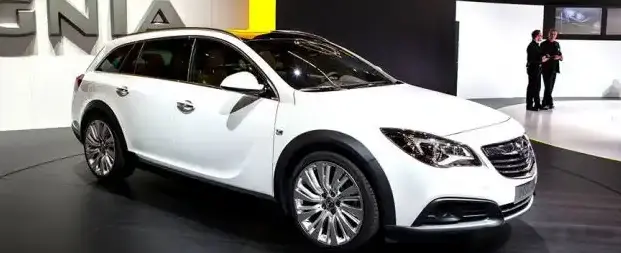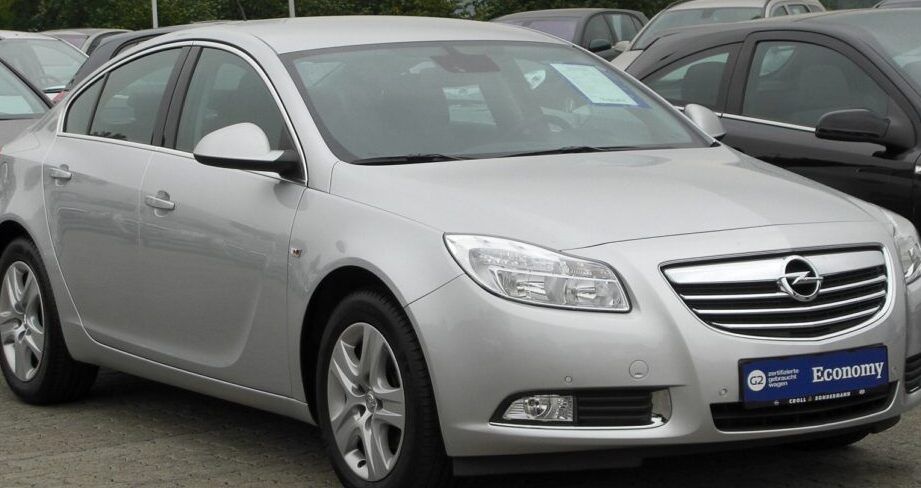
The Opel Insignia Sedan (A) 2.0 Turbo 4×4 Automatic, produced between November 2008 and June 2011, represented a significant step forward for Opel in the mid-size sedan segment. Positioned as a premium offering within the Insignia range, this variant combined a potent turbocharged engine with all-wheel drive and a six-speed automatic transmission. It was designed to compete with established players like the Ford Mondeo, Volkswagen Passat, and Audi A4, offering a blend of performance, comfort, and technology. The Insignia, built on the GM Epsilon II platform (internally designated as the A platform), aimed to elevate Opel’s brand image and provide a more sophisticated driving experience.
Technical Specifications
| Brand | Opel |
| Model | Insignia |
| Generation | Insignia Sedan (A) |
| Type (Engine) | 2.0 Turbo (220 Hp) 4×4 Automatic |
| Start of production | November, 2008 |
| End of production | June, 2011 |
| Powertrain Architecture | Internal Combustion engine |
| Body type | Sedan |
| Seats | 5 |
| Doors | 4 |
| Fuel consumption (economy) – urban | 14.3 l/100 km (16.4 US mpg, 19.8 UK mpg, 7 km/l) |
| Fuel consumption (economy) – extra urban | 7.2 l/100 km (32.7 US mpg, 39.2 UK mpg, 13.9 km/l) |
| Fuel consumption (economy) – combined | 9.8 l/100 km (24 US mpg, 28.8 UK mpg, 10.2 km/l) |
| Fuel Type | Petrol (Gasoline) |
| Acceleration 0 – 100 km/h | 7.9 sec |
| Acceleration 0 – 62 mph | 7.9 sec |
| Acceleration 0 – 60 mph | 7.5 sec |
| Maximum speed | 237 km/h (147.26 mph) |
| Emission standard | Euro 5 |
| Weight-to-power ratio | 8.1 kg/Hp, 123.2 Hp/tonne |
| Weight-to-torque ratio | 5.1 kg/Nm, 196.1 Nm/tonne |
| Power | 220 Hp @ 5300 rpm |
| Power per litre | 110.1 Hp/l |
| Torque | 350 Nm @ 2000-4000 rpm (258.15 lb.-ft. @ 2000-4000 rpm) |
| Engine layout | Front, Transverse |
| Engine Model/Code | A20NHT |
| Engine displacement | 1998 cm3 (121.93 cu. in.) |
| Number of cylinders | 4 |
| Engine configuration | Inline |
| Cylinder Bore | 86 mm (3.39 in.) |
| Piston Stroke | 86 mm (3.39 in.) |
| Compression ratio | 9.3:1 |
| Number of valves per cylinder | 4 |
| Fuel injection system | Direct injection |
| Engine aspiration | Twin-scroll turbo, Intercooler |
| Engine oil capacity | 6 l (6.34 US qt | 5.28 UK qt) |
| Coolant | 7.3 l (7.71 US qt | 6.42 UK qt) |
| Kerb Weight | 1785 kg (3935.25 lbs.) |
| Max. weight | 2290 kg (5048.59 lbs.) |
| Max load | 505 kg (1113.33 lbs.) |
| Trunk (boot) space – minimum | 500 l (17.66 cu. ft.) |
| Trunk (boot) space – maximum | 1010 l (35.67 cu. ft.) |
| Fuel tank capacity | 70 l (18.49 US gal | 15.4 UK gal) |
| Length | 4830 mm (190.16 in.) |
| Width | 1858 mm (73.15 in.) |
| Height | 1498 mm (58.98 in.) |
| Wheelbase | 2737 mm (107.76 in.) |
| Front track | 1585 mm (62.4 in.) |
| Rear (Back) track | 1587 mm (62.48 in.) |
| Ride height (ground clearance) | 160 mm (6.3 in.) |
| Minimum turning circle | 10.8 m (35.43 ft.) |
| Drive wheel | All wheel drive (4×4) |
| Number of gears and type of gearbox | 6 gears, automatic transmission |
| Front brakes | Ventilated discs |
| Rear brakes | Disc |
| Assisting systems | ABS (Anti-lock braking system) |
| Tires size | 225/55 R17 |
| Wheel rims size | 17 |
Powertrain & Engine Architecture
At the heart of the Insignia 2.0 Turbo 4×4 Automatic lies the A20NHT engine, a 1.998-liter inline-four cylinder gasoline engine. This engine utilizes direct fuel injection and a twin-scroll turbocharger, technologies that contribute to both power output and efficiency. The twin-scroll design minimizes turbo lag, providing a more responsive driving experience. The engine produces 220 horsepower at 5300 rpm and 350 Nm (258 lb-ft) of torque between 2000 and 4000 rpm. The six-speed automatic transmission, sourced from Aisin, was chosen for its smooth shifting characteristics and reliability. It features adaptive shift patterns, adjusting to the driver’s style and road conditions. The all-wheel-drive system is a torque-on-demand system, primarily driving the front wheels but seamlessly engaging the rear wheels when traction is needed, enhancing stability and handling.
Driving Characteristics
The 2.0 Turbo 4×4 Automatic Insignia offered a comfortable and capable driving experience. While not as overtly sporty as some of its rivals, it provided ample power for everyday driving and confident performance during highway overtaking. The automatic transmission, while smooth, wasn’t particularly quick to downshift, meaning the engine sometimes felt slightly strained when demanding immediate acceleration. The all-wheel-drive system provided excellent grip in various weather conditions, making it a practical choice for drivers in regions with inclement weather. Compared to the base 1.6L models, the 2.0 Turbo offered a substantial performance upgrade. It also felt more refined than the diesel variants, offering a quieter and smoother engine note.
Equipment & Trim Levels
The Insignia 2.0 Turbo 4×4 Automatic typically came well-equipped, reflecting its position as a premium trim level. Standard features included dual-zone climate control, a CD/MP3 stereo system, alloy wheels, and a comprehensive suite of safety features including ABS, ESP (Electronic Stability Program), and multiple airbags. Optional extras included leather upholstery, a sunroof, navigation system, and advanced safety features like adaptive cruise control and lane departure warning. Interior trim levels varied, with higher-spec models featuring more luxurious materials and finishes.
Chassis & Braking
The Insignia’s chassis was tuned to provide a balance between comfort and handling. The suspension utilized MacPherson struts at the front and a multi-link setup at the rear. The 4×4 models generally featured slightly stiffer springs and dampers compared to the front-wheel-drive variants to manage the increased weight and provide better body control. Braking duties were handled by ventilated discs at the front and solid discs at the rear, providing adequate stopping power for the vehicle’s weight and performance. ABS (Anti-lock Braking System) was standard, enhancing safety during emergency braking situations.
Market Reception & Comparison
The Opel Insignia 2.0 Turbo 4×4 Automatic was generally well-received by automotive critics. It was praised for its spacious interior, comfortable ride, and strong engine performance. However, some reviewers noted that the automatic transmission could feel a bit sluggish at times, and the steering lacked some of the feedback found in more focused sports sedans. Fuel economy was respectable for a vehicle of its size and performance, but not class-leading. Compared to the 1.8L and diesel variants, the 2.0 Turbo 4×4 offered a significant performance boost but came at a higher price point. The 2.0 Turbo was often seen as a more compelling alternative to the base models, offering a more satisfying driving experience for those willing to pay the premium.
Legacy
The Opel Insignia 2.0 Turbo 4×4 Automatic has proven to be a relatively reliable vehicle in the used car market. The A20NHT engine is generally considered robust, and the Aisin automatic transmission is known for its durability. Common issues reported by owners include occasional problems with the electronic parking brake and the infotainment system. However, these are typically minor and can be addressed with routine maintenance. Today, the Insignia 2.0 Turbo 4×4 Automatic represents a good value proposition for buyers seeking a spacious, comfortable, and well-equipped mid-size sedan with all-wheel-drive capability.