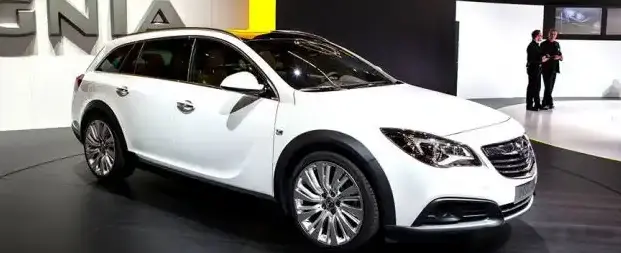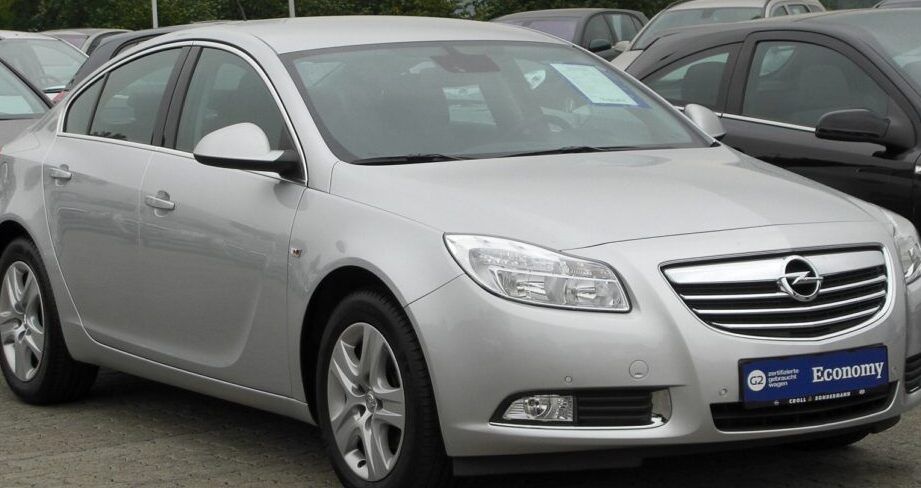
The Opel Insignia Sedan (A) 2.0 Turbo (220 hp) Automatic, produced from November 2008 to June 2011, represented a significant step forward for Opel in the mid-size sedan segment. Part of the first generation (A) Insignia lineup, designated internally as the 1HX0, this variant aimed to offer a blend of performance, comfort, and technology. It was positioned as a higher-end trim within the Insignia range, appealing to buyers seeking more power and the convenience of an automatic transmission. The Insignia, in general, was Opel’s attempt to move upmarket and compete with established players like the Ford Mondeo and Volkswagen Passat, offering a more stylish and feature-rich alternative.
Technical Specifications
| Brand | Opel |
| Model | Insignia |
| Generation | Insignia Sedan (A) |
| Type (Engine) | 2.0 Turbo (220 Hp) Automatic |
| Start of production | November, 2008 |
| End of production | June, 2011 |
| Powertrain Architecture | Internal Combustion engine |
| Body type | Sedan |
| Seats | 5 |
| Doors | 4 |
| Fuel consumption (urban) | 14 l/100 km (16.8 US mpg, 20.2 UK mpg, 7.1 km/l) |
| Fuel consumption (extra urban) | 7 l/100 km (33.6 US mpg, 40.4 UK mpg, 14.3 km/l) |
| Fuel consumption (combined) | 9.6 l/100 km (24.5 US mpg, 29.4 UK mpg, 10.4 km/l) |
| CO2 emissions | 204 g/km |
| Fuel Type | Petrol (Gasoline) |
| Acceleration 0 – 100 km/h | 7.8 sec |
| Acceleration 0 – 62 mph | 7.8 sec |
| Acceleration 0 – 60 mph | 7.4 sec |
| Maximum speed | 240 km/h (149.13 mph) |
| Emission standard | Euro 4 |
| Weight-to-power ratio | 7.5 kg/Hp, 132.9 Hp/tonne |
| Weight-to-torque ratio | 4.7 kg/Nm, 211.5 Nm/tonne |
| Power | 220 Hp @ 5300 rpm |
| Power per litre | 110.1 Hp/l |
| Torque | 350 Nm @ 2000-4000 rpm (258.15 lb.-ft. @ 2000-4000 rpm) |
| Engine layout | Front, Transverse |
| Engine Model/Code | A20NHT |
| Engine displacement | 1998 cm3 (121.93 cu. in.) |
| Number of cylinders | 4 |
| Engine configuration | Inline |
| Cylinder Bore | 86 mm (3.39 in.) |
| Piston Stroke | 86 mm (3.39 in.) |
| Compression ratio | 9.3:1 |
| Number of valves per cylinder | 4 |
| Fuel injection system | Direct injection |
| Engine aspiration | Twin-scroll turbo, Intercooler |
| Engine oil capacity | 6 l (6.34 US qt | 5.28 UK qt) |
| Coolant | 7.3 l (7.71 US qt | 6.42 UK qt) |
| Kerb Weight | 1655 kg (3648.65 lbs.) |
| Max. weight | 2155 kg (4750.96 lbs.) |
| Max load | 500 kg (1102.31 lbs.) |
| Trunk (boot) space – minimum | 500 l (17.66 cu. ft.) |
| Trunk (boot) space – maximum | 1010 l (35.67 cu. ft.) |
| Fuel tank capacity | 70 l (18.49 US gal | 15.4 UK gal) |
| Length | 4830 mm (190.16 in.) |
| Width | 1858 mm (73.15 in.) |
| Height | 1498 mm (58.98 in.) |
| Wheelbase | 2737 mm (107.76 in.) |
| Front track | 1585 mm (62.4 in.) |
| Rear (Back) track | 1587 mm (62.48 in.) |
| Ride height (ground clearance) | 160 mm (6.3 in.) |
| Minimum turning circle | 10.8 m (35.43 ft.) |
| Drivetrain Architecture | Front wheel drive |
| Number of gears and type of gearbox | 6 gears, automatic transmission |
| Front brakes | Ventilated discs |
| Rear brakes | Disc |
| Assisting systems | ABS (Anti-lock braking system) |
| Tires size | 225/55 R17 |
| Wheel rims size | 17 |
Powertrain & Engine Architecture
The heart of the Insignia 2.0 Turbo Automatic is the A20NHT engine, a 1.998-liter inline-four cylinder gasoline engine. This engine utilizes direct fuel injection and a twin-scroll turbocharger, technologies that contribute to both power output and efficiency. The twin-scroll turbo design minimizes turbo lag, providing a more responsive driving experience. The engine produces 220 horsepower at 5300 rpm and 350 Nm (258 lb-ft) of torque between 2000 and 4000 rpm. The engine’s architecture is relatively conventional, featuring a cast iron block and aluminum cylinder head with four valves per cylinder. The automatic transmission is a six-speed unit, designed to provide smooth shifts and optimized gear ratios for both performance and fuel economy. While not a dual-clutch transmission, it offered a comfortable and convenient driving experience for many buyers.
Driving Characteristics
The 2.0 Turbo Automatic Insignia offered a noticeable step up in performance compared to the base 1.6L or 1.8L engine options. Acceleration from 0 to 60 mph took approximately 7.4-7.8 seconds, making it a competitive performer in its class. The automatic transmission, while smooth, wasn’t particularly sporty. Gear changes were geared towards comfort and fuel efficiency rather than aggressive downshifts. Compared to the six-speed manual version of the same engine, the automatic traded some responsiveness for ease of use. The torque delivery was strong throughout the mid-range, making overtaking maneuvers relatively effortless. However, the added weight of the automatic transmission and the less aggressive gear ratios meant it wasn’t as engaging to drive as its manual counterpart.
Equipment & Trim Levels
The 2.0 Turbo Automatic trim typically included a generous level of standard equipment. This often included features like dual-zone climate control, a CD/MP3 stereo system, alloy wheels (typically 17-inch), and front fog lights. Higher sub-trims offered options such as leather upholstery, a sunroof, and a more advanced infotainment system. Safety features like ABS, traction control, and multiple airbags were standard. The interior design was modern for its time, with a focus on ergonomics and comfort. The dashboard layout was generally clean and intuitive, although some materials felt less premium than those found in competing vehicles.
Chassis & Braking
The Insignia Sedan (A) utilized a MacPherson strut front suspension and a multi-link rear suspension. This setup provided a good balance between ride comfort and handling. The 2.0 Turbo Automatic models typically featured slightly stiffer suspension components compared to the lower-powered variants to manage the increased weight and power. Braking duties were handled by ventilated discs at the front and solid discs at the rear. ABS (Anti-lock Braking System) was standard. The steering was hydraulically assisted, providing a reasonably direct feel, although it lacked the feedback of some competitors.
Market Reception & Comparison
The Opel Insignia 2.0 Turbo Automatic was generally well-received by automotive critics. It was praised for its stylish design, spacious interior, and comfortable ride. The engine was considered powerful and refined, and the automatic transmission provided a smooth and convenient driving experience. However, some critics noted that the interior materials weren’t quite up to par with those found in some of its rivals, and the handling wasn’t as sharp as some sportier alternatives. Fuel economy was reasonable for a vehicle of its size and performance, but not class-leading. Compared to the 1.8L and diesel variants, the 2.0 Turbo Automatic offered significantly more performance but at a higher price point and with slightly increased running costs.
Legacy
The Opel Insignia Sedan (A) 2.0 Turbo Automatic has proven to be a relatively reliable vehicle in the used car market. The A20NHT engine is generally considered durable, although regular maintenance is crucial. Common issues include occasional turbocharger problems and potential issues with the automatic transmission after high mileage. Today, these Insignias represent a good value proposition for buyers seeking a spacious, comfortable, and reasonably well-equipped mid-size sedan. While it may not offer the same level of refinement or technology as more modern vehicles, it remains a capable and practical choice.