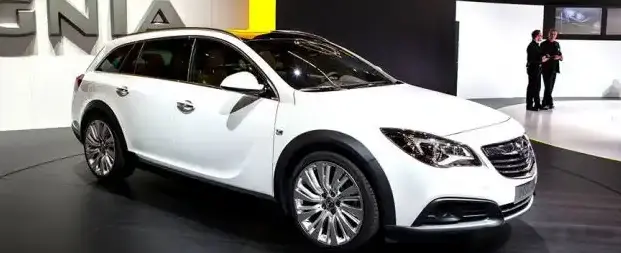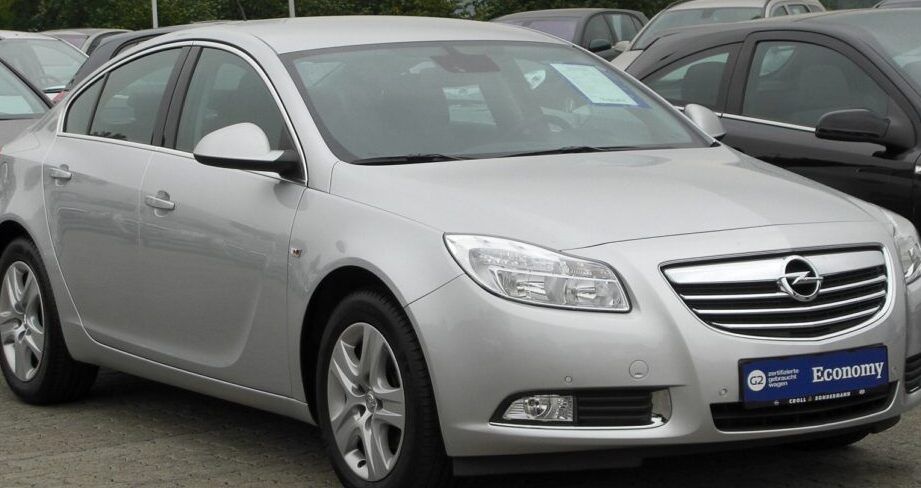
The Opel Insignia Sedan (A) 2.8 V6 Turbo 4×4, produced from November 2008 to June 2013, represented the flagship performance variant of Opel’s initial foray into the mid-size sedan segment. Positioned as a premium offering within the Insignia A range, it aimed to compete with established European and domestic rivals offering a blend of comfort, technology, and spirited driving. This model was a key component of Opel’s attempt to redefine its brand image, moving towards more sophisticated and dynamically capable vehicles. It was built on the GM Epsilon II platform, shared with other vehicles like the Saab 9-3 and Chevrolet Malibu.
Technical Specifications
| Brand | Opel |
| Model | Insignia |
| Generation | Insignia Sedan (A) |
| Type (Engine) | 2.8 V6 Turbo (260 Hp) 4×4 |
| Start of production | November, 2008 |
| End of production | June, 2013 |
| Powertrain Architecture | Internal Combustion engine |
| Body type | Sedan |
| Seats | 5 |
| Doors | 4 |
| Fuel consumption (economy) – urban | 16.9 l/100 km (13.9 US mpg, 16.7 UK mpg, 5.9 km/l) |
| Fuel consumption (economy) – extra urban | 7.4 l/100 km (31.8 US mpg, 38.2 UK mpg, 13.5 km/l) |
| Fuel consumption (economy) – combined | 10.9 l/100 km (21.6 US mpg, 25.9 UK mpg, 9.2 km/l) |
| CO2 emissions | 258 g/km |
| Fuel Type | Petrol (Gasoline) |
| Acceleration 0 – 100 km/h | 6.9 sec |
| Acceleration 0 – 62 mph | 6.9 sec |
| Acceleration 0 – 60 mph | 6.6 sec |
| Maximum speed | 250 km/h (155.34 mph) |
| Emission standard | Euro 5 |
| Weight-to-power ratio | 7 kg/Hp, 143.6 Hp/tonne |
| Weight-to-torque ratio | 5.2 kg/Nm, 193.4 Nm/tonne |
| Power | 260 Hp @ 5500 rpm |
| Power per litre | 93.1 Hp/l |
| Torque | 350 Nm @ 1900-4500 rpm (258.15 lb.-ft. @ 1900-4500 rpm) |
| Engine layout | Front, Transverse |
| Engine Model/Code | A28NET |
| Engine displacement | 2792 cm3 (170.38 cu. in.) |
| Number of cylinders | 6 |
| Engine configuration | V-engine |
| Cylinder Bore | 89 mm (3.5 in.) |
| Piston Stroke | 74.8 mm (2.94 in.) |
| Compression ratio | 9.5:1 |
| Number of valves per cylinder | 4 |
| Fuel injection system | Multi-port manifold injection |
| Engine aspiration | Turbocharger, Intercooler |
| Engine oil capacity | 6.3 l (6.66 US qt | 5.54 UK qt) |
| Coolant | 6.7 l (7.08 US qt | 5.9 UK qt) |
| Kerb Weight | 1810 kg (3990.37 lbs.) |
| Max. weight | 2315 kg (5103.7 lbs.) |
| Max load | 505 kg (1113.33 lbs.) |
| Trunk (boot) space – minimum | 500 l (17.66 cu. ft.) |
| Trunk (boot) space – maximum | 1010 l (35.67 cu. ft.) |
| Fuel tank capacity | 70 l (18.49 US gal | 15.4 UK gal) |
| Length | 4830 mm (190.16 in.) |
| Width | 1858 mm (73.15 in.) |
| Height | 1498 mm (58.98 in.) |
| Wheelbase | 2737 mm (107.76 in.) |
| Front track | 1585 mm (62.4 in.) |
| Rear (Back) track | 1587 mm (62.48 in.) |
| Ride height (ground clearance) | 160 mm (6.3 in.) |
| Minimum turning circle (turning diameter) | 10.8 m (35.43 ft.) |
| Drive wheel | All wheel drive (4×4) |
| Number of gears and type of gearbox | 6 gears, manual transmission |
| Front brakes | Ventilated discs |
| Rear brakes | Disc |
| Assisting systems | ABS (Anti-lock braking system) |
| Tires size | 245/45 R18 |
| Wheel rims size | 18 |
Powertrain & Engine Architecture
The heart of the Insignia 2.8 V6 Turbo 4×4 is the A28NET engine, a 2.8-liter naturally aspirated V6 engine augmented by a twin-scroll turbocharger and intercooler. This engine is a member of the GM High Feature V6 family, known for its robust construction and relatively smooth operation. The engine utilizes multi-port fuel injection and a double overhead camshaft (DOHC) valvetrain with four valves per cylinder. The turbocharger provides significant boost, contributing to the engine’s 260 horsepower and 350 Nm (258 lb-ft) of torque. The engine’s torque curve is relatively flat, providing strong acceleration across a wide RPM range. The 6-speed manual transmission was standard, offering precise shifts and a direct connection to the engine. The all-wheel-drive system is a sophisticated electronically controlled system, capable of distributing torque between the front and rear axles for optimal traction in various conditions.
Driving Characteristics
The Insignia 2.8 V6 Turbo 4×4 delivers a noticeably more engaging driving experience compared to lower-powered variants. The combination of the potent V6 engine and the all-wheel-drive system results in brisk acceleration and confident handling. The 0-60 mph sprint takes approximately 6.6 seconds, making it a genuinely quick sedan for its class. The manual transmission allows for precise control, while the all-wheel-drive system provides excellent grip, particularly in wet or slippery conditions. Compared to the 2.0-liter turbocharged four-cylinder models, the V6 offers a smoother power delivery and a more refined engine note. While the 2.0-liter diesel variants offered superior fuel economy, they lacked the V6’s outright performance and responsiveness. The gear ratios are well-matched to the engine’s powerband, providing strong acceleration in all gears.
Equipment & Trim Levels
The 2.8 V6 Turbo 4×4 typically came equipped with a high level of standard features. These included leather upholstery, heated front seats, dual-zone climate control, a premium audio system, and a comprehensive suite of safety features, including ABS, traction control, and multiple airbags. Optional extras included a navigation system, adaptive cruise control, and a panoramic sunroof. The interior design was modern and well-appointed, with a focus on comfort and ergonomics. The dashboard layout was clean and intuitive, with easy-to-use controls. Trim levels varied slightly depending on the market, but generally, the V6 model represented the highest level of equipment available for the Insignia Sedan.
Chassis & Braking
The Insignia Sedan (A) featured a MacPherson strut front suspension and a multi-link rear suspension. The V6 4×4 model often received slightly stiffer suspension components to better manage the increased power and weight. Braking duties were handled by ventilated discs at the front and solid discs at the rear, providing ample stopping power. The ABS system worked in conjunction with electronic brakeforce distribution (EBD) to optimize braking performance. The all-wheel-drive system contributed to enhanced stability and control during braking, particularly on loose surfaces. The steering was precise and well-weighted, providing good feedback to the driver.
Market Reception & Comparison
The Insignia 2.8 V6 Turbo 4×4 was generally well-received by automotive critics. It was praised for its strong performance, comfortable ride, and spacious interior. However, its relatively high fuel consumption was a common criticism. Compared to rivals like the Ford Mondeo, Volkswagen Passat, and Audi A4, the Insignia offered a compelling combination of value and performance. The V6 model stood out for its distinctive engine and all-wheel-drive system, which were not always available on competing models. Fuel economy was noticeably lower than the 2.0-liter diesel and petrol variants, but the performance trade-off was considered worthwhile by many enthusiasts.
Legacy
The Opel Insignia 2.8 V6 Turbo 4×4, while not a high-volume seller, established a reputation for reliability and durability. The A28NET engine, when properly maintained, proved to be a robust and long-lasting powerplant. On the used car market, these models are sought after by enthusiasts who appreciate their performance and unique character. Maintenance costs can be higher than for lower-powered variants due to the complexity of the engine and all-wheel-drive system. However, the Insignia 2.8 V6 Turbo 4×4 remains a capable and enjoyable sedan, offering a compelling alternative to more mainstream mid-size cars.