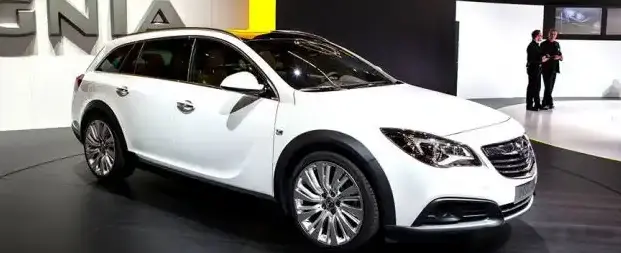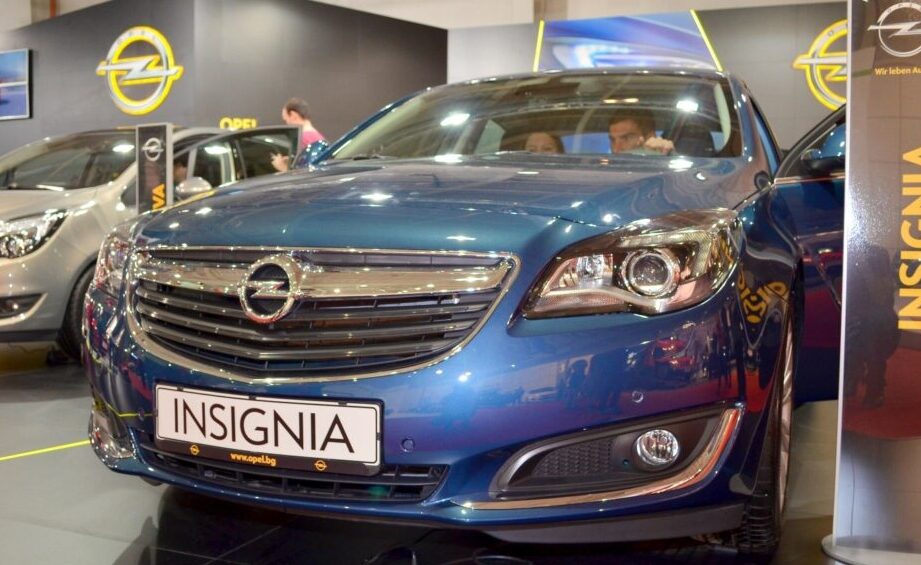
The Opel Insignia Sedan (A, facelift 2013) 2.0 (250 Hp) Ecotec Start/Stop represents a performance-oriented variant of Opel’s mid-size sedan, produced from May 2014 to January 2017. Positioned as a near-top-of-the-line offering within the Insignia A range, it aimed to provide a blend of comfort, practicality, and spirited driving. This facelifted version of the original Insignia (introduced in 2008) brought updated styling and, crucially, a more refined engine lineup, including this potent 2.0-liter turbocharged gasoline engine. The Insignia, in general, was Opel’s flagship model intended to compete with established players like the Ford Mondeo, Volkswagen Passat, and Skoda Superb, primarily targeting the European market.
Technical Specifications
| Brand | Opel |
| Model | Insignia |
| Generation | Insignia Sedan (A, facelift 2013) |
| Type (Engine) | 2.0 (250 Hp) Ecotec Start/Stop |
| Start of production | May, 2014 |
| End of production | January, 2017 |
| Powertrain Architecture | Internal Combustion engine |
| Body type | Sedan |
| Seats | 5 |
| Doors | 4 |
| Fuel consumption (urban) | 10.1 l/100 km (23.3 US mpg, 28 UK mpg, 9.9 km/l) |
| Fuel consumption (extra urban) | 5.5 l/100 km (42.8 US mpg, 51.4 UK mpg, 18.2 km/l) |
| Fuel consumption (combined) | 7.2 l/100 km (32.7 US mpg, 39.2 UK mpg, 13.9 km/l) |
| CO2 emissions | 169 g/km |
| Fuel Type | Petrol (Gasoline) |
| Acceleration 0 – 100 km/h | 7.5 sec |
| Acceleration 0 – 62 mph | 7.5 sec |
| Acceleration 0 – 60 mph | 7.1 sec |
| Maximum speed | 250 km/h (155.34 mph) |
| Emission standard | Euro 5 |
| Weight-to-power ratio | 6.2 kg/Hp, 162.5 Hp/tonne |
| Weight-to-torque ratio | 3.8 kg/Nm, 260.1 Nm/tonne |
| Power | 250 Hp @ 5300-5500 rpm |
| Power per litre | 125.1 Hp/l |
| Torque | 400 Nm @ 2500-4500 rpm (295.02 lb.-ft. @ 2500-4500 rpm) |
| Engine layout | Front, Transverse |
| Engine Model/Code | A20NHT, B20NHT |
| Engine displacement | 1998 cm3 (121.93 cu. in.) |
| Number of cylinders | 4 |
| Engine configuration | Inline |
| Cylinder Bore | 86 mm (3.39 in.) |
| Piston Stroke | 86 mm (3.39 in.) |
| Compression ratio | 9.5:1 |
| Number of valves per cylinder | 4 |
| Fuel injection system | Direct injection |
| Engine aspiration | Turbocharger, Intercooler |
| Engine oil capacity | 6 l (6.34 US qt | 5.28 UK qt) |
| Coolant | 8 l (8.45 US qt | 7.04 UK qt) |
| Kerb Weight | 1538 kg (3390.71 lbs.) |
| Max. weight | 2175 kg (4795.05 lbs.) |
| Max load | 637 kg (1404.34 lbs.) |
| Trunk (boot) space – minimum | 500 l (17.66 cu. ft.) |
| Trunk (boot) space – maximum | 1015 l (35.84 cu. ft.) |
| Fuel tank capacity | 70 l (18.49 US gal | 15.4 UK gal) |
| Max. roof load | 100 kg (220.46 lbs.) |
| Permitted trailer load with brakes (8%) | 2000 kg (4409.25 lbs.) |
| Permitted trailer load without brakes | 750 kg (1653.47 lbs.) |
| Length | 4842 mm (190.63 in.) |
| Width | 1856 mm (73.07 in.) |
| Width including mirrors | 2084 mm (82.05 in.) |
| Height | 1498 mm (58.98 in.) |
| Wheelbase | 2737 mm (107.76 in.) |
| Front track | 1587 mm (62.48 in.) |
| Rear (Back) track | 1590 mm (62.6 in.) |
| Minimum turning circle | 10.9 m (35.76 ft.) |
| Drivetrain Architecture | Front wheel drive |
| Number of gears and type of gearbox | 6 gears, manual transmission |
Powertrain & Engine Architecture
At the heart of this Insignia variant lies the A20NHT (or B20NHT) 2.0-liter inline-four cylinder gasoline engine. This engine is a member of Opel’s Ecotec family, known for its focus on efficiency and performance. The engine utilizes direct fuel injection, a technology that precisely meters fuel directly into the combustion chamber, improving combustion efficiency and reducing emissions. A single turbocharger, coupled with an intercooler, forces more air into the engine, boosting power output. The engine’s valvetrain features four valves per cylinder, optimizing airflow for enhanced performance. The 6-speed manual transmission was standard, providing drivers with full control over gear selection. The Start/Stop system, a key feature of this engine, automatically shuts off the engine when the vehicle is stationary (e.g., at traffic lights) to conserve fuel and reduce emissions.
Driving Characteristics
The 250 hp and 295 lb-ft of torque delivered by the 2.0-liter Ecotec engine provided a noticeably more engaging driving experience compared to lower-powered Insignia models. Acceleration from 0-60 mph in around 7.1 seconds was respectable for a mid-size sedan. The turbocharger provides a surge of power in the mid-range, making overtaking maneuvers effortless. While not a sports car, the Insignia 2.0 offered a good balance between performance and comfort. The manual transmission allowed for precise gear changes, enhancing driver involvement. Compared to the 1.6L turbo variants, this engine offered significantly more power and torque, resulting in a more responsive and confident driving experience. It also provided a more premium feel than the diesel options, although at the cost of fuel economy.
Equipment & Trim Levels
The 2.0 (250 Hp) Ecotec Start/Stop trim typically included a generous level of standard equipment. This often included features like alloy wheels, automatic climate control, a touchscreen infotainment system with navigation, Bluetooth connectivity, and parking sensors. Higher trim levels within the range offered additional luxuries such as leather upholstery, heated seats, a premium sound system, and advanced safety features like adaptive cruise control and lane departure warning. The interior generally featured a dark color scheme with metallic accents, aiming for a sophisticated and modern aesthetic.
Chassis & Braking
The Insignia Sedan utilized a front-wheel-drive platform with independent suspension at all four corners. The front suspension employed MacPherson struts, while the rear featured a multi-link setup, providing a comfortable ride and good handling characteristics. Braking duties were handled by ventilated disc brakes at the front and solid disc brakes at the rear. Anti-lock Braking System (ABS) was standard, enhancing braking performance and stability. The chassis was tuned to balance comfort and handling, offering a composed ride on most road surfaces.
Market Reception & Comparison
The Opel Insignia 2.0 (250 Hp) Ecotec Start/Stop was generally well-received by automotive critics. It was praised for its strong performance, comfortable ride, and spacious interior. However, some reviewers noted that the styling, while improved with the facelift, remained somewhat conservative. Compared to the 1.6L turbo models, the 2.0-liter offered a significant performance upgrade, but at a higher price point and with slightly increased fuel consumption. The diesel variants, such as the 2.0 CDTI, offered better fuel economy but lacked the responsiveness of the gasoline engine. Against competitors like the Ford Mondeo and Volkswagen Passat, the Insignia offered a compelling package with a strong emphasis on value for money.
Legacy
The 2.0-liter Ecotec engine proved to be a relatively reliable unit, although, like any turbocharged engine, it requires regular maintenance, including oil changes and inspection of the turbocharger and intercooler. The Insignia A, in general, has established a reputation as a practical and comfortable family sedan. On the used car market, the 2.0 (250 Hp) Ecotec Start/Stop variant commands a premium over lower-powered models, reflecting its enhanced performance and desirability. Well-maintained examples continue to offer a good balance of performance, comfort, and value for buyers seeking a spacious and capable mid-size sedan.