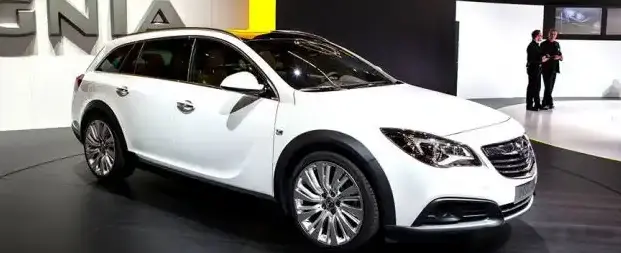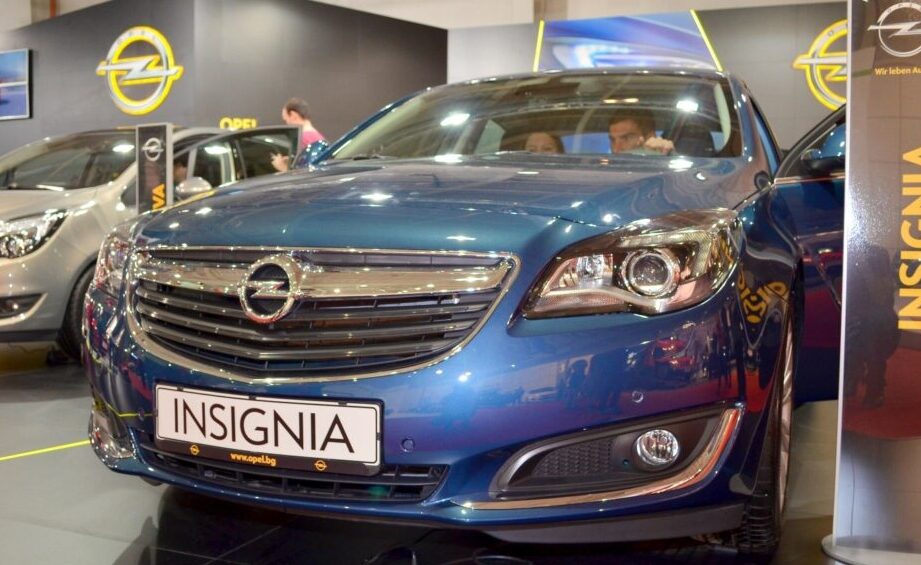
The Opel Insignia Sedan (A, facelift 2013) 2.0 CDTI (120 hp) Ecotec ecoFLEX start/stop represents a significant iteration within the first generation of the Insignia, a mid-size car designed to compete in the European market. Introduced in July 2013 and continuing through June 2015, this variant aimed to balance fuel efficiency with acceptable performance, targeting buyers seeking a comfortable and economical family sedan. It was positioned as a mainstream offering within the Insignia range, slotting below the more powerful petrol and higher-output diesel options. The facelift brought styling updates and technological improvements to the original Insignia, enhancing its appeal and competitiveness.
Technical Specifications
| Brand | Opel |
| Model | Insignia |
| Generation | Insignia Sedan (A, facelift 2013) |
| Type (Engine) | 2.0 CDTI (120 Hp) Ecotec ecoFLEX start/stop |
| Start of production | July, 2013 |
| End of production | June, 2015 |
| Powertrain Architecture | Internal Combustion engine |
| Body type | Sedan |
| Seats | 5 |
| Doors | 4 |
| Fuel consumption (urban) | 4.6 l/100 km (51.1 US mpg, 61.4 UK mpg, 21.7 km/l) |
| Fuel consumption (extra urban) | 3.3 l/100 km (71.3 US mpg, 85.6 UK mpg, 30.3 km/l) |
| Fuel consumption (combined) | 3.7 l/100 km (63.6 US mpg, 76.3 UK mpg, 27 km/l) |
| CO2 emissions | 99 g/km |
| Fuel Type | Diesel |
| Acceleration 0 – 100 km/h | 11.9 sec |
| Acceleration 0 – 62 mph | 11.9 sec |
| Acceleration 0 – 60 mph | 11.3 sec |
| Maximum speed | 195 km/h (121.17 mph) |
| Emission standard | Euro 5 |
| Power | 120 Hp @ 4000 rpm |
| Power per litre | 61.3 Hp/l |
| Torque | 300 Nm @ 1750-2500 rpm (221.27 lb.-ft. @ 1750-2500 rpm) |
| Engine layout | Front, Transverse |
| Engine Model/Code | A20DTE |
| Engine displacement | 1956 cm3 (119.36 cu. in.) |
| Number of cylinders | 4 |
| Engine configuration | Inline |
| Cylinder Bore | 83 mm (3.27 in.) |
| Piston Stroke | 90.4 mm (3.56 in.) |
| Number of valves per cylinder | 4 |
| Fuel injection system | Diesel Commonrail |
| Engine aspiration | Turbocharger, Intercooler |
| Engine oil capacity | 4.5 l (4.76 US qt | 3.96 UK qt) |
| Coolant | 9 l (9.51 US qt | 7.92 UK qt) |
| Trunk (boot) space – minimum | 500 l (17.66 cu. ft.) |
| Trunk (boot) space – maximum | 1015 l (35.84 cu. ft.) |
| Fuel tank capacity | 70 l (18.49 US gal | 15.4 UK gal) |
| Length | 4842 mm (190.63 in.) |
| Width | 1856 mm (73.07 in.) |
| Width including mirrors | 2084 mm (82.05 in.) |
| Height | 1498 mm (58.98 in.) |
| Wheelbase | 2737 mm (107.76 in.) |
| Front track | 1587 mm (62.48 in.) |
| Rear (Back) track | 1590 mm (62.6 in.) |
| Minimum turning circle | 11.4 m (37.4 ft.) |
| Drivetrain Architecture | The Internal combustion engine (ICE) drives the front wheels of the vehicle. |
| Drive wheel | Front wheel drive |
| Number of gears and type of gearbox | 6 gears, manual transmission |
| Assisting systems | ABS (Anti-lock braking system) |
| Steering type | Steering rack and pinion |
Powertrain & Engine Architecture
The heart of this Insignia variant is the 2.0 CDTI engine, specifically the A20DTE engine code. This is a four-cylinder, inline diesel engine utilizing common rail direct injection and a turbocharger with intercooling. The engine benefits from Opel’s ecoFLEX technology, which incorporates start/stop functionality to reduce fuel consumption and emissions. The 120 horsepower output is achieved at 4000 rpm, while the 300 Nm (221 lb-ft) of torque is available from 1750 to 2500 rpm, providing a usable powerband for everyday driving. The engine’s design prioritizes efficiency, with features like low-friction components and optimized combustion chamber geometry. The transmission is a six-speed manual gearbox, chosen for its efficiency and driver engagement, although an automatic transmission was available as an option in some markets.
Driving Characteristics
The 120 hp 2.0 CDTI with the six-speed manual transmission delivers a respectable, if not exhilarating, driving experience. Acceleration from 0-100 km/h takes approximately 11.9 seconds, making it suitable for routine commuting and highway cruising. The torque-rich engine provides adequate pulling power for overtaking maneuvers, but it doesn’t offer the brisk acceleration of the higher-powered petrol or diesel variants. The gear ratios are well-spaced, allowing for comfortable cruising at highway speeds while maintaining reasonable fuel economy. Compared to the 1.6-liter petrol engine, the 2.0 CDTI offers significantly more torque, resulting in better in-gear acceleration and reduced strain on the engine when carrying passengers or cargo. However, it lacks the responsiveness and higher revving nature of the petrol unit. The suspension is tuned for comfort, providing a smooth ride over most road surfaces, but it may exhibit some body roll during spirited cornering.
Equipment & Trim Levels
The Insignia Sedan (A, facelift 2013) 2.0 CDTI (120 hp) ecoFLEX typically came equipped with a reasonable level of standard features. These included air conditioning, electric front windows, a CD/MP3 stereo system, and ABS brakes. Higher trim levels, such as SE or Sport, added features like alloy wheels, cruise control, rear parking sensors, and upgraded interior trim. Interior upholstery was typically cloth, with leather options available as an upgrade. The dashboard layout was modern and functional, with a clear instrument cluster and intuitive controls. Optional extras included a navigation system, heated seats, and a panoramic sunroof.
Chassis & Braking
The Insignia Sedan features a front-wheel-drive layout with independent suspension at the front and a semi-independent torsion beam suspension at the rear. The front suspension utilizes MacPherson struts, while the rear torsion beam provides a balance between comfort and handling. Braking duties are handled by disc brakes at the front and drum brakes at the rear, with ABS standard. The steering is a rack-and-pinion system, providing precise and responsive steering feel. Stabilizer bars are fitted to both the front and rear axles to reduce body roll during cornering. The chassis is designed to provide a comfortable and stable ride, with a focus on minimizing noise and vibration.
Market Reception & Comparison
The Opel Insignia 2.0 CDTI (120 hp) ecoFLEX was generally well-received by automotive critics as a practical and economical family sedan. It was praised for its fuel efficiency, comfortable ride, and spacious interior. However, some critics noted that the engine lacked the refinement and performance of its competitors. Compared to other trims in the Insignia lineup, the 120 hp diesel offered the best fuel economy and lower running costs, making it an attractive option for budget-conscious buyers. It was often compared to rivals such as the Ford Mondeo, Volkswagen Passat, and Peugeot 508. In terms of reliability, the A20DTE engine has proven to be generally robust, although regular maintenance is essential to prevent issues with the diesel particulate filter (DPF) and turbocharger.
Legacy
The Opel Insignia 2.0 CDTI (120 hp) ecoFLEX remains a popular choice in the used car market, particularly for those seeking an affordable and fuel-efficient family sedan. The A20DTE engine has a reputation for being relatively reliable, although potential buyers should be aware of the potential for DPF issues and the importance of regular oil changes. The Insignia’s spacious interior, comfortable ride, and reasonable running costs continue to make it a compelling option for buyers looking for a practical and economical vehicle. While it may not offer the performance of higher-powered variants, the 120 hp diesel provides a good balance between efficiency and usability.