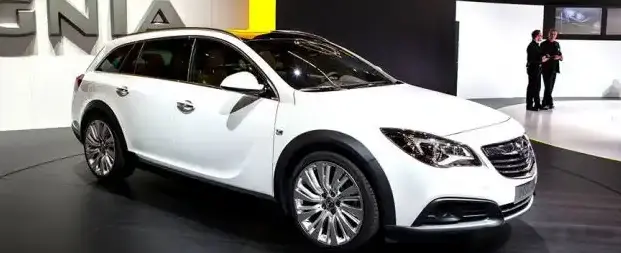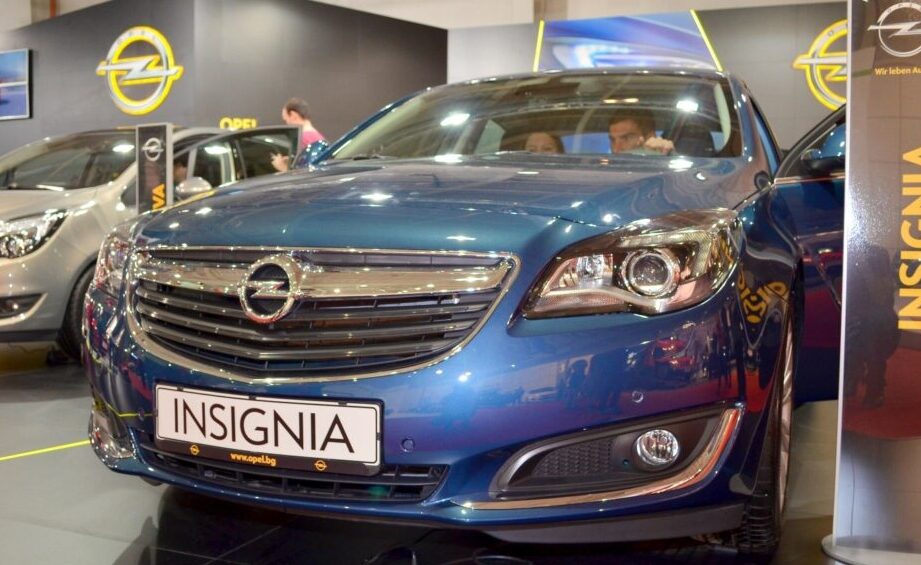
The Opel Insignia Sedan (A, facelift 2013) 2.0 CDTI (163 Hp) AWD Ecotec Automatic represents a significant iteration of Opel’s mid-size offering, positioned as a practical and relatively efficient all-wheel-drive option within the Insignia range. Introduced in July 2013 and continuing through June 2015, this variant aimed to provide a balance between performance, fuel economy, and all-weather capability for European drivers. It occupied a mid-range slot in the Insignia lineup, offering a step up in both price and features from the base models while remaining more accessible than the higher-performance or luxury-focused trims.
Technical Specifications
| Brand | Opel |
| Model | Insignia |
| Generation | Insignia Sedan (A, facelift 2013) |
| Type (Engine) | 2.0 CDTI (163 Hp) AWD Ecotec Automatic |
| Start of production | July, 2013 |
| End of production | June, 2015 |
| Powertrain Architecture | Internal Combustion engine |
| Body type | Sedan |
| Seats | 5 |
| Doors | 4 |
| Fuel consumption (urban) | 5.5 l/100 km (42.8 US mpg, 51.4 UK mpg, 18.2 km/l) |
| Fuel consumption (extra urban) | 4.9 l/100 km (48 US mpg, 57.6 UK mpg, 20.4 km/l) |
| Fuel consumption (combined) | 6.2 l/100 km (37.9 US mpg, 45.6 UK mpg, 16.1 km/l) |
| CO2 emissions | 164 g/km |
| Fuel Type | Diesel |
| Acceleration 0 – 100 km/h | 10.5 sec |
| Acceleration 0 – 62 mph | 10.5 sec |
| Acceleration 0 – 60 mph | 10 sec |
| Maximum speed | 210 km/h (130.49 mph) |
| Emission standard | Euro 5 |
| Power | 163 Hp @ 4000 rpm |
| Power per litre | 83.3 Hp/l |
| Torque | 350 Nm @ 1750-2500 rpm (258.15 lb.-ft. @ 1750-2500 rpm) |
| Engine layout | Front, Transverse |
| Engine Model/Code | A20DTH |
| Engine displacement | 1956 cm3 (119.36 cu. in.) |
| Number of cylinders | 4 |
| Engine configuration | Inline |
| Cylinder Bore | 83 mm (3.27 in.) |
| Piston Stroke | 90.4 mm (3.56 in.) |
| Number of valves per cylinder | 4 |
| Fuel injection system | Diesel Commonrail |
| Engine aspiration | Turbocharger, Intercooler |
| Engine oil capacity | 4.5 l (4.76 US qt | 3.96 UK qt) |
| Coolant | 9 l (9.51 US qt | 7.92 UK qt) |
| Engine systems | Particulate filter |
| Trunk (boot) space – minimum | 500 l (17.66 cu. ft.) |
| Trunk (boot) space – maximum | 1015 l (35.84 cu. ft.) |
| Fuel tank capacity | 70 l (18.49 US gal | 15.4 UK gal) |
| Length | 4842 mm (190.63 in.) |
| Width | 1856 mm (73.07 in.) |
| Width including mirrors | 2084 mm (82.05 in.) |
| Height | 1498 mm (58.98 in.) |
| Wheelbase | 2737 mm (107.76 in.) |
| Front track | 1587 mm (62.48 in.) |
| Rear (Back) track | 1590 mm (62.6 in.) |
| Minimum turning circle | 10.9 m (35.76 ft.) |
| Drive wheel | All wheel drive (4×4) |
| Number of gears and type of gearbox | 6 gears, automatic transmission |
| Assisting systems | ABS (Anti-lock braking system) |
| Steering type | Steering rack and pinion |
Overview and Market Positioning
The Insignia, launched in 2008, was Opel’s attempt to move upmarket and compete with established players like the Ford Mondeo and Volkswagen Passat. The facelifted version in 2013 brought styling updates and refinements to the engine range. The 2.0 CDTI with 163 horsepower, coupled with all-wheel drive and an automatic transmission, was a popular configuration, particularly in regions with inclement weather. It appealed to buyers who needed a comfortable, spacious family sedan with added security and traction. This trim level wasn’t marketed as a performance model; instead, it focused on providing a smooth, refined driving experience and practical usability.
Engine and Transmission Details
The heart of this Insignia variant is the A20DTH 2.0-liter turbocharged diesel engine. This engine, part of Opel’s Ecotec range, was known for its relatively good fuel efficiency and decent power output. The 163 horsepower and 350 Nm (258 lb-ft) of torque provided adequate performance for everyday driving and highway cruising. The torque curve was relatively flat, offering good responsiveness across a wide range of engine speeds. The six-speed automatic transmission was chosen for its convenience and ease of use, further enhancing the car’s appeal to a broader audience. While not a particularly sporty transmission, it provided smooth shifts and contributed to the overall comfortable driving experience.
Comparison with Other Insignia Variants
The Insignia range offered a variety of engine and transmission options. Compared to the base 1.6-liter petrol engine, the 2.0 CDTI AWD offered significantly more power and torque, resulting in better acceleration and towing capacity. However, it came at a higher price point and with slightly increased running costs due to the diesel fuel and potentially more complex maintenance. Against the more powerful 2.0 BiTurbo CDTI variants (typically around 195 hp), the 163 hp version offered a more economical option, sacrificing some outright performance for improved fuel economy. The 1.9 CDTI models, while also diesel-powered, were generally less refined and offered lower power outputs. The all-wheel-drive system differentiated this variant from many of the front-wheel-drive Insignias, providing enhanced grip and stability, especially in slippery conditions. This made it a compelling choice for drivers in regions prone to snow or rain.
Technology and Features
The 2013 facelift brought several technological enhancements to the Insignia. Standard features typically included ABS, electronic stability control, and multiple airbags. Optional extras could include features like adaptive cruise control, lane departure warning, and a touchscreen infotainment system with navigation. The interior was generally well-appointed, with comfortable seats and a spacious cabin. The Insignia also boasted a relatively large trunk capacity, making it a practical choice for families. The inclusion of a diesel particulate filter (DPF) demonstrated Opel’s commitment to reducing emissions, aligning with increasingly stringent European regulations.
Reliability and Maintenance
Like many modern diesel vehicles, the Insignia 2.0 CDTI requires regular maintenance to ensure optimal performance and longevity. Key maintenance items include oil and filter changes, air filter replacement, and fuel filter replacement. The diesel particulate filter (DPF) requires periodic regeneration, and failure to do so can lead to costly repairs. The automatic transmission also requires regular fluid changes. While generally reliable, some owners have reported issues with the electronic parking brake and the infotainment system. Overall, the Insignia 2.0 CDTI is considered a reasonably reliable vehicle, but preventative maintenance is crucial to avoid potential problems.
Legacy and Impact
The Opel Insignia, and specifically the 2.0 CDTI AWD variant, played a role in establishing Opel as a more competitive player in the mid-size segment. It offered a compelling combination of practicality, comfort, and efficiency, appealing to a wide range of buyers. While the Insignia has since been replaced by newer models, it remains a popular choice on the used car market, offering good value for money and a refined driving experience. The 2.0 CDTI engine, in particular, proved to be a durable and reliable powerplant, contributing to the Insignia’s overall reputation for dependability.