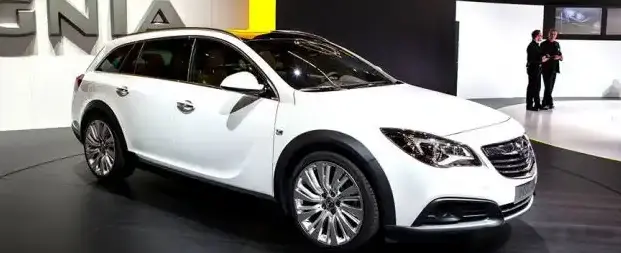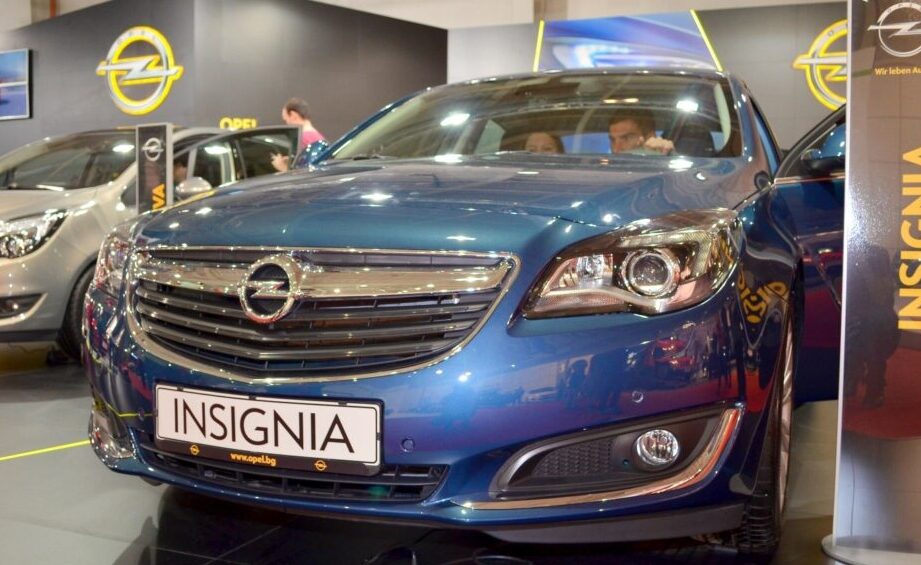
The Opel Insignia Sedan (A, facelift 2013) 2.0 CDTI (163 Hp) AWD Ecotec Start/Stop represents a significant iteration of Opel’s mid-size offering, aimed at providing a blend of practicality, performance, and fuel efficiency within the European market. Introduced in July 2013 and continuing through June 2015, this variant occupied a middle ground within the Insignia lineup, offering all-wheel drive capability and a diesel engine for those seeking enhanced traction and economy. It was positioned above the base models and below the more powerful, often petrol-fueled, higher trim levels.
Technical Specifications
| Brand | Opel |
| Model | Insignia |
| Generation | Insignia Sedan (A, facelift 2013) |
| Type (Engine) | 2.0 CDTI (163 Hp) AWD Ecotec Start/Stop |
| Start of production | July, 2013 |
| End of production | June, 2015 |
| Powertrain Architecture | Internal Combustion engine |
| Body type | Sedan |
| Seats | 5 |
| Doors | 4 |
| Fuel consumption (urban) | 6.6 l/100 km (35.6 US mpg, 42.8 UK mpg, 15.2 km/l) |
| Fuel consumption (extra urban) | 4.5 l/100 km (52.3 US mpg, 62.8 UK mpg, 22.2 km/l) |
| Fuel consumption (combined) | 5.3 l/100 km (44.4 US mpg, 53.3 UK mpg, 18.9 km/l) |
| CO2 emissions | 139 g/km |
| Fuel Type | Diesel |
| Acceleration 0 – 100 km/h | 10.2 sec |
| Acceleration 0 – 62 mph | 10.2 sec |
| Acceleration 0 – 60 mph | 9.7 sec |
| Maximum speed | 215 km/h (133.59 mph) |
| Emission standard | Euro 5 |
| Power | 163 Hp @ 4000 rpm |
| Power per litre | 83.3 Hp/l |
| Torque | 350 Nm @ 1750-2500 rpm (258.15 lb.-ft. @ 1750-2500 rpm) |
| Engine layout | Front, Transverse |
| Engine Model/Code | A20DTH |
| Engine displacement | 1956 cm3 (119.36 cu. in.) |
| Number of cylinders | 4 |
| Engine configuration | Inline |
| Cylinder Bore | 83 mm (3.27 in.) |
| Piston Stroke | 90.4 mm (3.56 in.) |
| Number of valves per cylinder | 4 |
| Fuel injection system | Diesel Commonrail |
| Engine aspiration | Turbocharger, Intercooler |
| Engine oil capacity | 4.5 l (4.76 US qt | 3.96 UK qt) |
| Coolant | 9 l (9.51 US qt | 7.92 UK qt) |
| Trunk (boot) space – minimum | 500 l (17.66 cu. ft.) |
| Trunk (boot) space – maximum | 1015 l (35.84 cu. ft.) |
| Fuel tank capacity | 70 l (18.49 US gal | 15.4 UK gal) |
| Length | 4842 mm (190.63 in.) |
| Width | 1856 mm (73.07 in.) |
| Width including mirrors | 2084 mm (82.05 in.) |
| Height | 1498 mm (58.98 in.) |
| Wheelbase | 2737 mm (107.76 in.) |
| Front track | 1587 mm (62.48 in.) |
| Rear (Back) track | 1590 mm (62.6 in.) |
| Minimum turning circle | 11.4 m (37.4 ft.) |
| Drive wheel | All wheel drive (4×4) |
| Number of gears and type of gearbox | 6 gears, manual transmission |
| Assisting systems | ABS (Anti-lock braking system) |
| Steering type | Steering rack and pinion |
A Response to Market Demands
The Insignia, launched in 2008, was Opel’s attempt to move upmarket and compete with established players like the Ford Mondeo and Volkswagen Passat. The facelift in 2013 brought styling revisions and technological updates, aiming to refresh the model and maintain its competitiveness. The 2.0 CDTI AWD variant was particularly relevant in regions with inclement weather or challenging road conditions, where the added security of all-wheel drive was highly valued. While Opel wasn’t a major player in the US market, the Insignia was a key model in Europe, offering a compelling alternative to its rivals.
Engine and Performance Characteristics
At the heart of this Insignia variant lies the A20DTH 2.0-liter turbocharged diesel engine. Producing 163 horsepower and 350 Nm (258 lb-ft) of torque, it provided a good balance between performance and fuel economy. The engine’s torque curve, peaking between 1750 and 2500 rpm, ensured strong pulling power for everyday driving and overtaking maneuvers. The six-speed manual transmission allowed for driver engagement, while the all-wheel-drive system distributed power to all four wheels, enhancing grip and stability. Acceleration from 0 to 60 mph took approximately 9.7 seconds, and the car had a top speed of 133.59 mph. The Start/Stop system further contributed to fuel savings by automatically shutting off the engine when the vehicle was stationary.
Comparison with Other Insignia Variants
The Insignia range offered a variety of engine and transmission options. Compared to the petrol-powered versions, such as the 1.6 Turbo or 2.8 V6, the 2.0 CDTI AWD prioritized fuel efficiency and low-end torque. While the petrol engines offered more outright power and a potentially more refined driving experience, they came at the cost of higher fuel consumption. The 2.0 CDTI was also available in front-wheel-drive configuration, which was more affordable but lacked the all-weather capability of the AWD model. Another common variant was the 2.0 CDTI with a six-speed automatic transmission, offering greater convenience but potentially slightly reduced fuel economy compared to the manual version. The diesel engine also offered a different driving experience than the more powerful V6, appealing to drivers who prioritized economy and practicality over outright performance.
Technology and Features
The 2013 facelift brought several technological enhancements to the Insignia. The 2.0 CDTI AWD typically included features such as ABS, electronic stability control, and multiple airbags as standard equipment. Optional extras could include features like adaptive cruise control, lane departure warning, and a touchscreen infotainment system. The interior was designed with comfort and practicality in mind, offering ample space for passengers and luggage. The trunk capacity of 500 liters (17.66 cu. ft.) could be expanded to 1015 liters (35.84 cu. ft.) by folding down the rear seats. The Ecotec Start/Stop system was a key feature, contributing to reduced emissions and improved fuel economy.
Reliability and Maintenance
Like many modern diesel engines, the A20DTH engine requires regular maintenance to ensure optimal performance and longevity. Key maintenance items include oil and filter changes, air filter replacement, and fuel filter replacement. The diesel particulate filter (DPF) requires periodic regeneration to prevent clogging. The all-wheel-drive system also requires occasional servicing to ensure proper operation. Overall, the Insignia is generally considered a reliable vehicle, but potential owners should be aware of the maintenance requirements associated with a diesel engine and all-wheel-drive system.
Legacy and Impact
The Opel Insignia, including the 2.0 CDTI AWD variant, played a significant role in Opel’s efforts to establish itself as a credible competitor in the mid-size segment. It offered a compelling combination of style, practicality, and technology, appealing to a wide range of buyers. While the Insignia was never sold in large numbers in the US, it remains a popular choice in Europe, known for its comfortable ride, spacious interior, and efficient diesel engines. The 2.0 CDTI AWD variant, in particular, provided a versatile and capable option for drivers seeking a well-rounded family car with all-weather capability.